


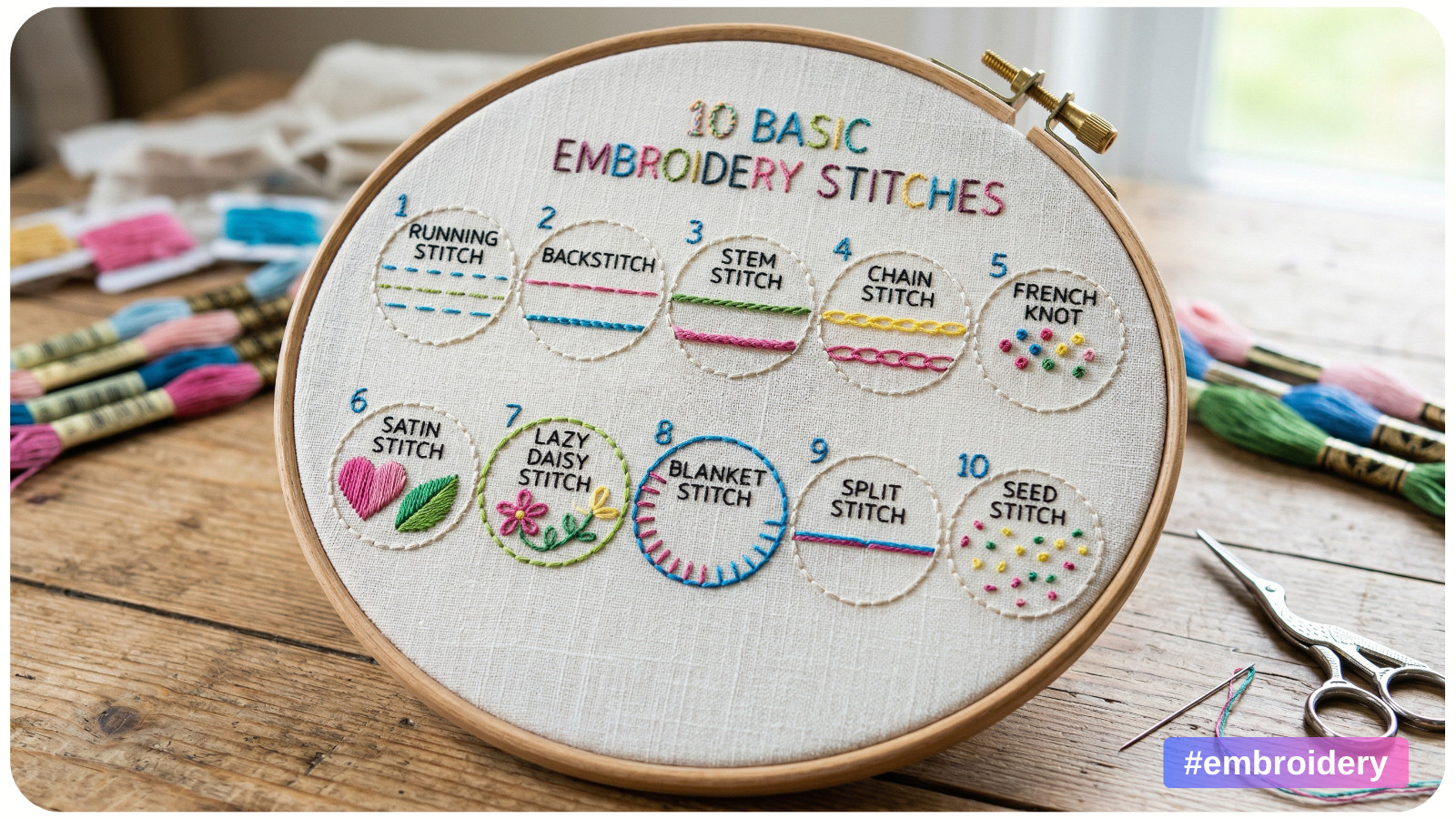
If you want to build strong embroidery skills, learning the right stitches in the right order makes a huge difference. A beginner does not need dozens of decorative techniques at once. What matters most is understanding a core set of stitches that teach control, tension, direction, spacing, and texture.
These foundational stitches appear in everything from hoop art to floral samplers and clothing customization. Once you understand how the needle moves through the fabric, how the thread sits on the surface, and how stitch length affects the final look, embroidery becomes much more precise and enjoyable.
Below are 10 basic embroidery stitches that every beginner should learn first. Each one develops a different technical skill and gives you more creative freedom for future projects.
1. RUNNING STITCH
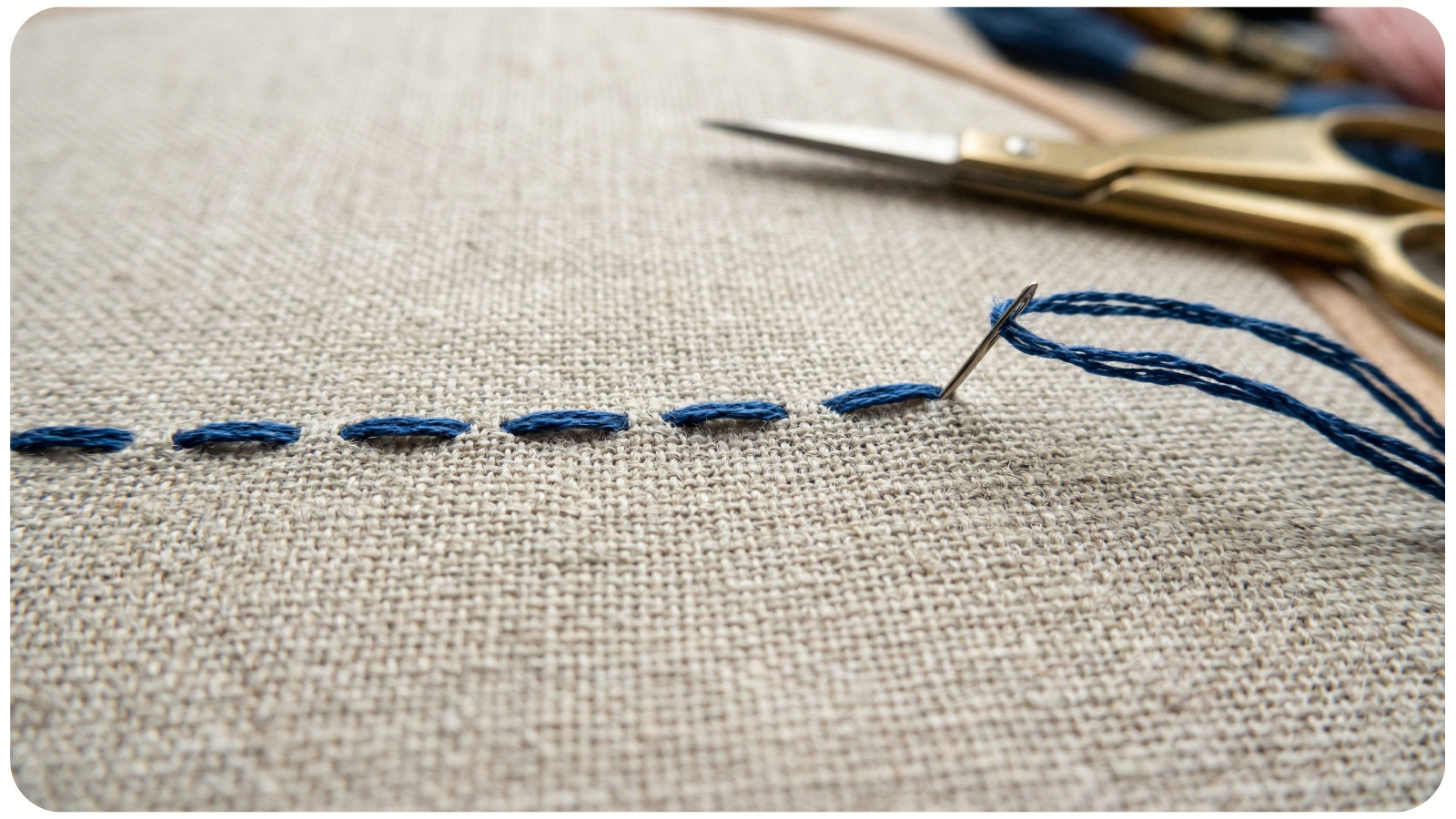
Running stitch is one of the simplest and most important stitches in embroidery. It is formed by passing the needle up and down through the fabric at regular intervals, creating a dashed line.
Technically, the key to a clean running stitch is consistency. Each stitch should be close in length to each gap. Beginners often make the stitches uneven because they focus only on where the needle enters, not where it exits. Try to plan both points before pulling the thread through.
This stitch is ideal for outlines, subtle details, and hand-drawn effects. It can also be packed closely for a stronger linear appearance. Because it teaches spacing and rhythm, it is often the first stitch worth mastering.
2. BACKSTITCH
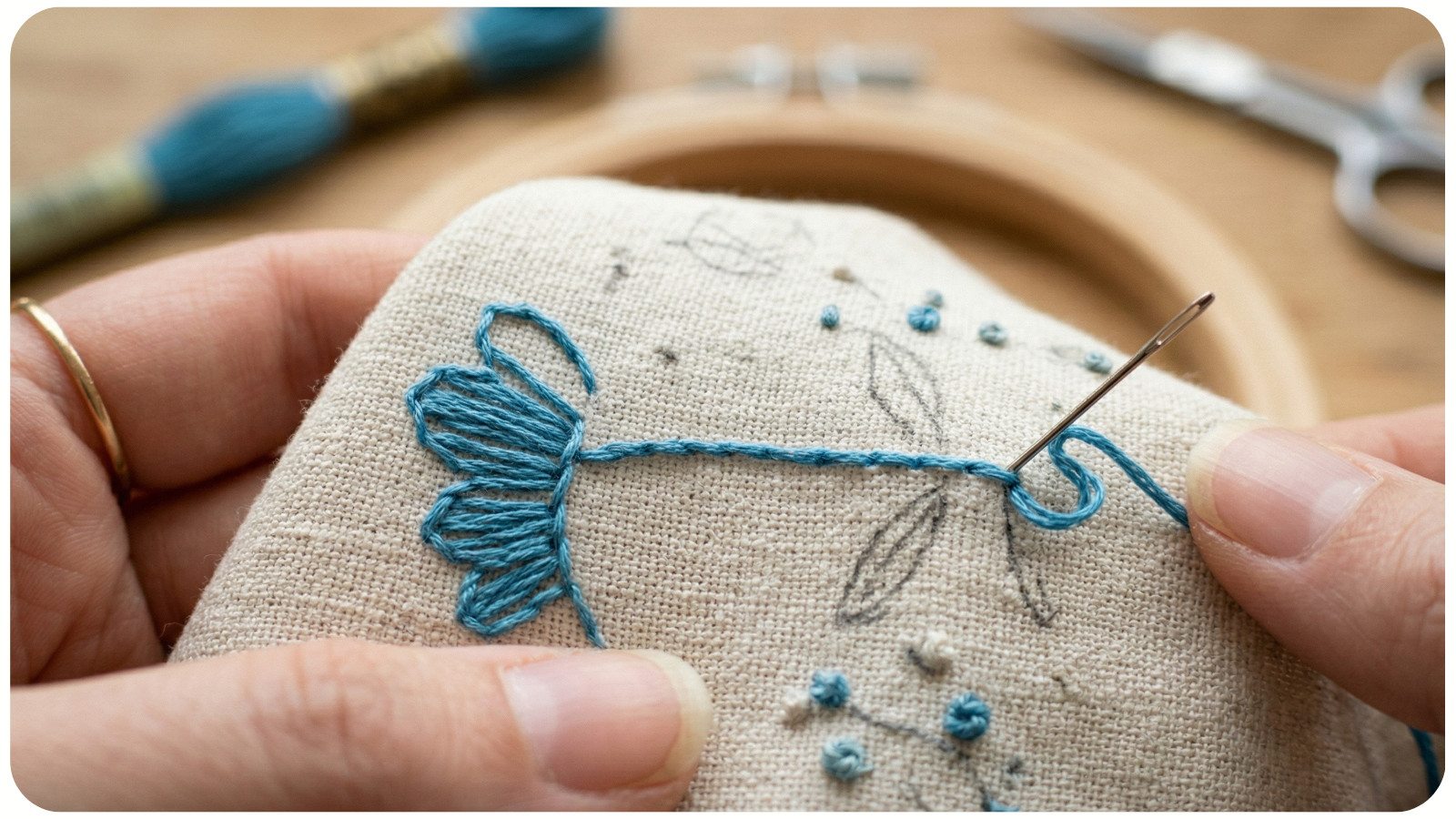
Backstitch creates a solid, continuous line, making it one of the best stitches for outlines, lettering, and defined shapes. To work it, bring the needle up ahead of the previous stitch, then insert it back into the end of the last stitch.
The technical advantage of backstitch is line strength. Unlike running stitch, it leaves no gaps. Accuracy depends on stitch length and curve control. For straight lines, slightly longer stitches work well. For tight curves, shorter stitches give smoother results and prevent an angular look.
Backstitch is excellent for pattern tracing and contour work. Many modern embroidery designs rely on it heavily because it produces crisp edges with minimal bulk.
3. SATIN STITCH
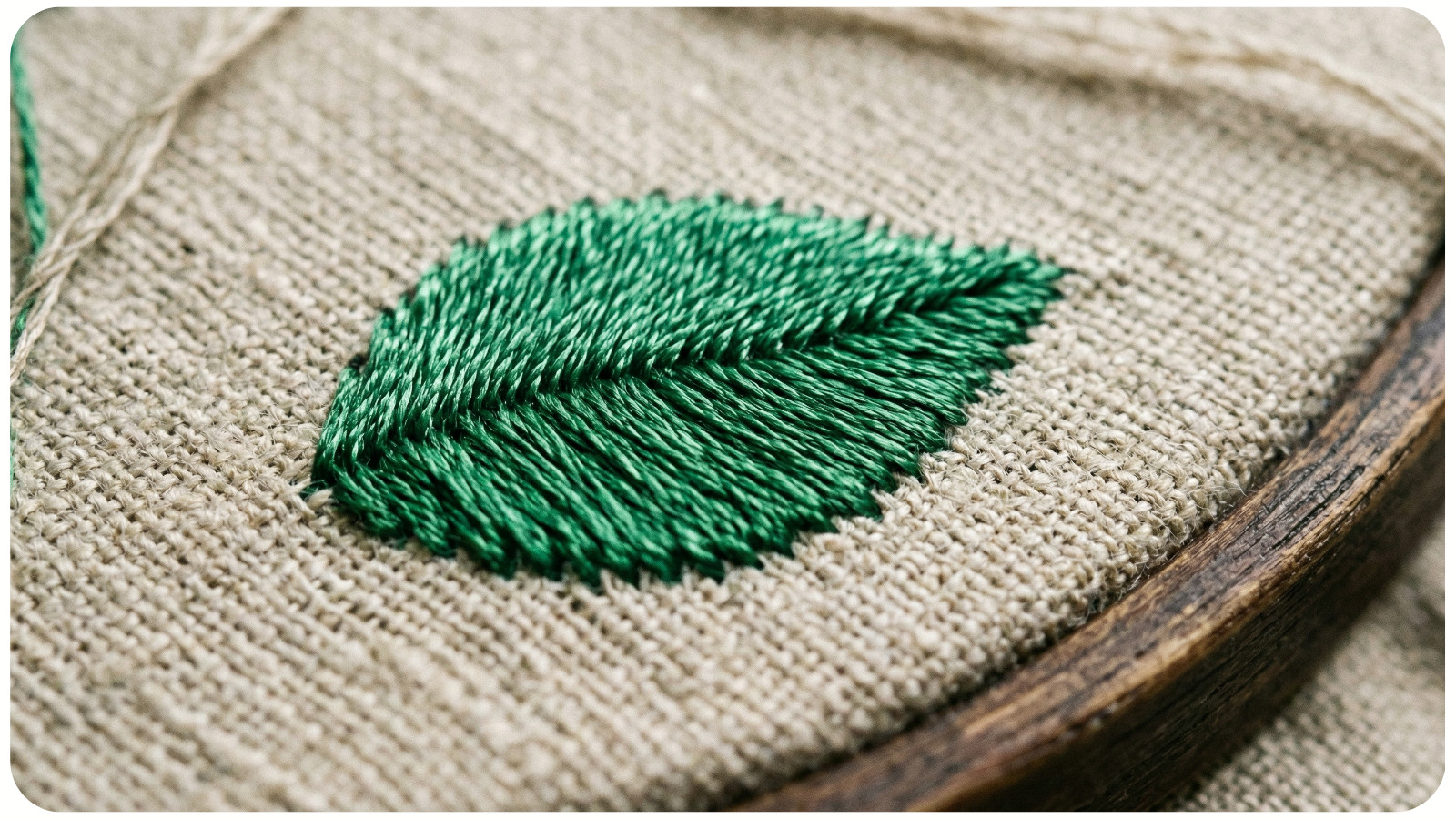
Satin stitch is used to fill shapes with smooth, solid blocks of thread. The stitch is formed by laying parallel stitches closely side by side across an area.
This stitch demands careful control. The edges must be clearly defined before filling, or the final shape will look uneven. For beginners, smaller shapes are easier because long satin stitches can snag, loosen, or look flat in an uncontrolled way.
The beauty of satin stitch comes from its sheen and dense coverage. It works beautifully for petals, leaves, initials, and bold motifs. Pay close attention to stitch direction, because changing the angle changes how light reflects off the thread. That is where color and texture become especially expressive.
4. STEM STITCH
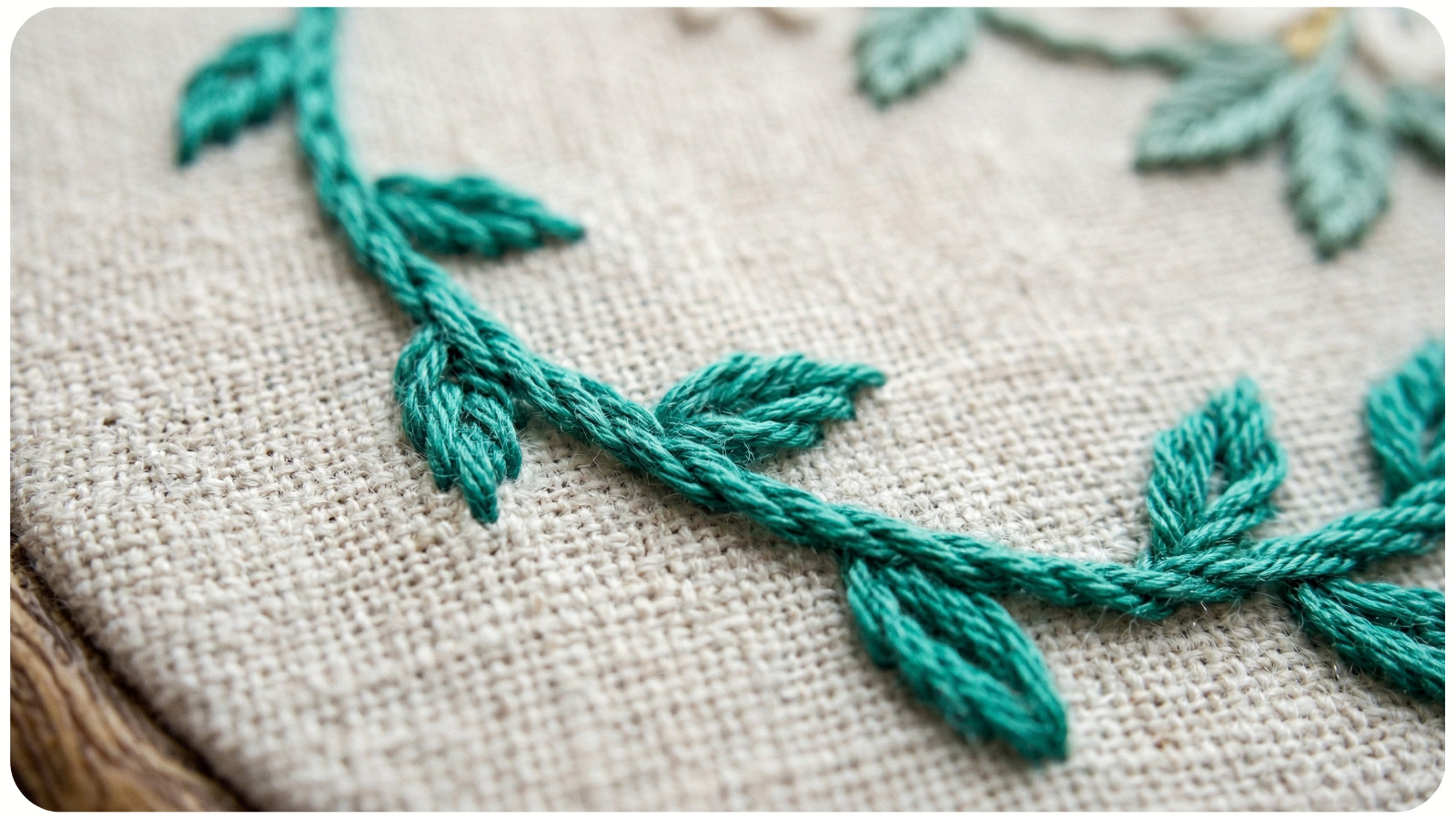
Stem stitch is commonly used for curved lines, vines, outlines, and delicate lettering. It creates a slightly twisted rope-like line with soft texture.
To form it, bring the needle up, take a forward stitch, then bring the needle back up halfway along that stitch while keeping the thread consistently on the same side. That last detail matters. If the working thread shifts sides, the stitch loses its characteristic twist.
Stem stitch is especially useful when you want a line that feels softer and more dimensional than backstitch. It is a favorite for botanical designs because the gentle rope effect mimics natural stems beautifully.
5. SPLIT STITCH
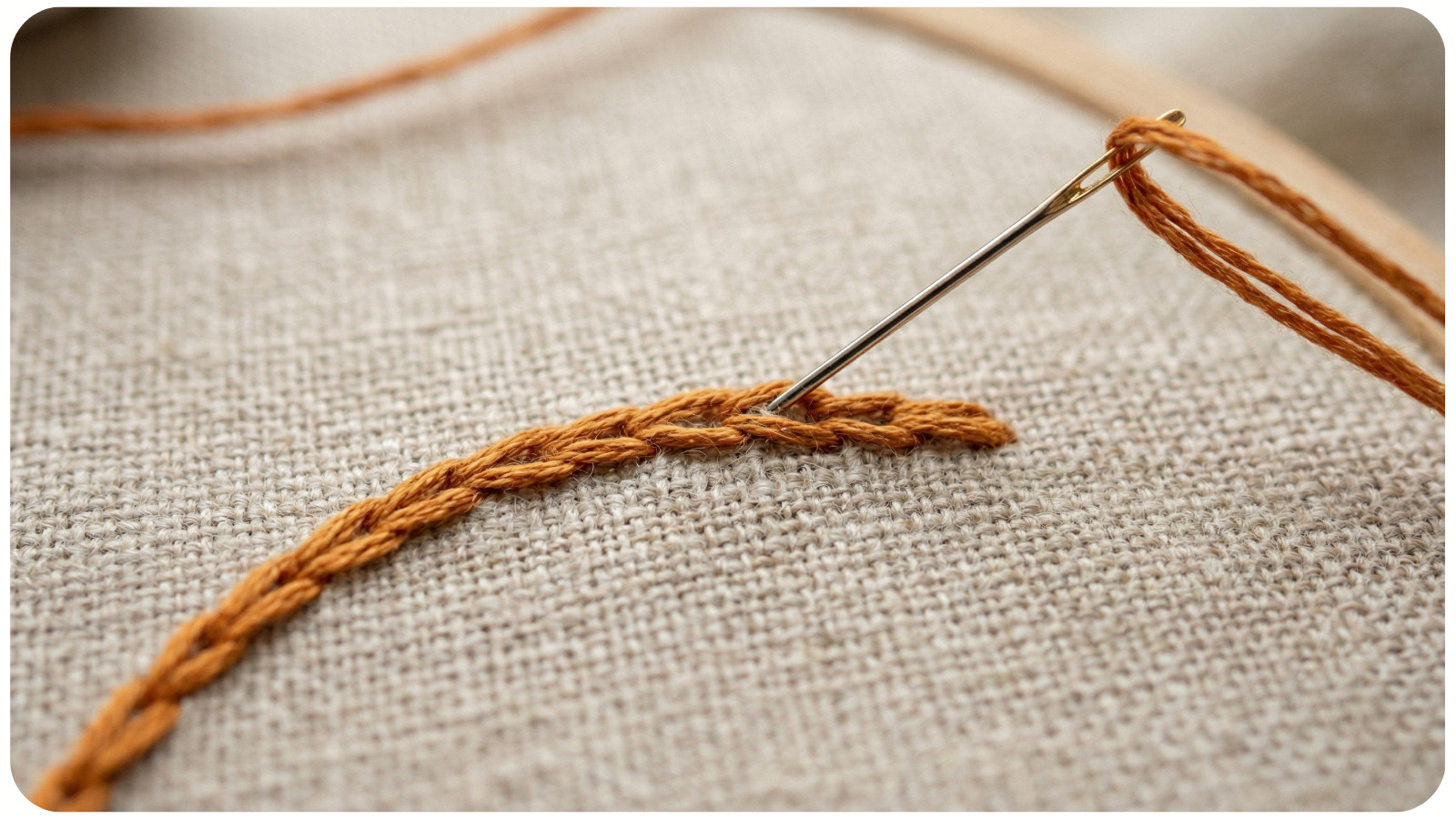
Split stitch is excellent for fine outlines and textured fills. It is worked by bringing the needle up through the previous stitch, splitting the thread strand cleanly in the center.
Technically, this means thread choice matters. Split stitch is easier with stranded cotton when the strands lie neatly together. If the thread twists too much, splitting can become messy. Use a sharp needle and insert it carefully to separate the fibers rather than pushing them aside.
The result is a slightly raised, braided line. It is perfect for detailed outlines and for filling areas where you want soft texture rather than the sleek surface of satin stitch.
6. CHAIN STITCH
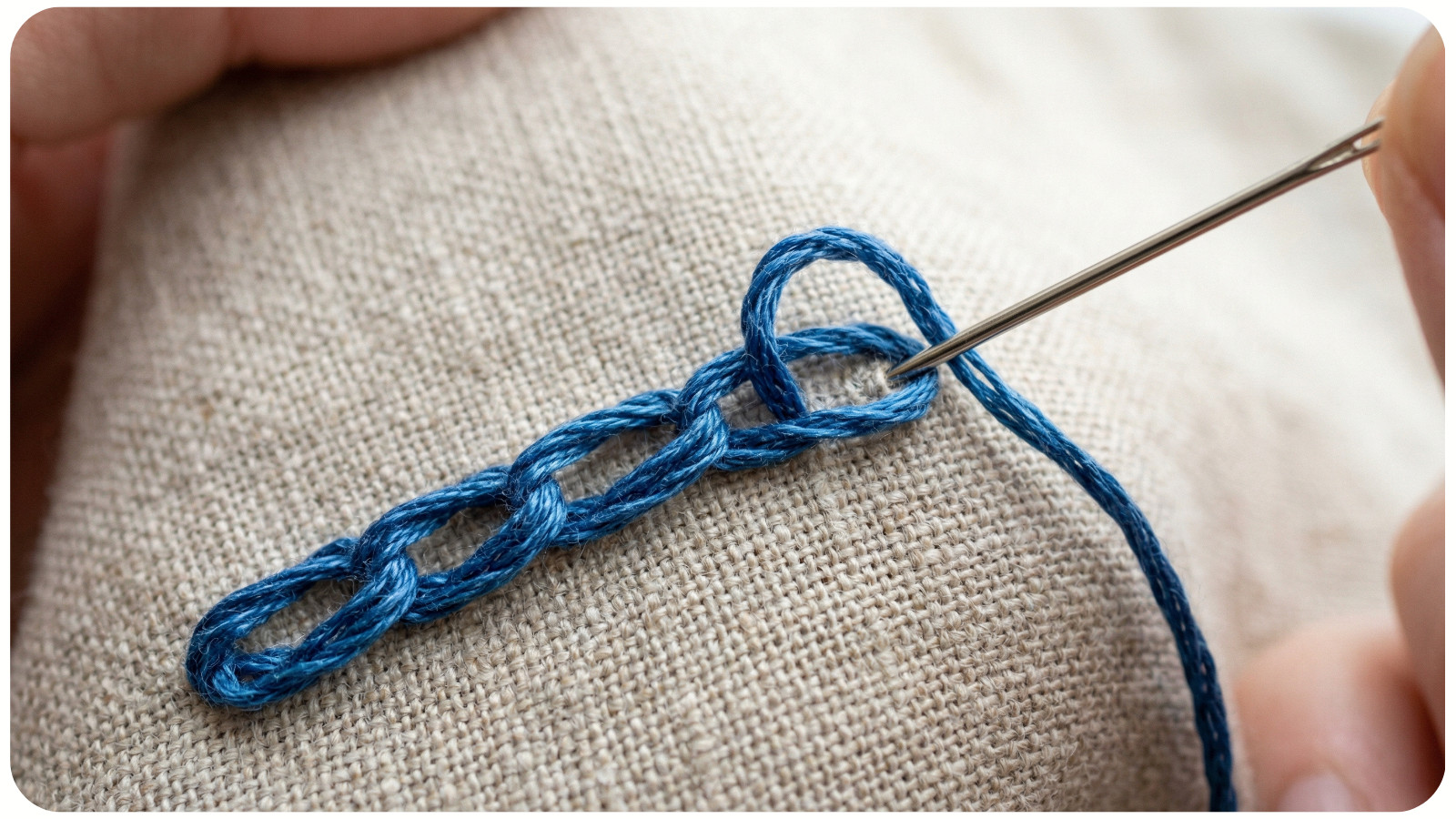
Chain stitch creates linked loops that resemble a fine crochet chain. It adds obvious texture and decorative character to embroidery.
To work it, bring the needle up, reinsert it in the same hole or very close to it, and bring the needle tip back up a short distance away while catching the thread loop underneath. Then pull gently to form the chain link.
The main technical challenge is tension. Pull too tightly and the loop collapses. Leave it too loose and the stitch looks sloppy. Chain stitch is beautiful for bold outlines, floral stems, and ornamental details. It also fills shapes effectively when rows are placed side by side.
7. LAZY DAISY STITCH
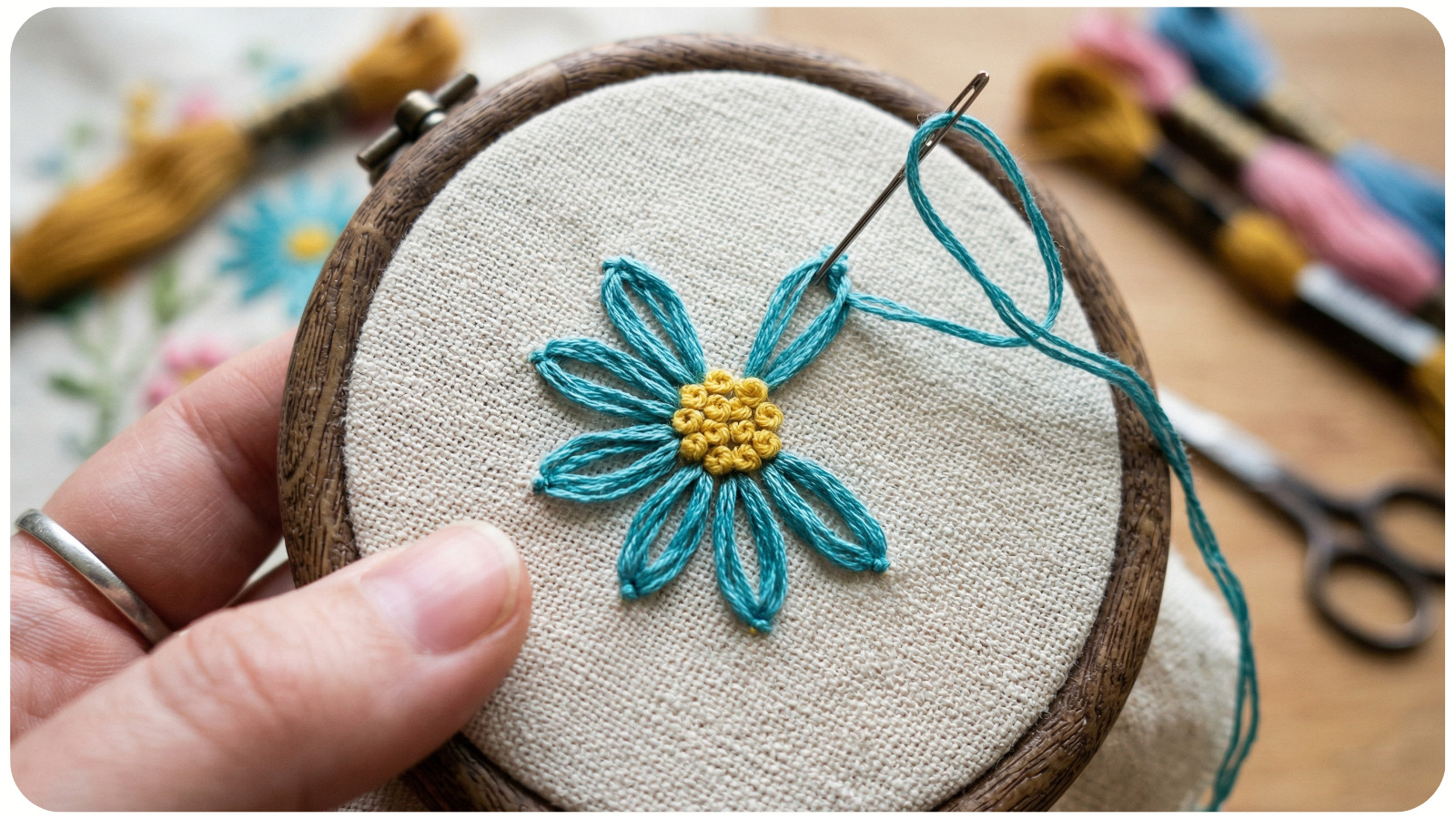
Lazy daisy is essentially a detached chain stitch used to form single petal-shaped loops. It is one of the most beginner-friendly decorative stitches and is especially useful in floral embroidery.
Each petal is made individually, then anchored with a tiny straight stitch at the tip. This anchoring stitch controls the final shape. A short anchor creates a rounder loop, while a slightly longer one gives the petal a pointed finish.
Because it is easy to repeat, lazy daisy helps beginners practice loop control and symmetry. It is ideal for simple flowers, leaves, and scattered motifs with a light, airy feel.
8. FRENCH KNOT
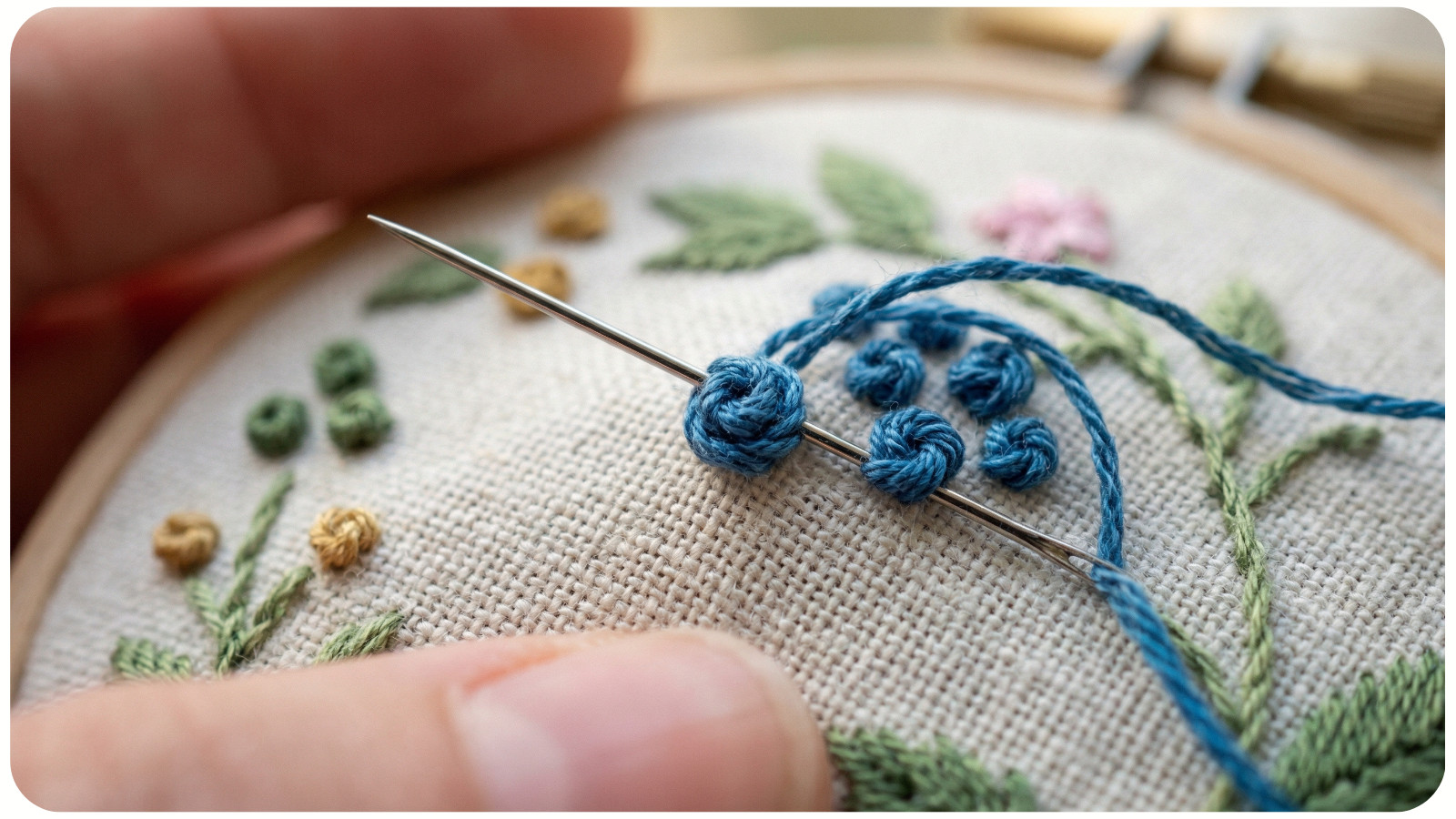
French knots add small raised dots of texture and dimension. They are commonly used for flower centers, eyes, berries, and delicate filler details.
Bring the needle up through the fabric, wrap the thread around the needle once or twice, then insert the needle very close to the original hole while holding the thread taut. The wrap count affects the knot size, but so does thread thickness.
The most common beginner mistake is losing tension before the knot is seated. Keep the wraps snug and controlled as the needle passes through. French knots may seem intimidating at first, but once the hand motion becomes consistent, they are extremely useful for adding tactile detail.
9. STRAIGHT STITCH
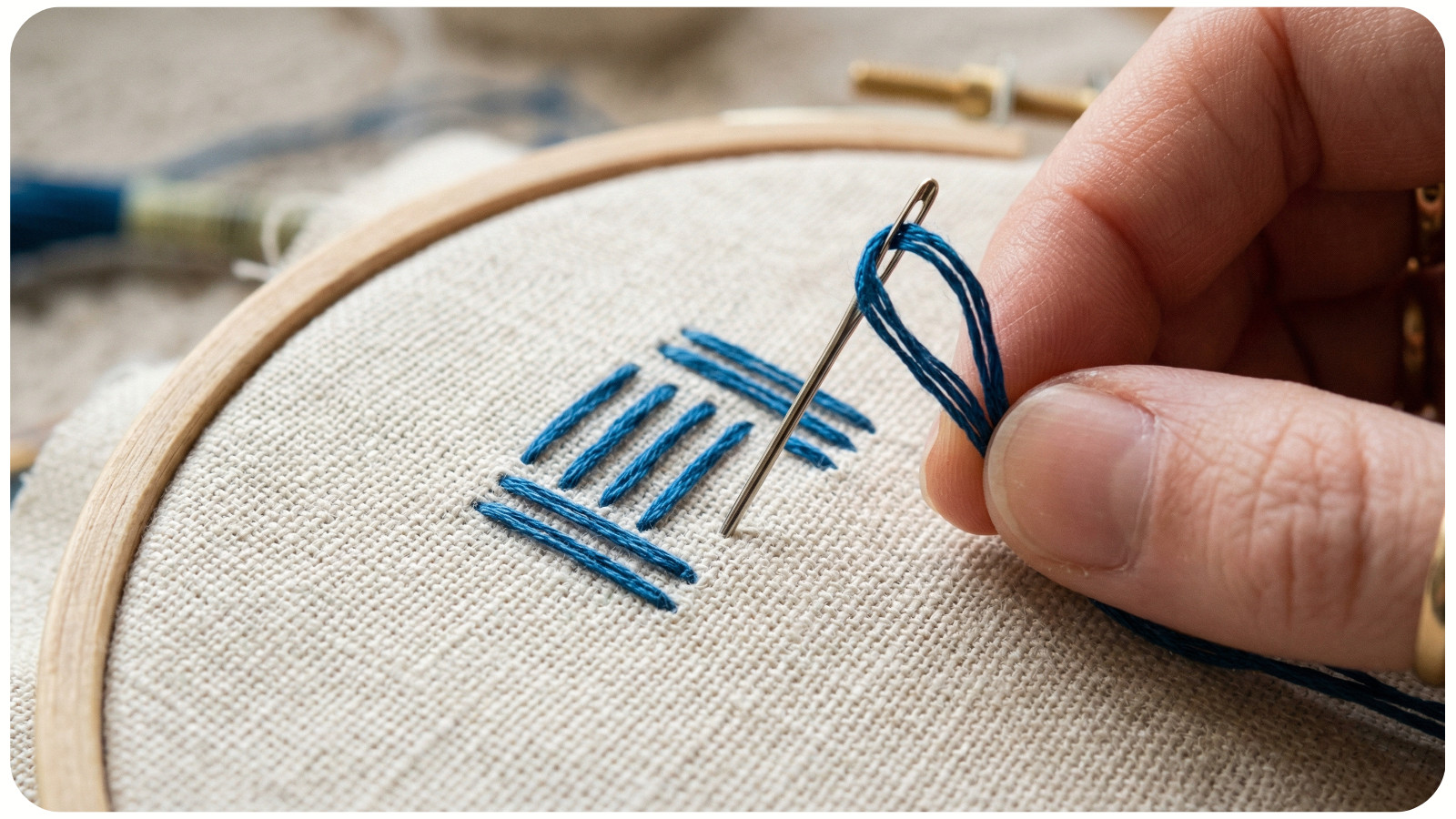
Straight stitch is simply a single stitch made between two points, but its versatility is enormous. It can be used for scattered fills, starbursts, leaves, shading, and structural accents.
What makes straight stitch important is directional control. The angle, length, and density of each stitch determine the texture of the design. A cluster of short straight stitches can suggest fur, grass, or feathering. Longer, radiating stitches can create floral centers or modern abstract forms.
Because it is so simple, it teaches deliberate placement. In modern embroidery, straight stitch is often used creatively for minimalist and Pinterest-worthy compositions.
10. SEED STITCH
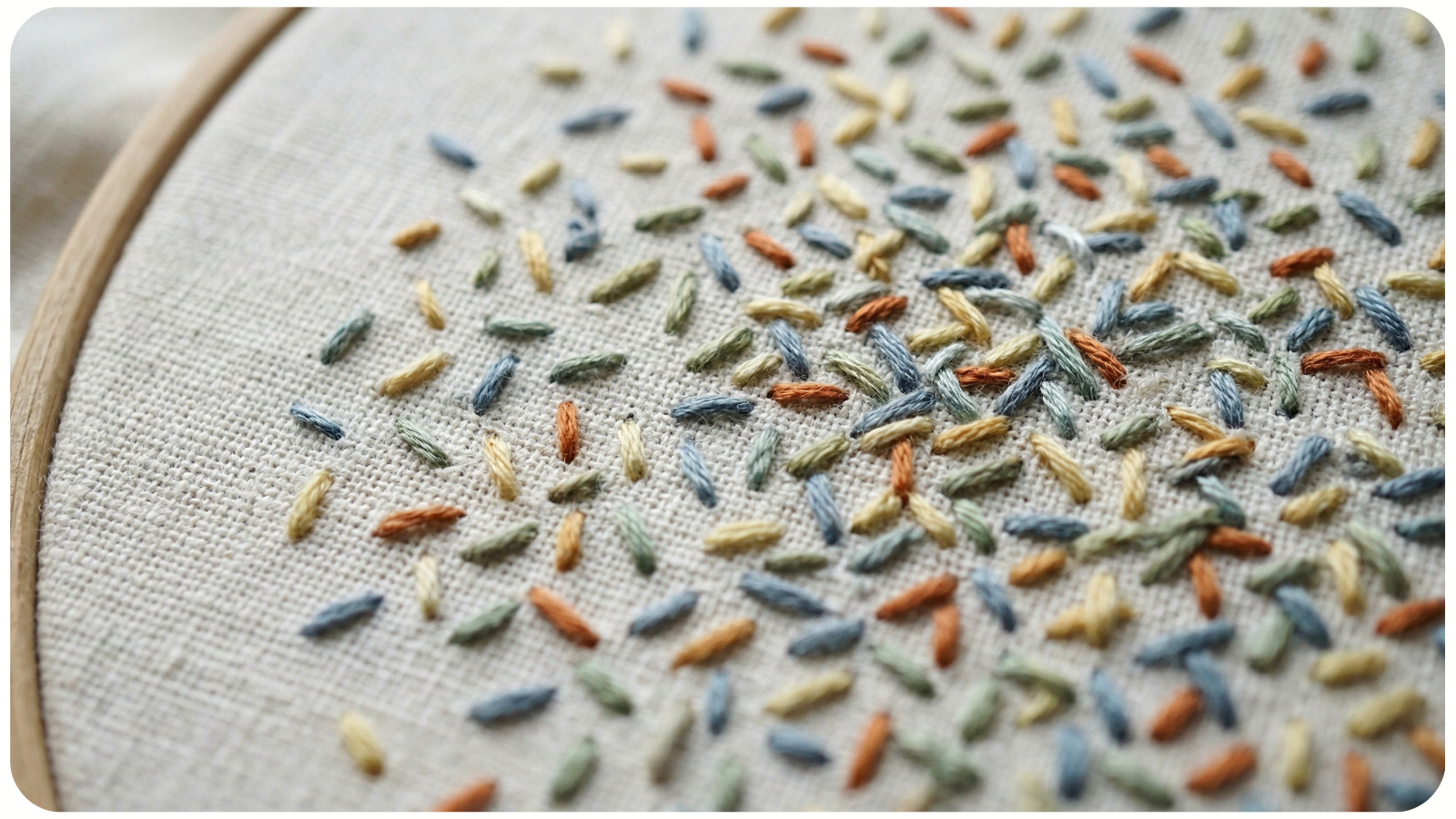
Seed stitch consists of tiny straight stitches scattered randomly across an area. It is ideal for subtle texture, soft filling, and background effects.
Although it looks casual, good seed stitch is actually controlled. The stitches should vary slightly in direction but remain balanced across the space. Too much uniformity makes it stiff; too much randomness makes it look untidy.
This stitch is useful for adding visual depth without heavy coverage. It works well in contemporary embroidery where negative space matters and texture needs to stay light.
PRO-TIP
Before practicing decorative motifs, stitch rows of each basic technique on plain cotton fabric or a sampler. Focus on thread tension, stitch length, and needle entry points. This builds muscle memory faster than jumping straight into a finished design.
For cleaner results, separate your floss strands neatly, avoid excessive twisting, and use a hoop tight enough to keep the fabric drum-like but not overstretched.
CONCLUSION
Learning these 10 stitches first gives you a technically sound foundation for almost any embroidery style. Running stitch and backstitch teach line control. Satin stitch and split stitch build filling accuracy.
Chain stitch, lazy daisy, and French knots introduce texture. Stem stitch, straight stitch, and seed stitch expand your ability to create movement and detail.
Once these stitches feel natural in your hands, you can combine them to create richer, more expressive work with confidence. That is when embroidery becomes both precise and beautifully personal.
For well-designed projects to practice these skills, Awesome Pattern Studio offers inspiring patterns that help beginners develop technique while creating something genuinely beautiful.