


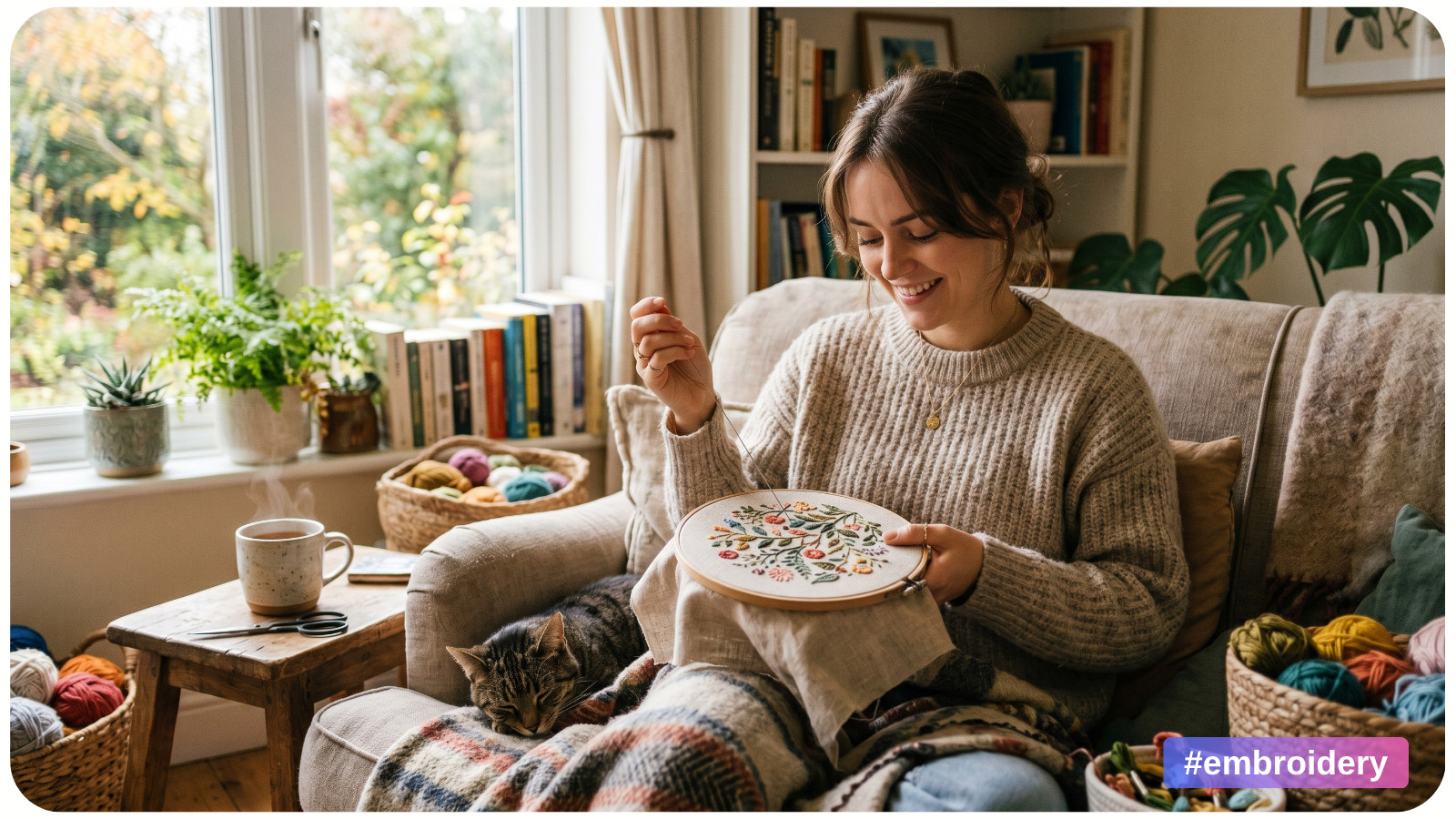
Embroidery is often seen as a slow, meditative craft – and it absolutely can be. But “slow” doesn’t have to mean inefficient or frustrating. With the right techniques, you can significantly improve your stitching speed without sacrificing precision or beauty. In fact, when your hands move more fluidly and your setup supports you, embroidery becomes even more calming.
Below are 10 expert-approved ways to make your embroidery process both faster and more relaxing, with a strong focus on technical accuracy, stitch efficiency, and ergonomic flow.
1. MASTER THE SEWING METHOD (WITHOUT FLIPPING THE HOOP)
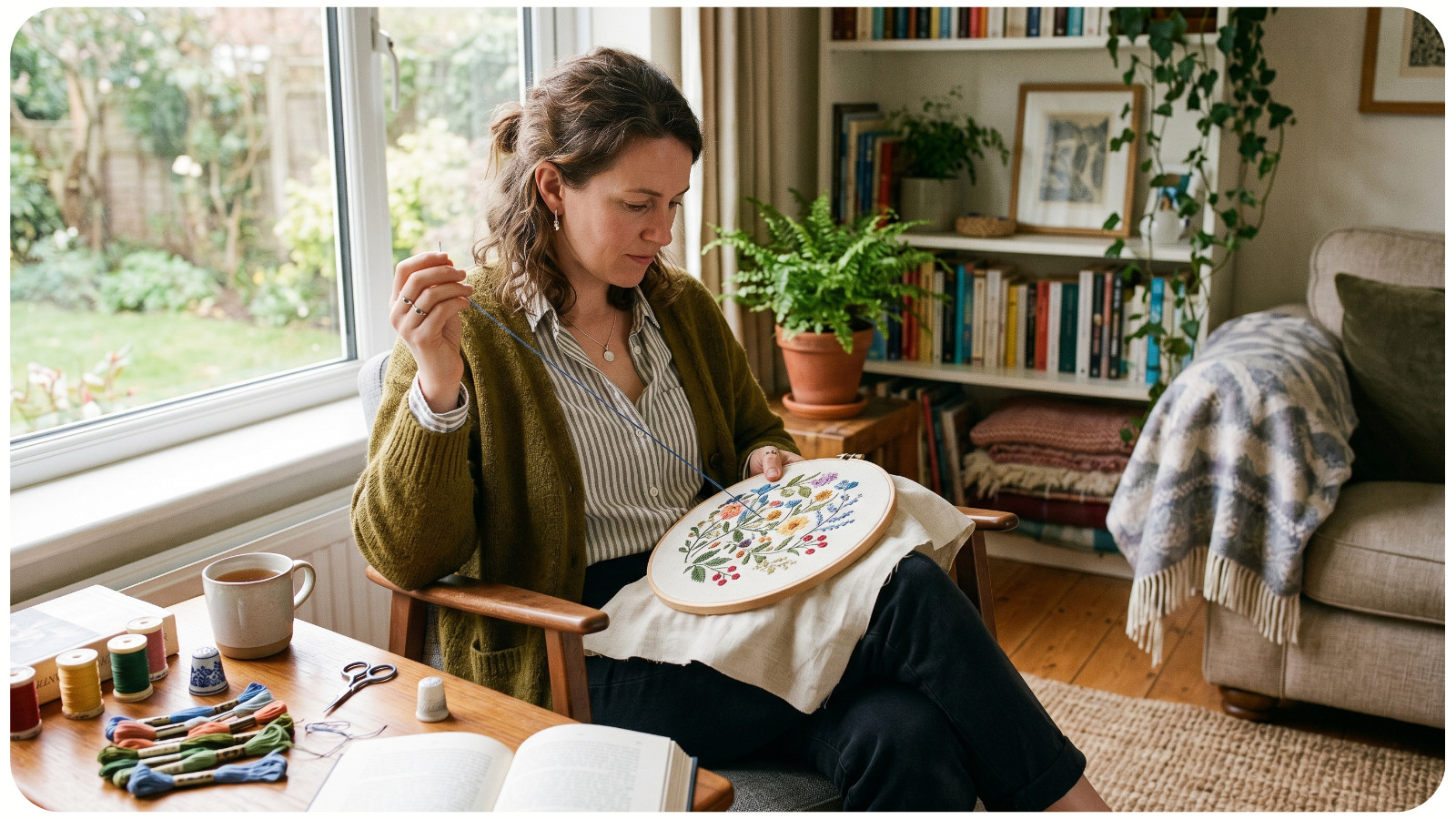
Instead of the traditional stab method (bringing the needle fully up and down), try the sewing method – a continuous motion where the needle weaves in and out of the fabric in one fluid pass.
This technique works best for:
- Running stitch;
- Backstitch;
- Straight stitch;
By minimizing hand movement and avoiding constant hoop flipping, your stitching becomes faster and rhythmically soothing.
2. USE THE RIGHT NEEDLE SIZE FOR YOUR FABRIC
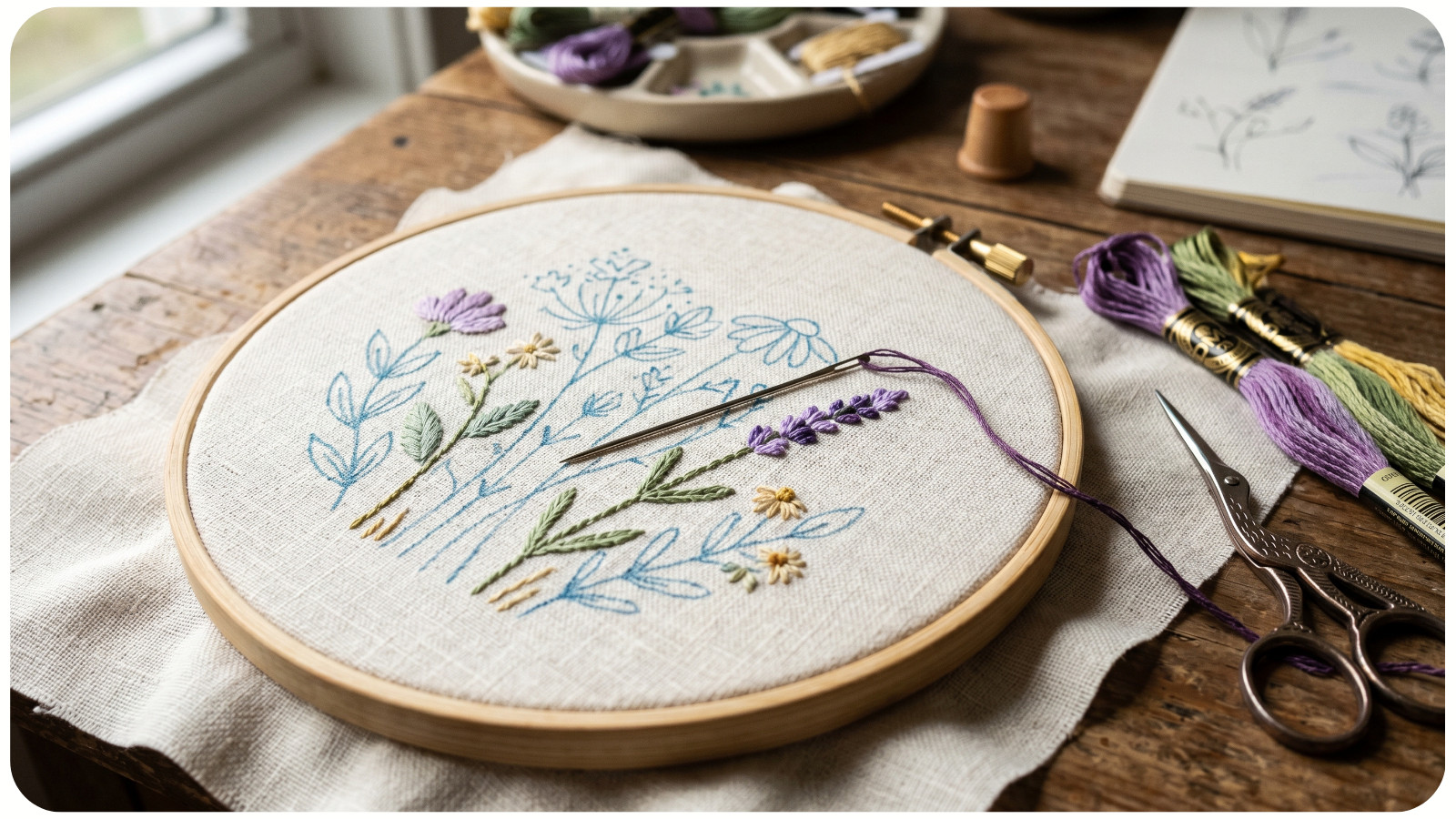
A mismatch between needle and fabric slows you down and strains your hands.
- Fine fabrics → smaller needles (size 9-10);
- Heavier fabrics → larger needles (size 5-7);
A properly sized needle glides through fabric effortlessly, reducing resistance and improving stitch consistency.
3. OPTIMIZE THREAD LENGTH (NOT TOO LONG!)
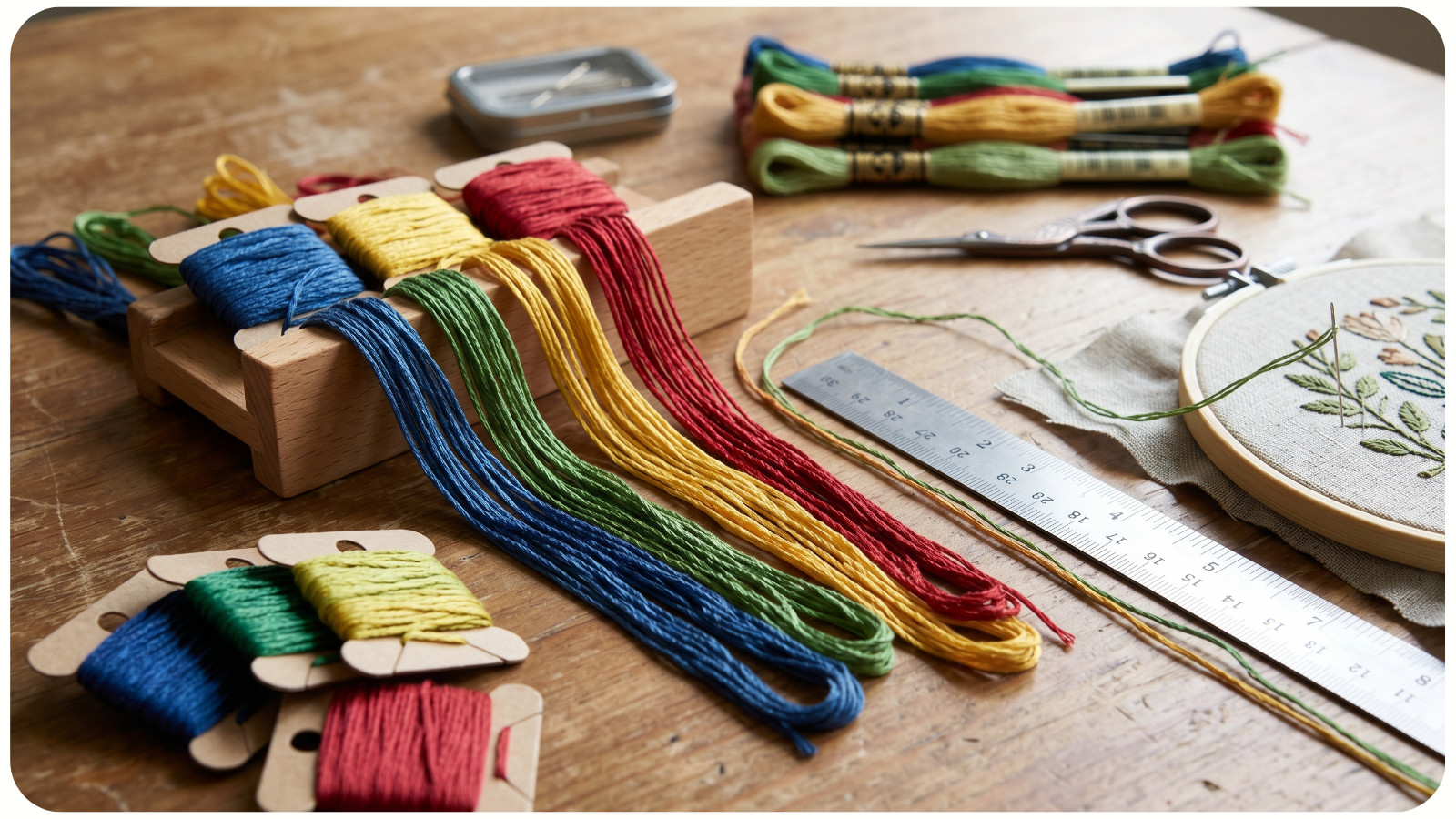
Long threads may seem efficient, but they tangle easily and wear down faster.
Ideal length: about 16-18 inches (40-45 cm)
This balance minimizes:
- Knotting;
- Friction damage;
- Time spent rethreading;
Result: smoother stitching and fewer interruptions.
4. CONDITION YOUR THREAD FOR SMOOTH FLOW
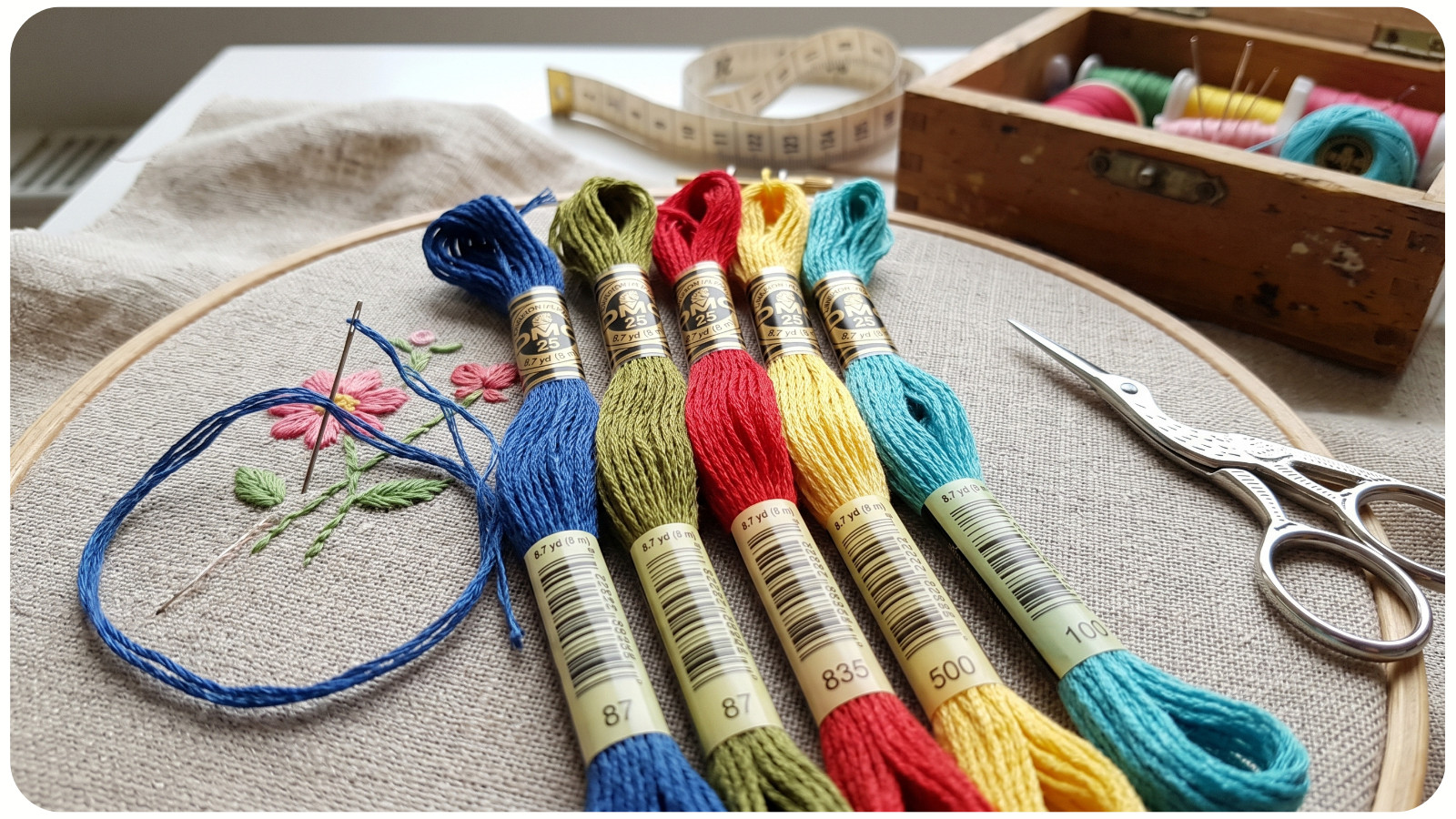
Thread conditioners (like beeswax or silicone-based products) reduce friction and static.
Benefits:
- Less tangling;
- Cleaner satin stitches;
- More consistent tension;
When stitching dense fills like satin stitch, conditioned thread glides like silk across the fabric.
5. USE A HOOP OR FRAME WITH PROPER TENSION
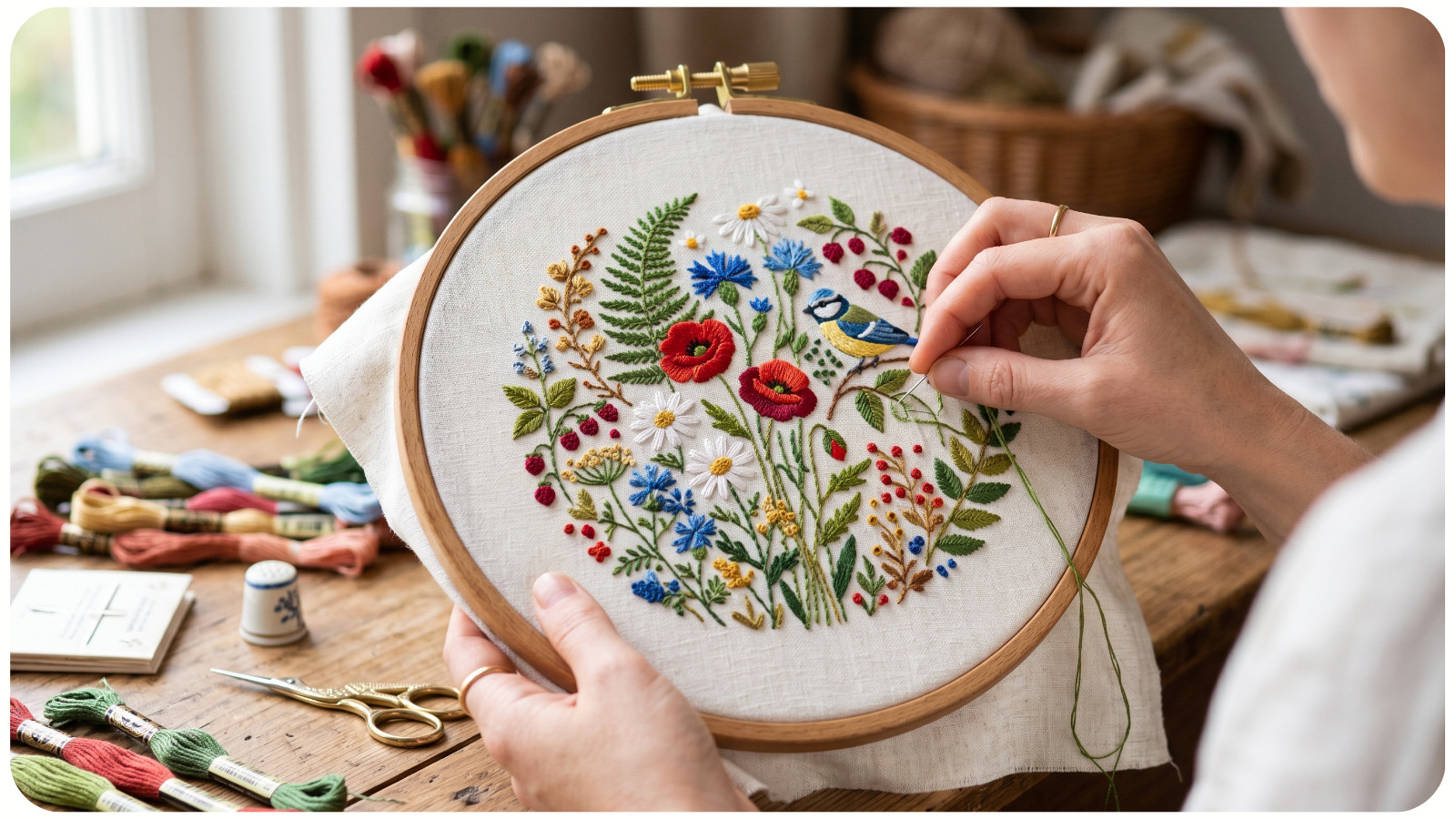
Loose fabric is one of the biggest time-wasters.
Your fabric should feel like a drum:
- Tight enough to prevent puckering;
- Stable enough for precise needle placement;
This is especially critical for:
- French knots;
- Satin stitch;
- Long-and-short stitch;
Consistent tension = fewer mistakes and faster progress.
6. PRE-PLAN YOUR STITCH DIRECTION
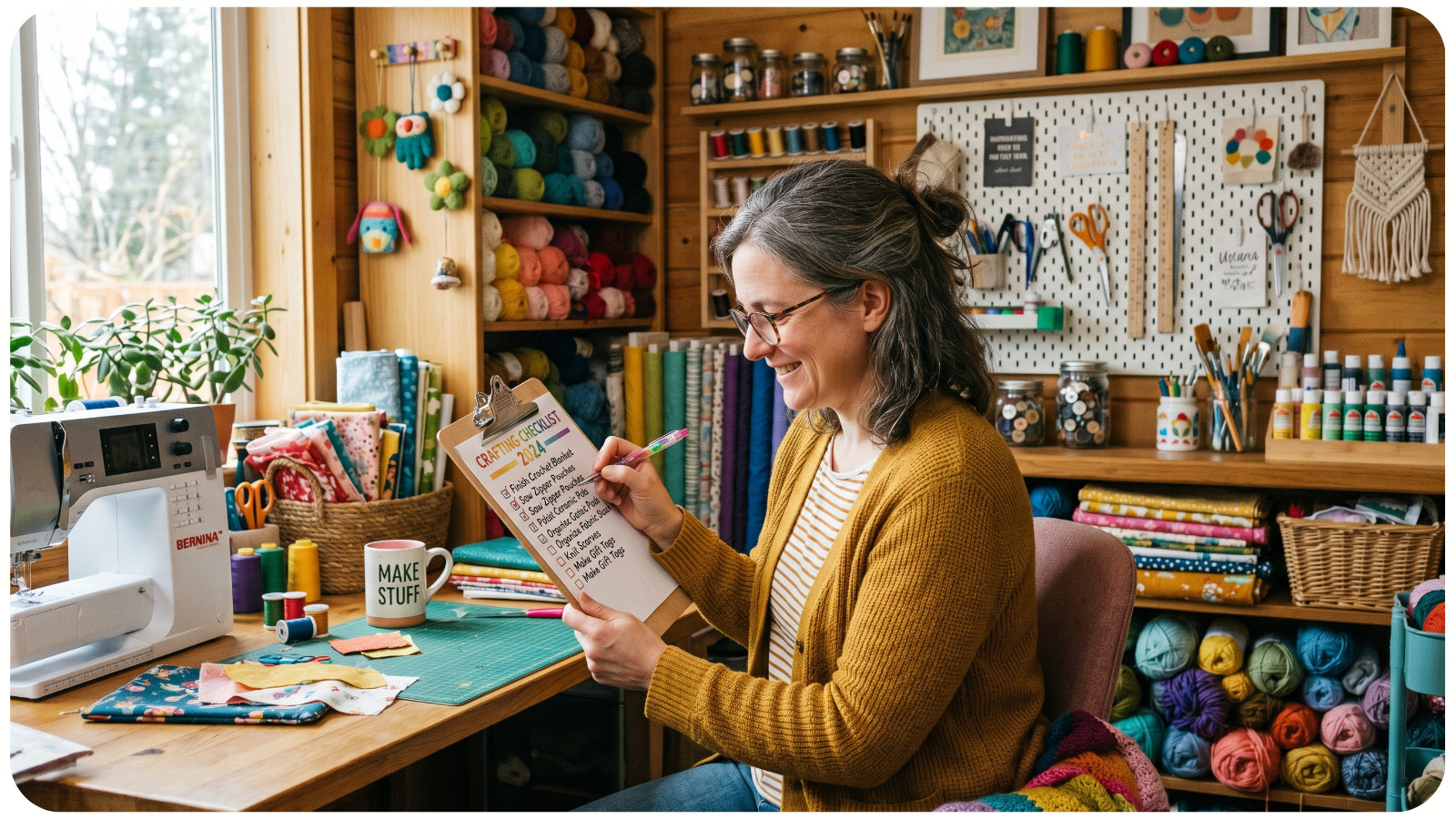
Before you start stitching, visualize the flow of your design.
Ask yourself:
- Where will the stitch begin and end?
- Can I minimize thread jumps?
- How will the texture flow?
For example:
- Satin stitch → follow the shape’s contour;
- Long-and-short stitch → build directional shading layers;
Planning reduces rework and creates a more natural, painterly effect.
7. USE A STAND FOR TWO-HANDED STITCHING
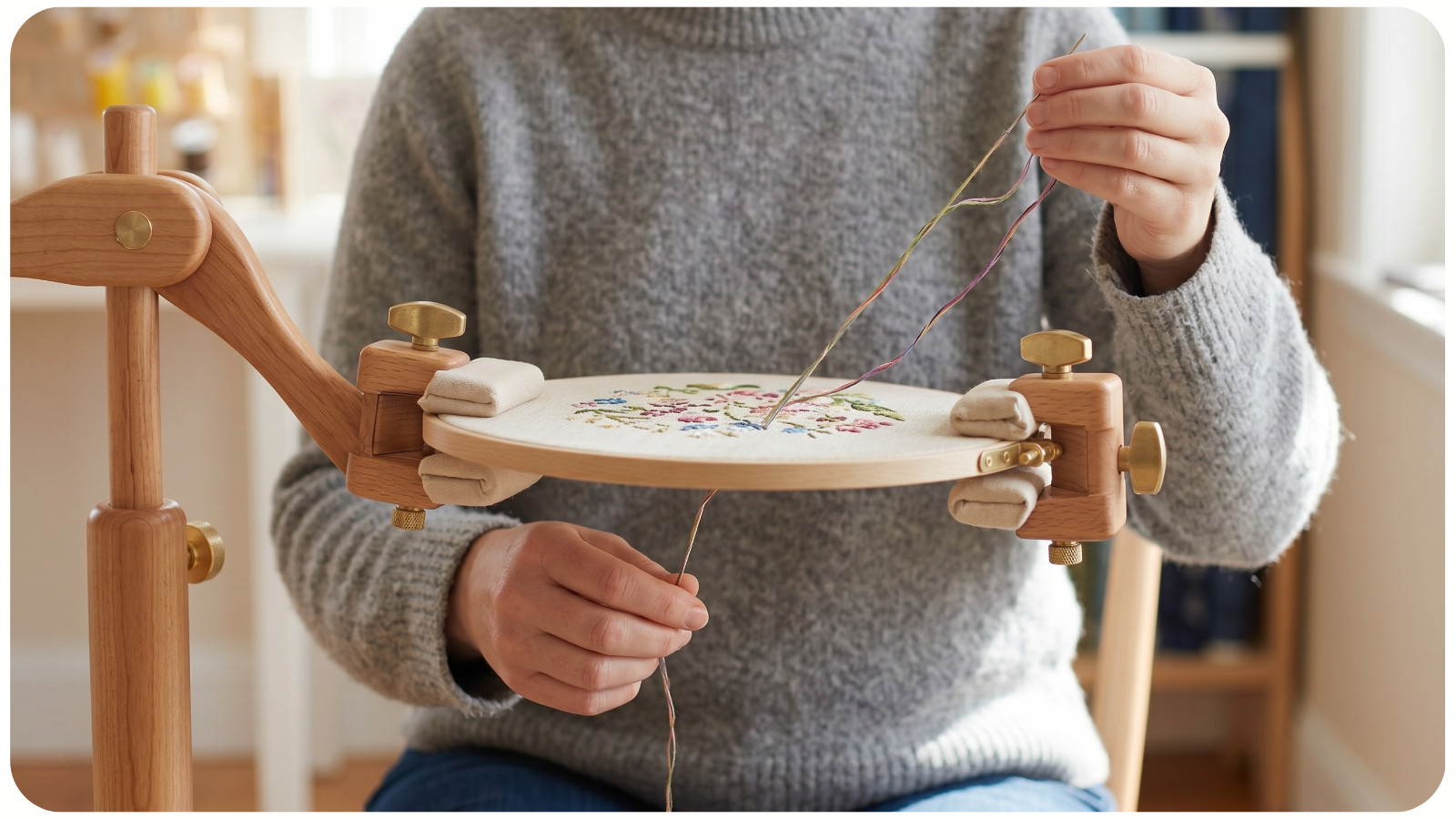
A hoop stand or frame stand allows you to use both hands:
- One above the fabric;
- One below;
This dramatically increases speed and reduces fatigue. Your motion becomes continuous and almost automatic – perfect for large projects.
8. SIMPLIFY COLOR CHANGES WITH SMART ORGANIZATION
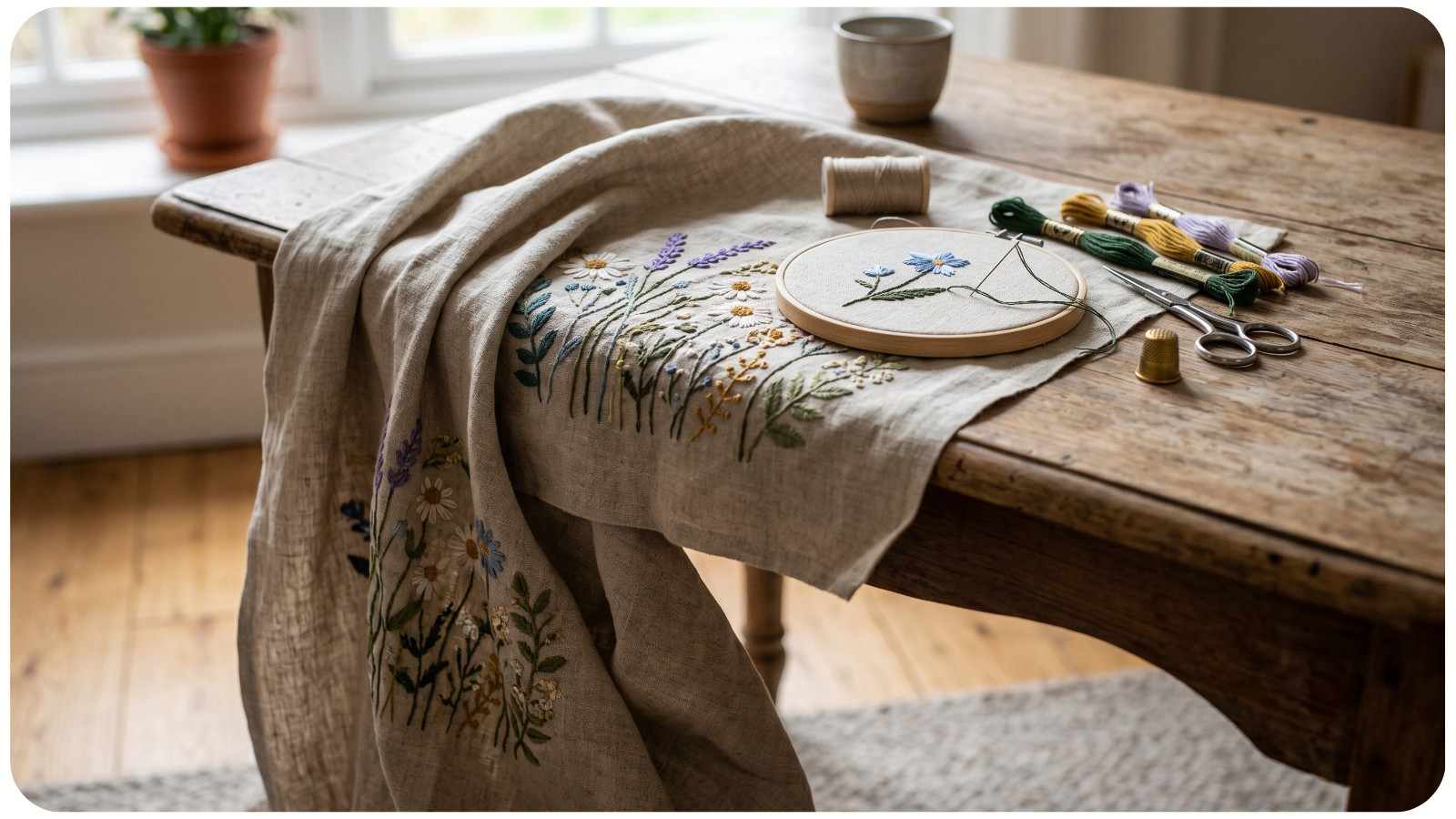
Switching threads can break your rhythm.
Speed it up by:
- Pre-cutting commonly used colors;
- Using a thread organizer or bobbins;
- Grouping similar shades together;
This is especially helpful for color-heavy designs from Awesome Pattern Studio, where smooth transitions matter.
9. IMPROVE NEEDLE CONTROL WITH SMALLER MOTIONS
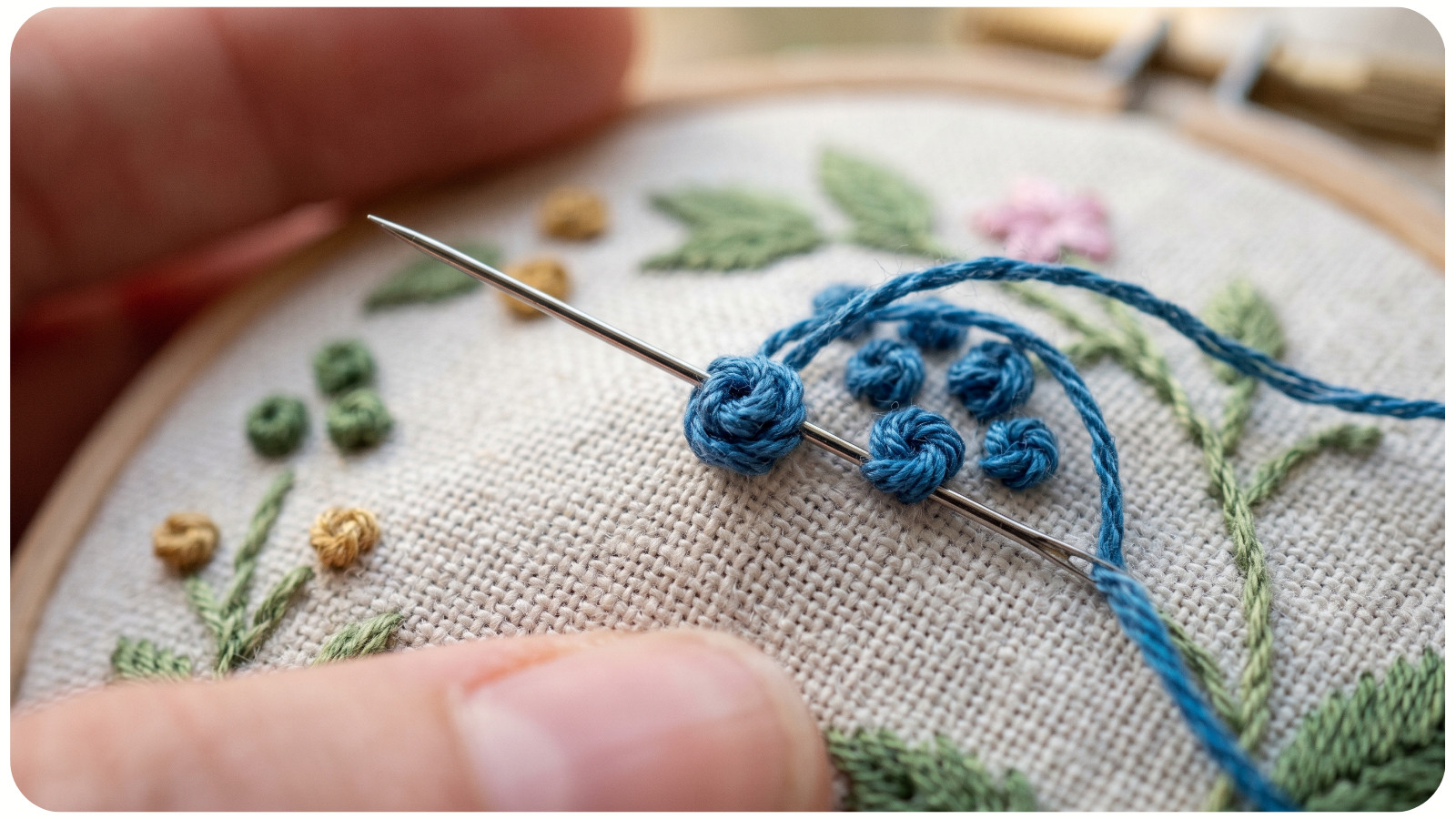
Instead of large, exaggerated hand movements, focus on micro-movements:
- Keep your fingers close to the fabric;
- Use wrist motion instead of full arm movement;
This improves:
- Precision;
- Speed;
- Muscle endurance;
It also makes stitching feel more controlled and meditative.
10. CHOOSE THE RIGHT STITCHES FOR EFFICIENCY
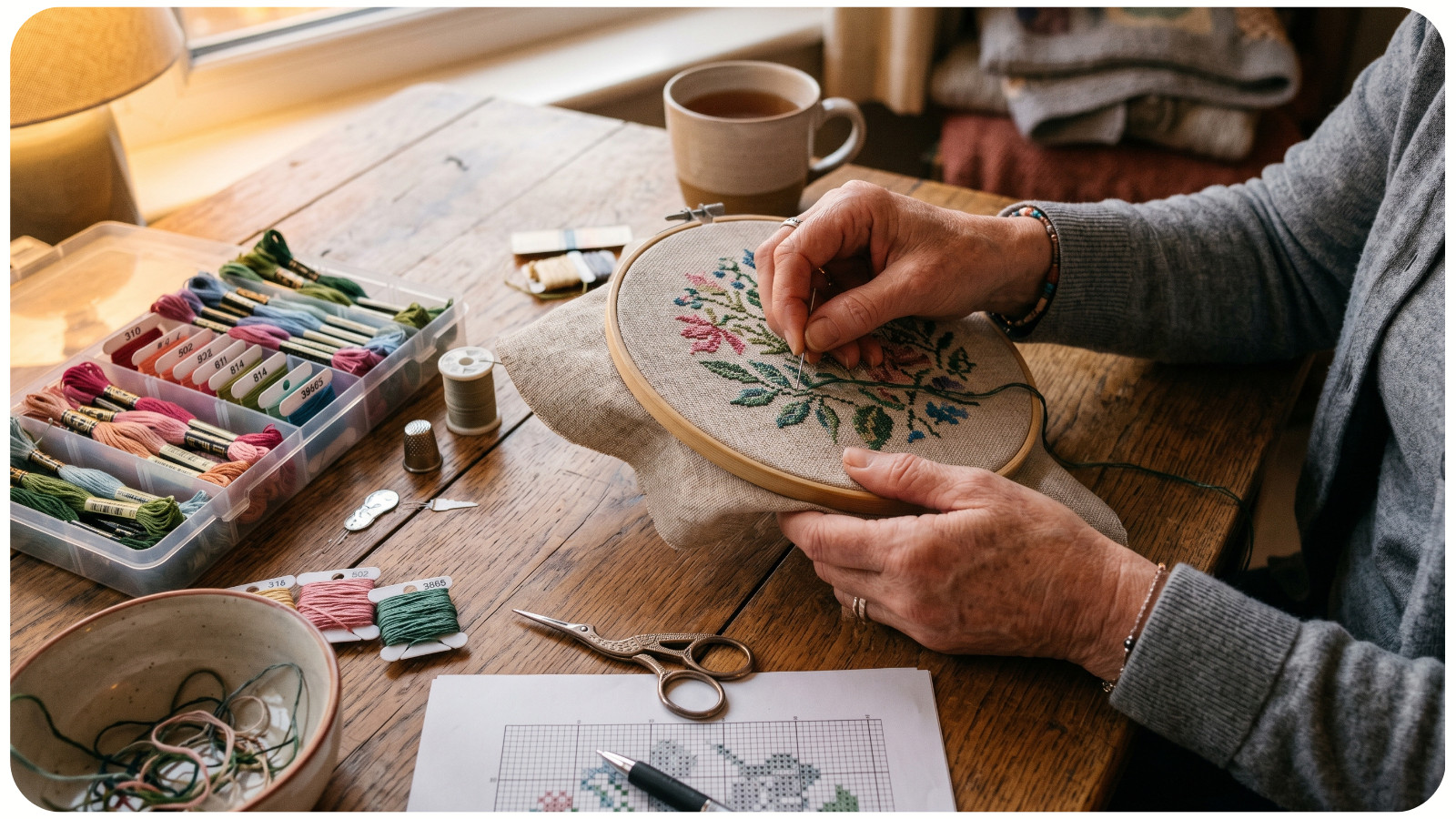
Some stitches naturally work faster than others.
Faster stitches:
- Running stitch;
- Stem stitch;
- Split stitch;
More time-intensive:
- French knots;
- Dense satin stitch;
When possible, substitute or combine stitches creatively to maintain texture while saving time.
PRO TIP: BUILD A “FLOW STATE” STITCHING ENVIRONMENT
Your surroundings matter more than you think.
To enter a relaxed, productive rhythm:
- Use warm, focused lighting
- Sit in a comfortable, supported position
- Play calming music or ambient sound
When your environment supports you, your stitching becomes almost automatic – like a gentle, repetitive meditation.
CONCLUSION
Embroidery doesn’t have to be slow to be relaxing. By refining your technique – how you hold your needle, manage your thread, and plan your stitches – you create a workflow that’s both efficient and deeply satisfying.
Whether you’re working on a delicate floral hoop or a bold modern design from Awesome Pattern Studio, these techniques will help you stitch smarter, not harder. And once your hands find that rhythm? That’s where the real magic begins.