


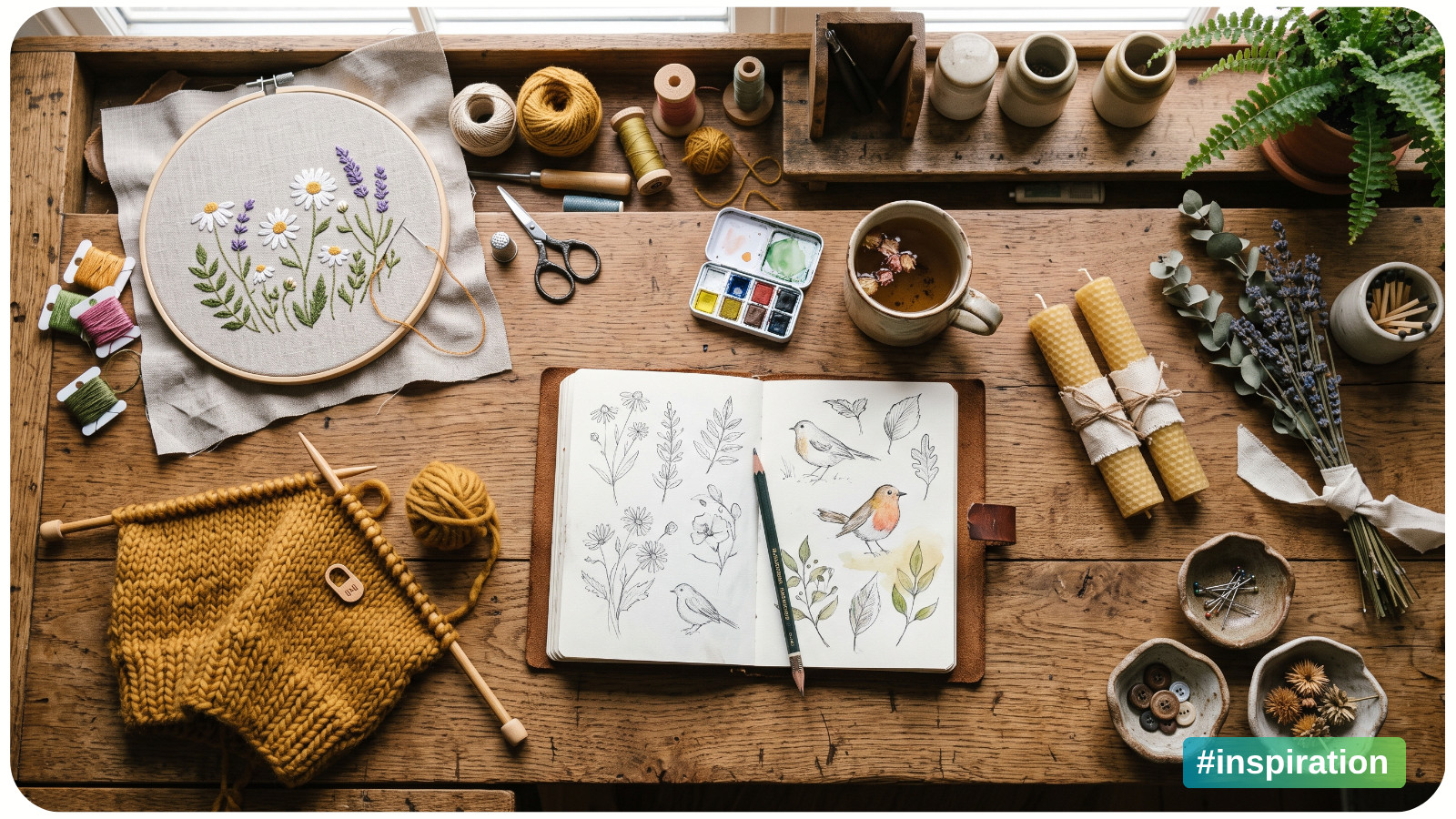
Some days, you do not need another productivity hack. You need a quiet activity that helps your shoulders relax, your thoughts settle, and time move a little more gently.
That is where slow crafting comes in.
Slow crafts are creative activities designed to be enjoyed without rushing toward a perfect result. They often involve repetitive motions, natural materials, simple tools, and projects that can unfold over several evenings. Unlike fast DIY projects built around instant transformations, slow crafts invite you to notice texture, color, rhythm, and small details.
Whether you are searching for a calming hobby after work, a screen-free weekend activity, or a soothing creative ritual, these slow craft ideas can help you reconnect with the pleasure of making something by hand.
CHOOSE A SLOW CRAFT BASED ON YOUR MOOD
Before you begin, consider what kind of comfort you need. Choose knitting, embroidery, weaving, or hand quilting when repetitive movement feels soothing. Try watercolor, nature journaling, or pressed flowers when you want gentle creative freedom. Reach for clay, wood carving, or basket weaving when you want to work with tactile materials.
There is no need to complete anything in one sitting. The goal is simply to begin.
1. PRACTICE SIMPLE HAND EMBROIDERY
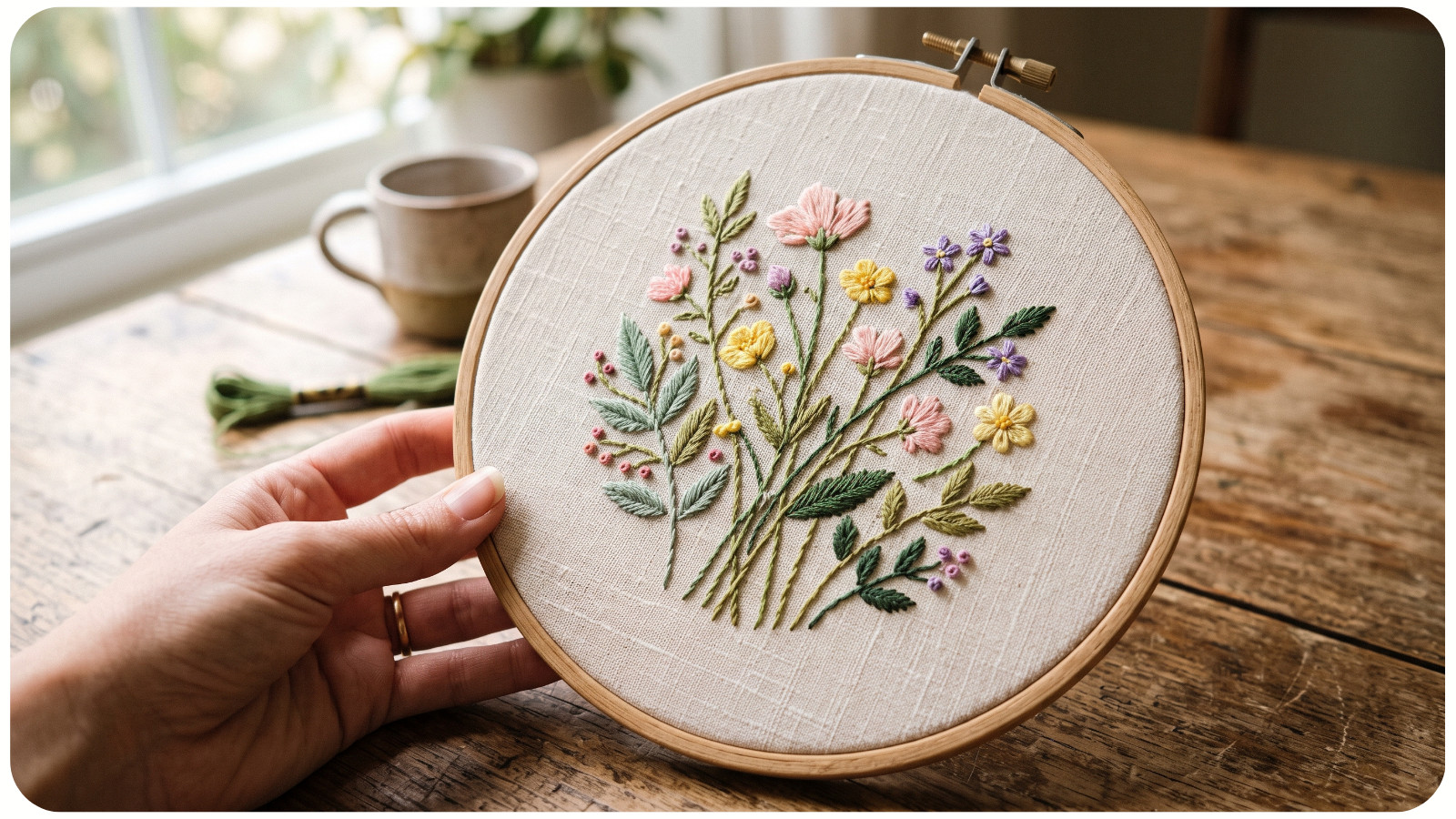
Hand embroidery is one of the most approachable slow crafts because you can begin with only a needle, thread, fabric, and embroidery hoop.
The gentle rhythm of pulling thread through fabric can feel meditative, especially when you work with uncomplicated stitches such as the running stitch, backstitch, or French knot. Start with a small floral design, a meaningful word, or a collection of tiny stars.
You do not need to follow an elaborate pattern. Even rows of imperfect stitches can become a beautiful decorative piece.
Try this: Embroider a small botanical design onto a linen napkin, tote bag, or fabric bookmark.
Best for: Quiet evenings, travel projects, and beginners who enjoy detailed work.
2. KNIT A SOFT SCARF ONE ROW AT A TIME
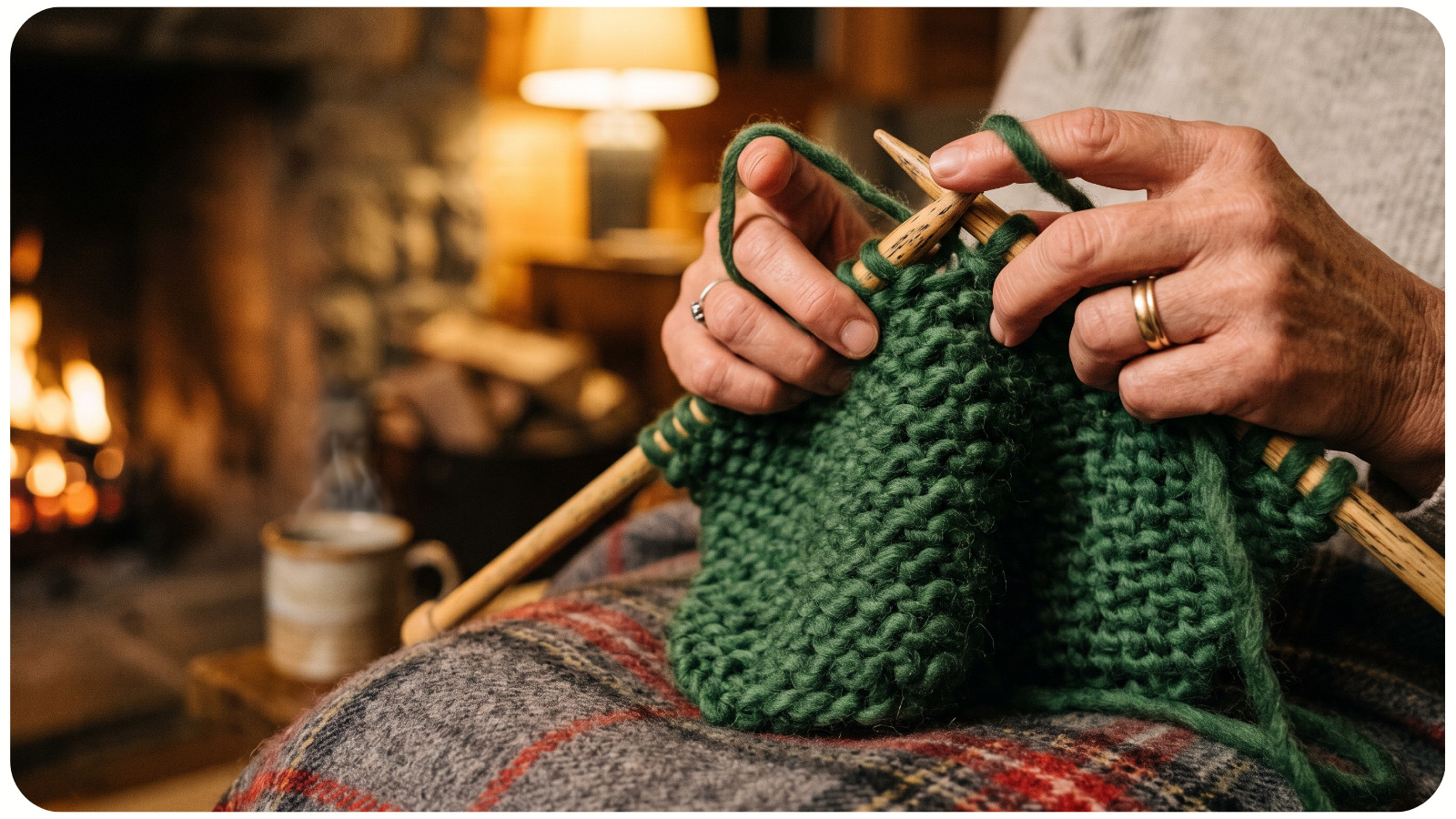
Knitting naturally encourages a slower pace. Each row builds on the one before it, creating visible progress without demanding speed.
A simple scarf is an ideal beginner project because you can practice the same stitch repeatedly. Choose a soft yarn in a calming neutral, muted blue, forest green, or warm oatmeal shade. Keep the project beside your favorite chair so you can add a few rows whenever you need a restful pause.
The finished scarf is rewarding, but the real pleasure comes from the steady click of the needles and the comforting feel of yarn in your hands.
Try this: Use a basic garter stitch and chunky yarn for a forgiving first project.
Best for: Cozy fall evenings, winter weekends, and anyone who finds repetitive motion calming.
3. CREATE A NATURE JOURNAL
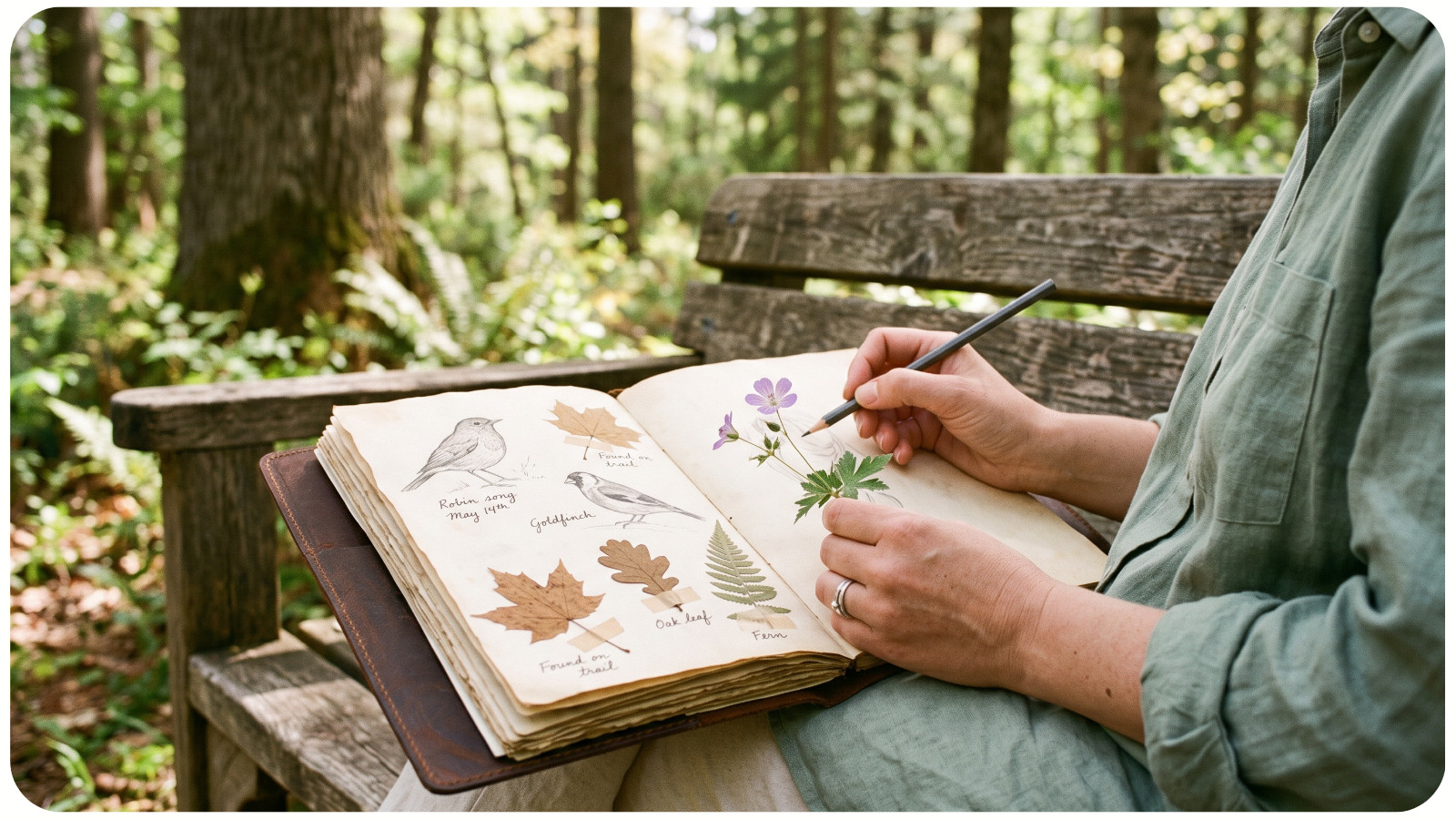
A nature journal combines observation, sketching, painting, and writing without requiring advanced artistic skills.
Take your journal outside and record what you notice: the curve of a leaf, the color of the sky, the shape of a seedpod, or the sound of birds nearby. You can include watercolor washes, pencil drawings, short notes, pressed plants, or seasonal color palettes.
The purpose is not to create a scientifically accurate record. It is to slow down long enough to notice your surroundings.
Try this: Document one small natural detail each day for a week.
Best for: Garden lovers, mindful walks, and anyone craving more time outdoors.
4. MAKE A HAND-STITCHED FABRIC COLLAGE
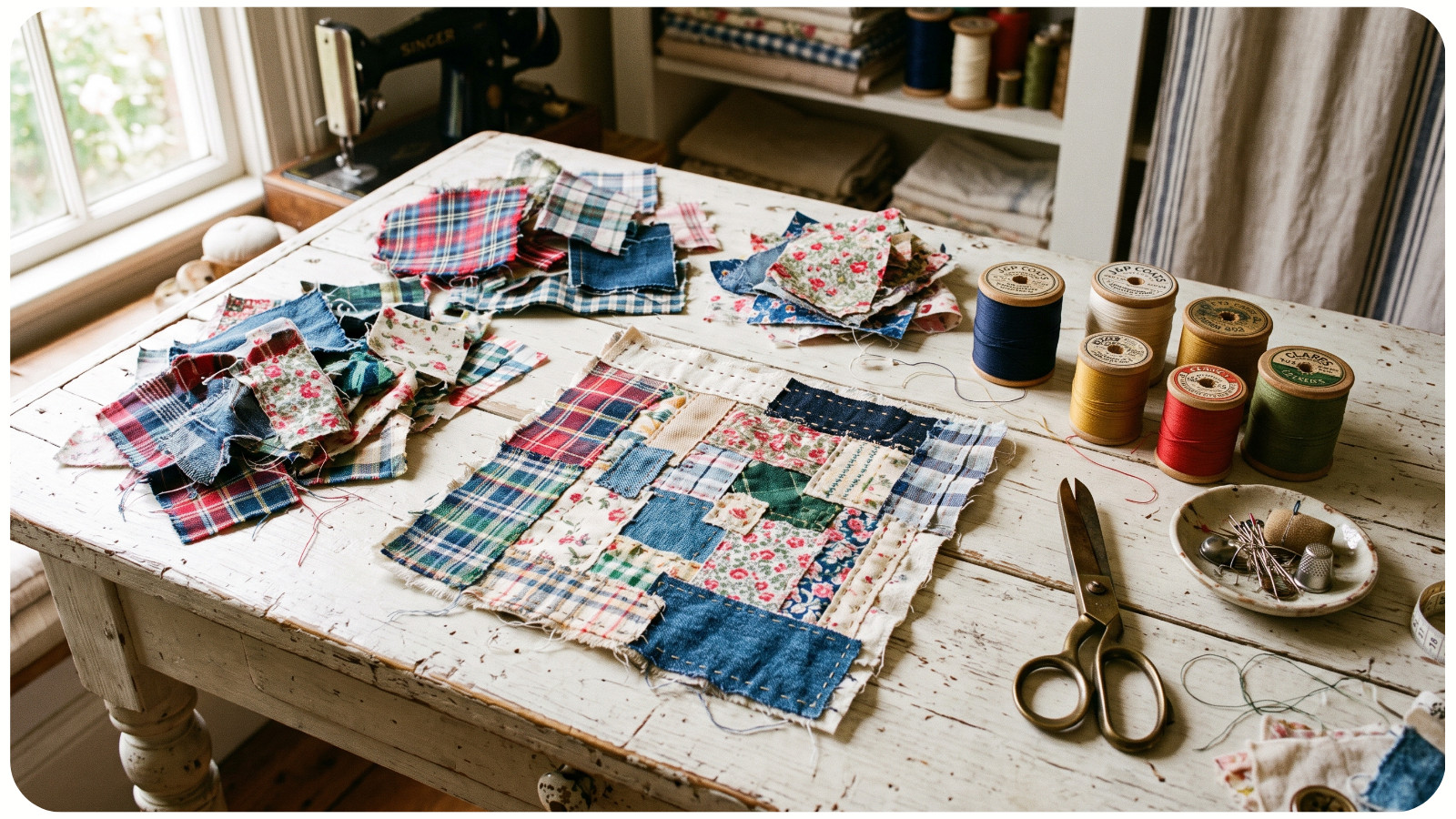
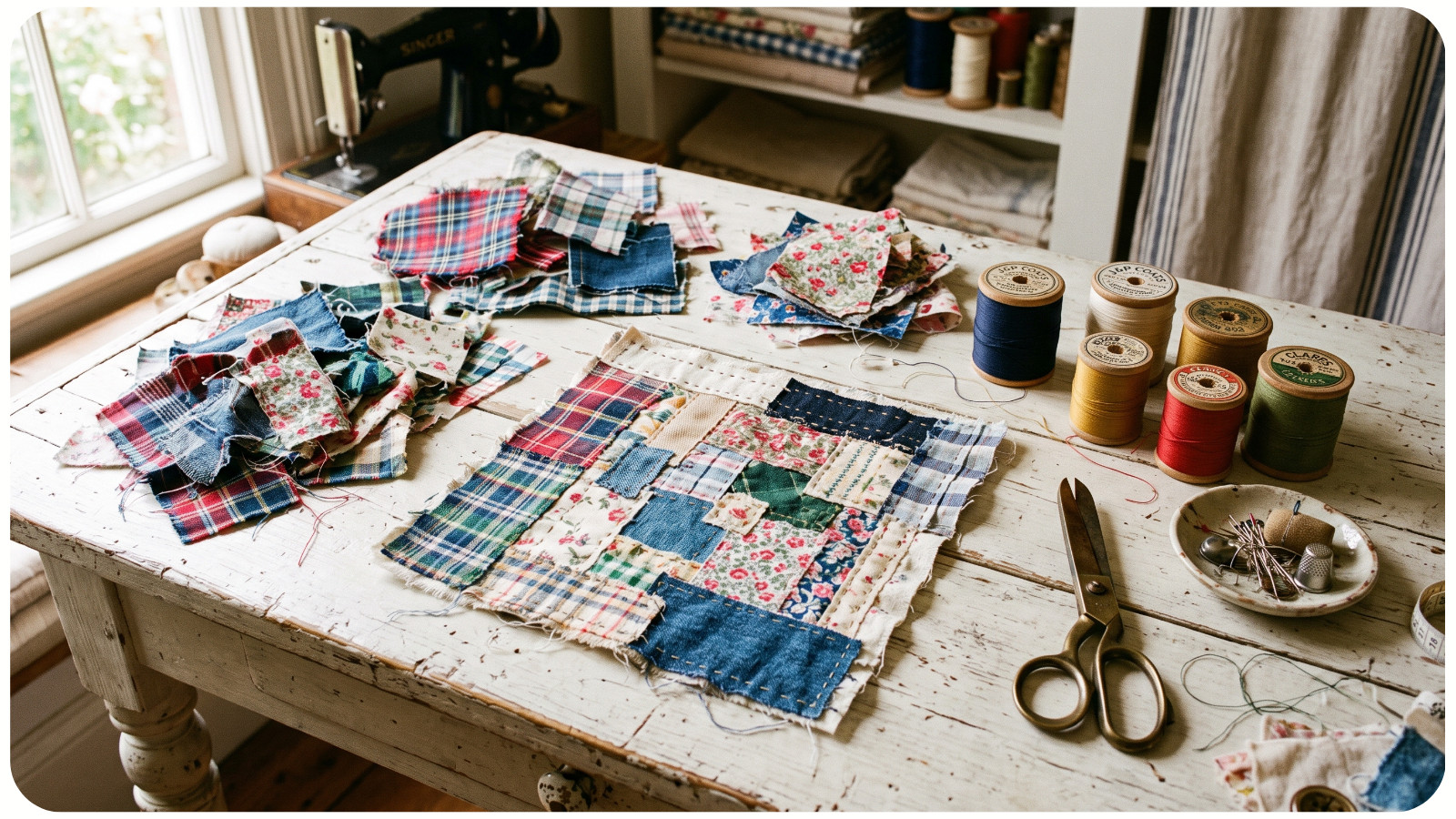
Fabric collage is a low-pressure way to combine color, texture, and hand stitching.
Gather small fabric scraps from old clothing, sewing projects, vintage linens, or worn tea towels. Arrange them on a larger piece of fabric, then secure each layer with simple visible stitches.
There are no strict rules. Frayed edges, uneven shapes, and mismatched patterns can add warmth and personality. The project can remain abstract or gradually become a landscape, flower garden, house, or memory-inspired design.
Try this: Build a small collage using fabrics in one color family.
Best for: Using cherished scraps, reducing textile waste, and crafting without a fixed pattern.
5. PAINT LOOSE WATERCOLOR FLORALS
Watercolor painting can be especially relaxing when you release the need to control every brushstroke.
Instead of trying to paint realistic flowers, experiment with soft shapes, watery layers, and loose botanical marks. Let colors blend naturally on the page. Leave imperfect edges and unexpected blooms of pigment exactly where they appear.
A small travel watercolor set, a brush, water, and paper are enough to begin.
Try this: Paint a page of simple leaves using different shades of green, then add tiny flowers once the paper dries.
Best for: Creative play, color lovers, and people who want an art practice without complicated supplies.
6. PRESS FLOWERS FOR FUTURE PROJECTS
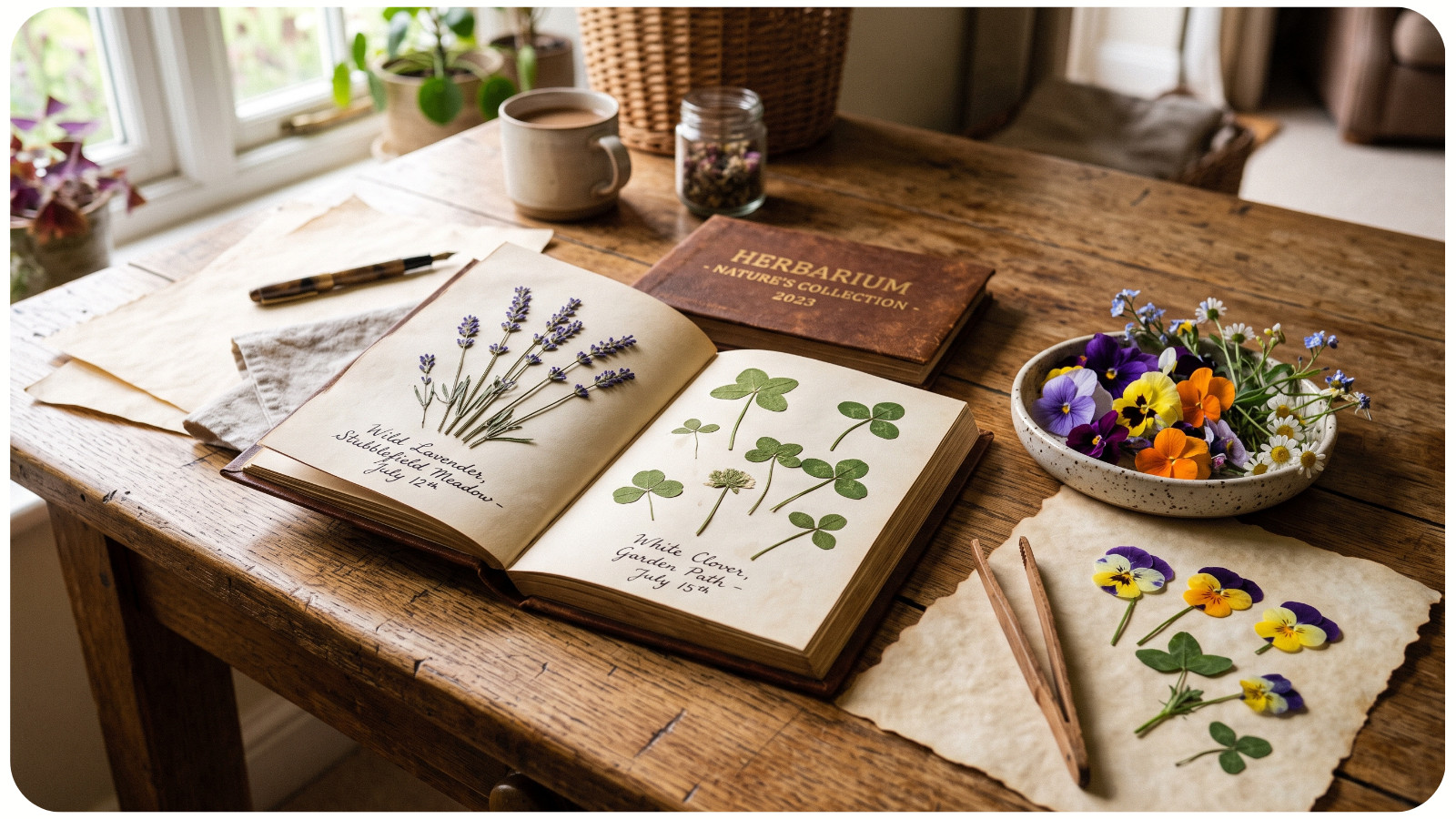
Flower pressing turns an ordinary walk or garden visit into a gentle creative ritual.
Collect small blooms, leaves, ferns, and delicate stems. Place them between sheets of absorbent paper inside a heavy book, then allow them to dry for several weeks. Opening the book later feels like discovering a tiny preserved season.
Pressed flowers can be used in handmade cards, framed botanical art, bookmarks, gift tags, and journals.
Only collect plants from places where gathering is permitted, and avoid picking rare or protected species.
Try this: Press pansies, clover, ferns, or small wildflowers with naturally flat shapes.
Best for: Spring and summer crafting, nature keepsakes, and patient makers.
7. SHAPE AIR-DRY CLAY BY HAND
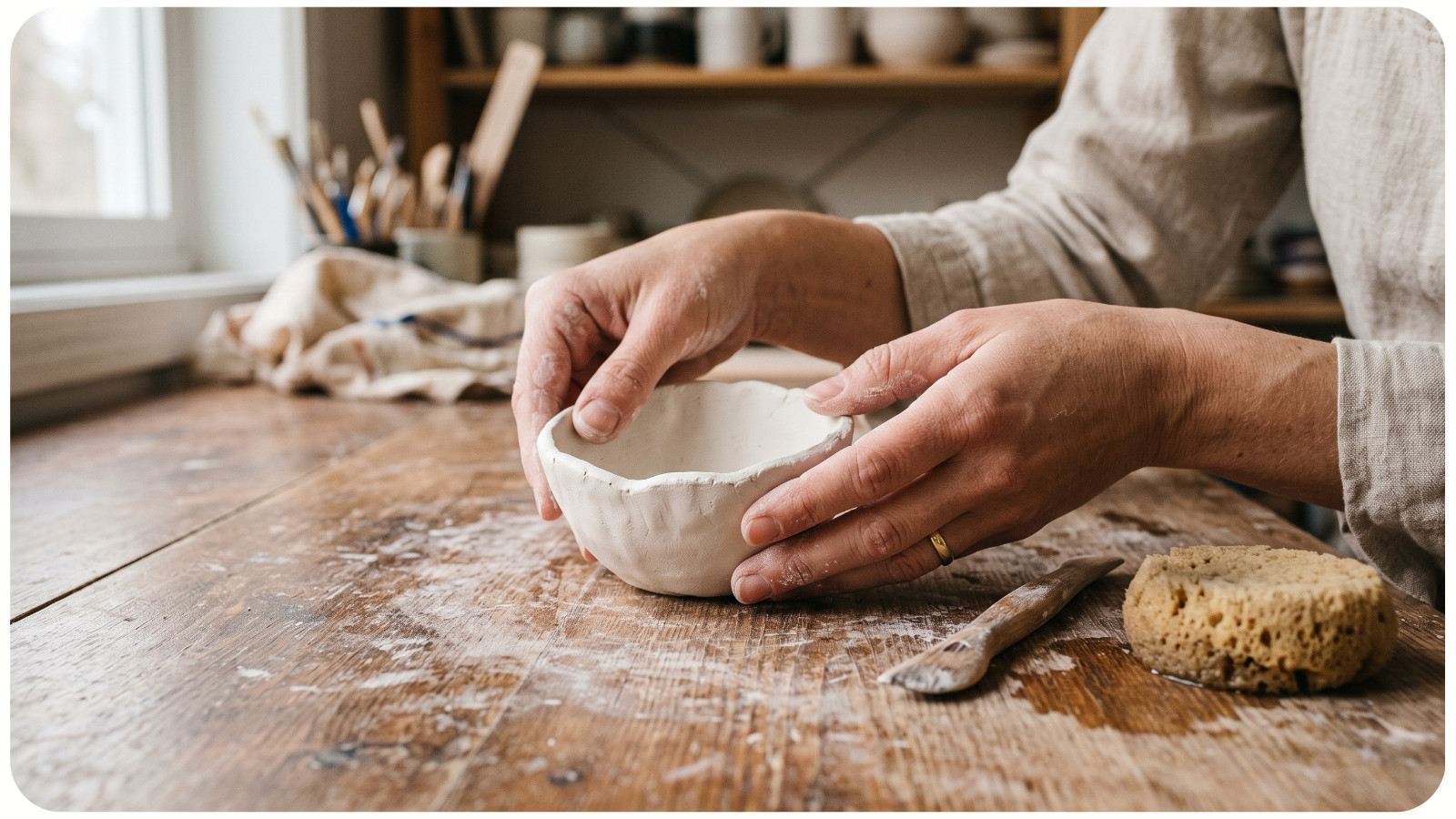
Air-dry clay offers the grounding experience of working with your hands without requiring a kiln.
Begin with a small amount of clay and create a pinch bowl, incense holder, trinket dish, ornament, or set of beads. Notice the temperature and texture of the clay as you press, smooth, and shape it.
Handmade clay pieces do not need to be perfectly symmetrical. Small fingerprints and organic edges often make them feel more personal.
Once dry, you can leave the clay natural or add paint in earthy, understated colors.
Try this: Make a shallow dish for rings, paper clips, or tiny treasures.
Best for: Tactile relaxation, beginner pottery projects, and screen-free afternoons.
8. WEAVE A SMALL WALL HANGING
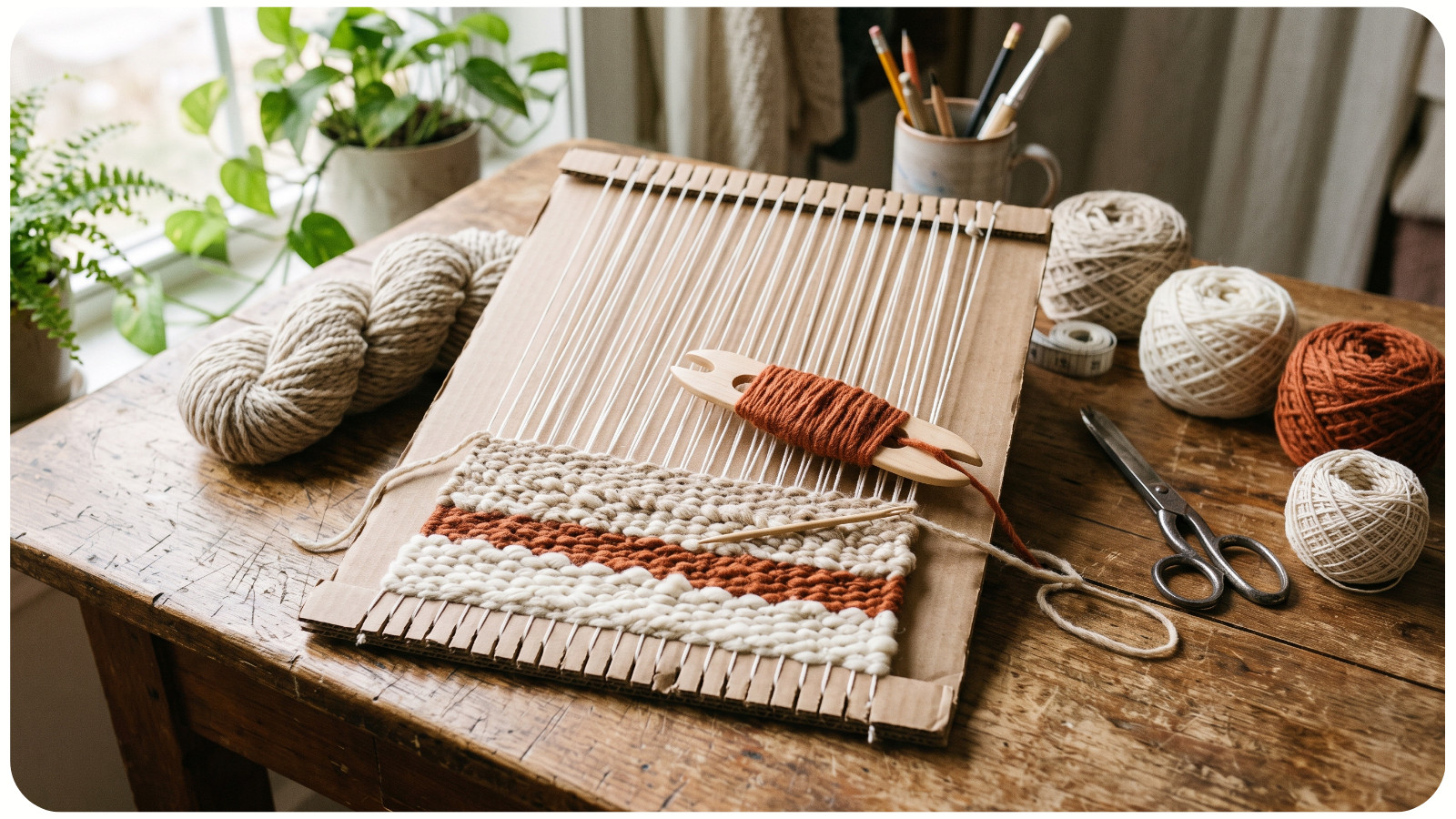
Weaving is a peaceful craft built around simple, repeated movements.
You can purchase a small frame loom or create a basic loom from sturdy cardboard. Use yarn, ribbon, fabric strips, or natural fibers to build rows of color and texture. There is no need to plan the entire design in advance.
Allow the pattern to evolve as you work. A few quiet rows each evening can eventually become a textured wall hanging with a handmade, collected feel.
Try this: Combine three neutral yarns with one accent color for a modern design.
Best for: Texture lovers, leftover yarn, and relaxed home decor projects.
9. SEW A PATCHWORK PROJECT BY HAND
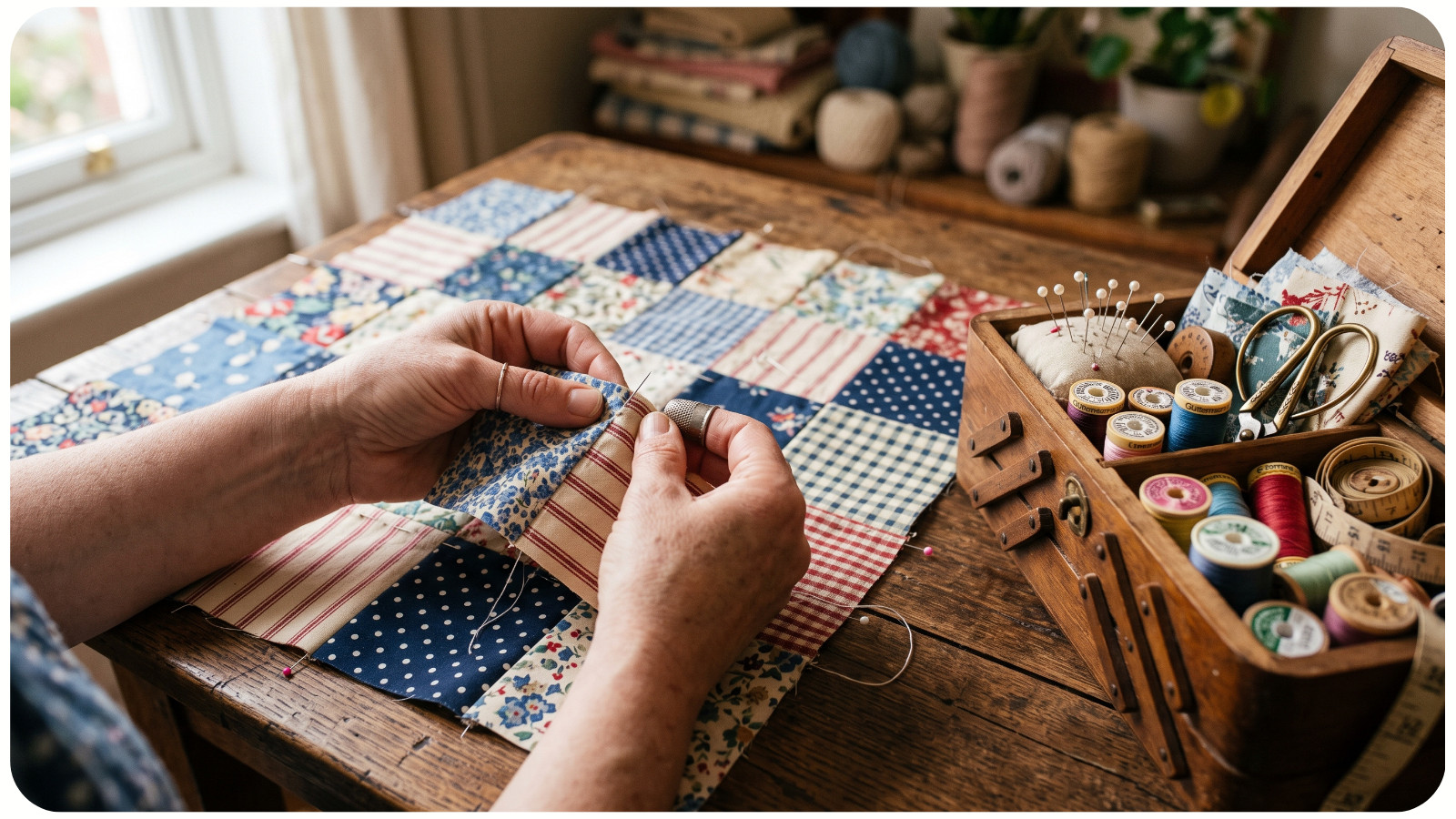
Hand-sewn patchwork is slower than machine quilting, but that is part of its charm.
Cut fabric into simple squares, rectangles, diamonds, or hexagons, then stitch the pieces together gradually. You might create a pillow cover, table runner, small quilt, coaster set, or fabric pouch.
Patchwork is also a meaningful way to preserve favorite textiles. A worn shirt, baby outfit, vintage pillowcase, or piece of leftover fabric can become part of something new.
Try this: Begin with nine fabric squares and turn them into a small decorative panel.
Best for: Memory projects, scrap fabric, and crafters who enjoy work that grows over time.
10. CARVE A SIMPLE WOODEN SPOON
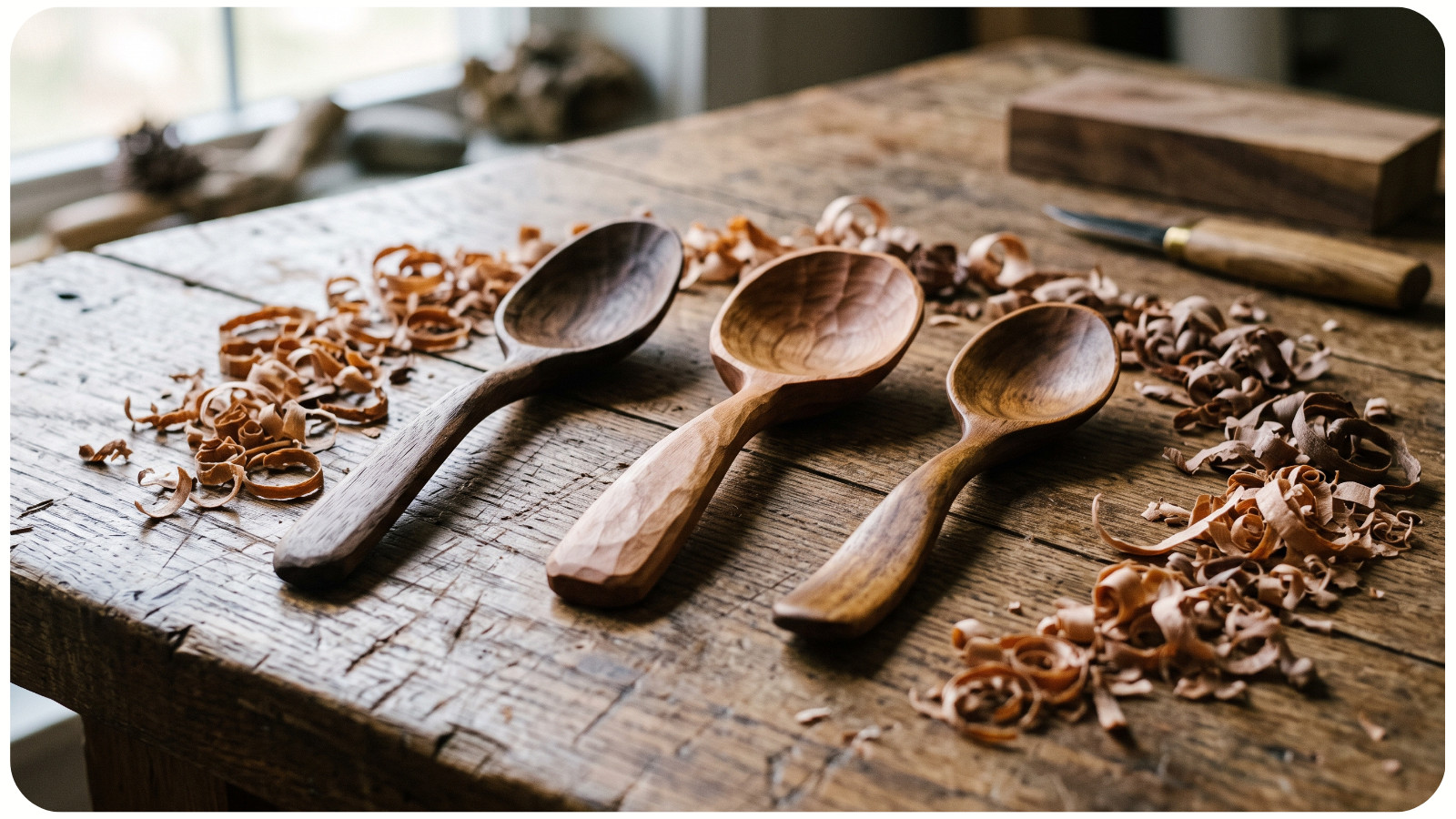
Wood carving requires patience, focus, and respect for the material, making it a naturally immersive slow craft.
A beginner spoon-carving kit can help you start with the appropriate wood and tools. Work carefully, taking away thin shavings rather than trying to shape the spoon quickly. The grain of the wood will influence the final form.
Always follow tool safety instructions, carve away from your body, and use cut-resistant protection when recommended.
Try this: Start with a small tasting spoon or butter spreader rather than a full-size serving spoon.
Best for: Focused hands-on work, rustic kitchen decor, and makers who enjoy natural materials.
11. MAKE ROLLED BEESWAX CANDLES
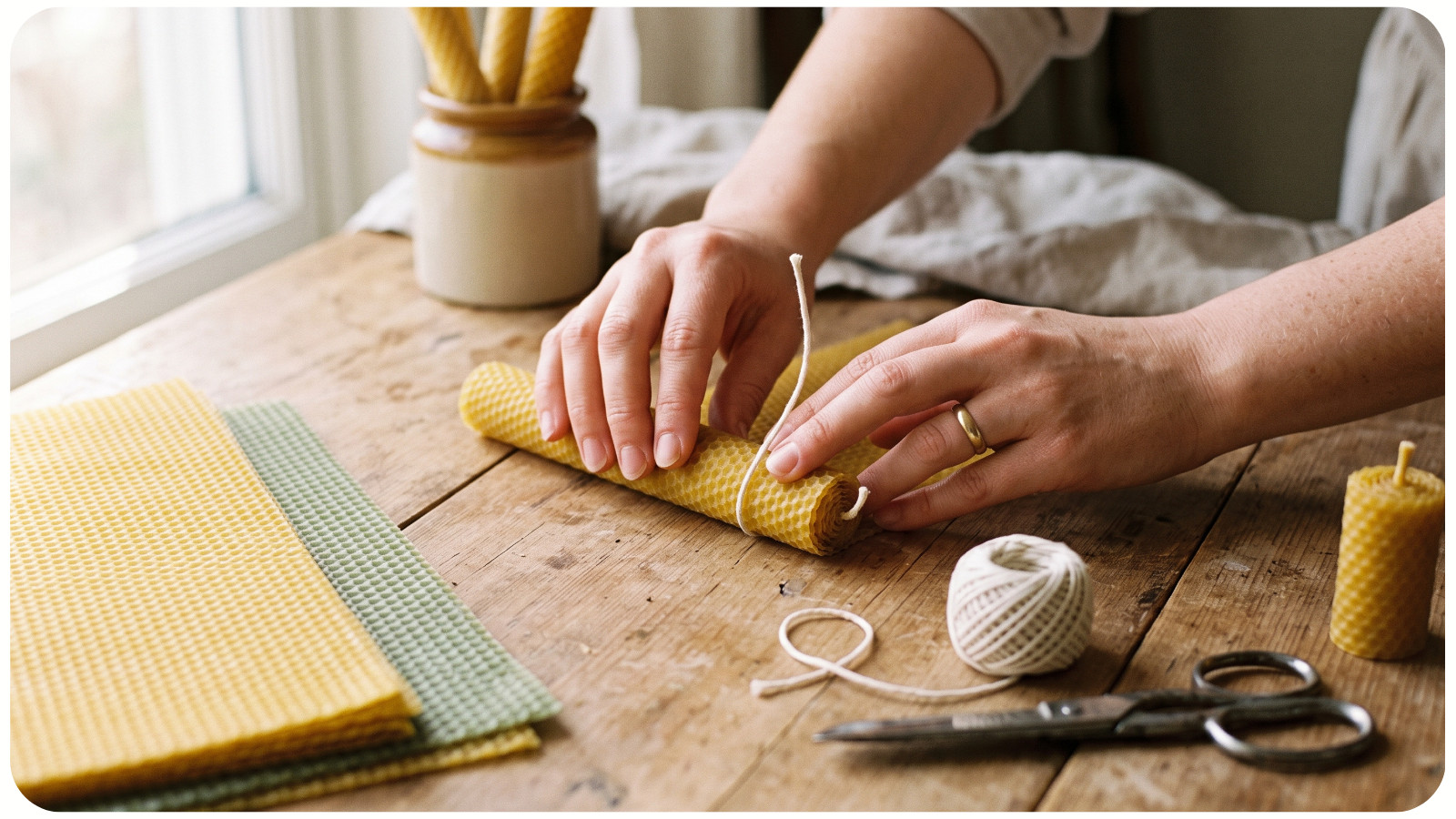
Rolling beeswax candles is a simple craft that engages the senses through color, texture, and scent.
Sheets of beeswax can be wrapped around cotton wicks to create taper candles in only a few steps. The slow part comes from carefully warming, aligning, and rolling each sheet with intention.
Choose natural golden beeswax for a classic look, or use muted colors that complement your home. Create several candles together and tie them with cotton ribbon for a thoughtful handmade gift.
Follow candle safety guidelines, use the correct wick, and never leave a burning candle unattended.
Try this: Make a pair of short taper candles for a quiet dinner table.
Best for: Cozy seasonal crafting, handmade gifts, and simple sensory projects.
12. LEARN TRADITIONAL BASKET WEAVING
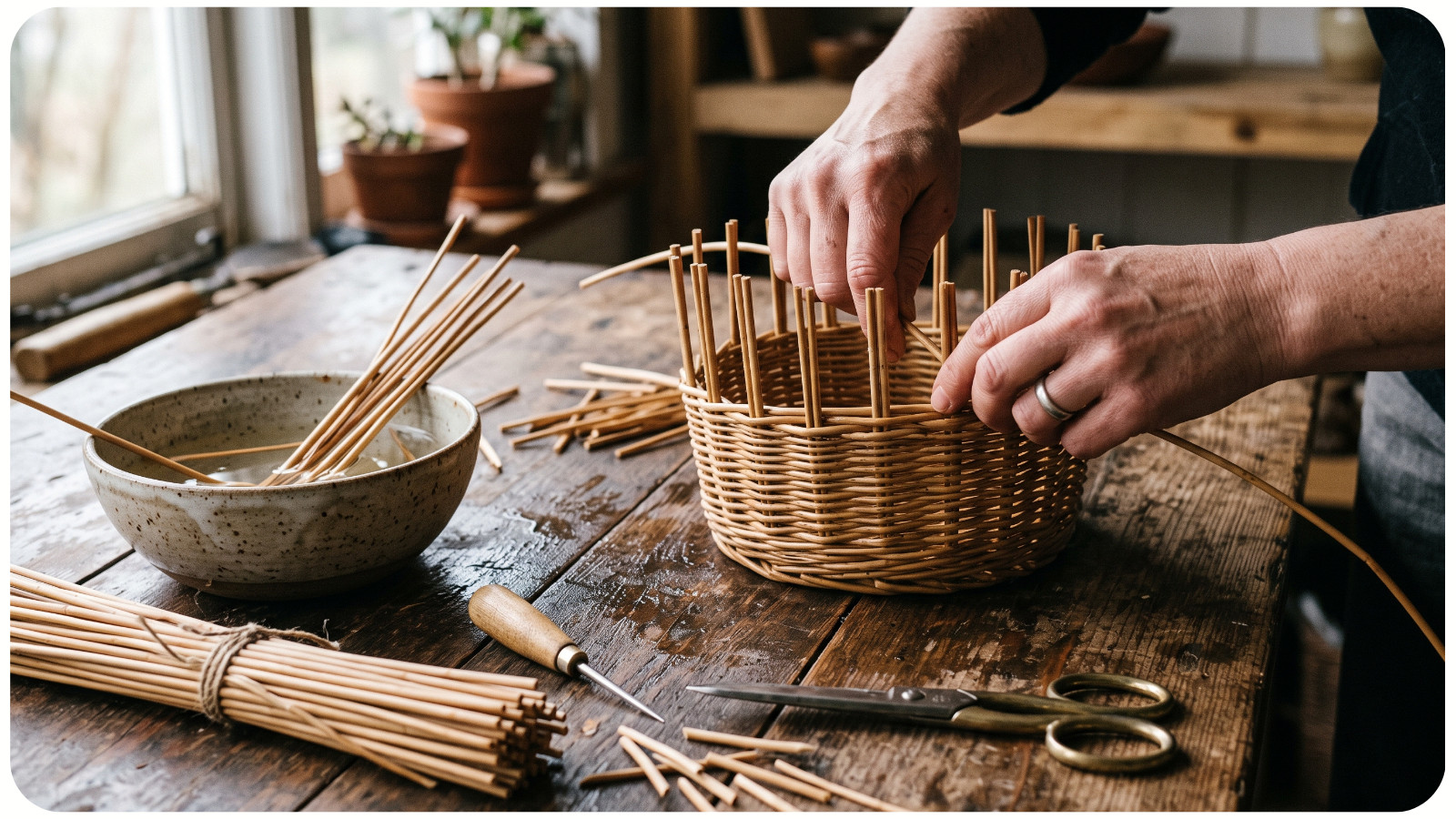
Basket weaving connects you with one of the oldest forms of functional craft.
Beginner kits often include pre-cut reeds and instructions for making a small basket. As you soak, bend, and weave the materials, the structure slowly becomes stronger and more defined.
The process requires attention, but it is not hurried. Each strand must be placed carefully, making basket weaving a satisfying choice when you want to focus deeply on one task.
Try this: Start with a small round basket for keys, yarn, or dried flowers.
Best for: Functional crafts, natural decor, and makers ready to learn a traditional skill.
13. CREATE A HANDMADE BOOK OR JOURNAL
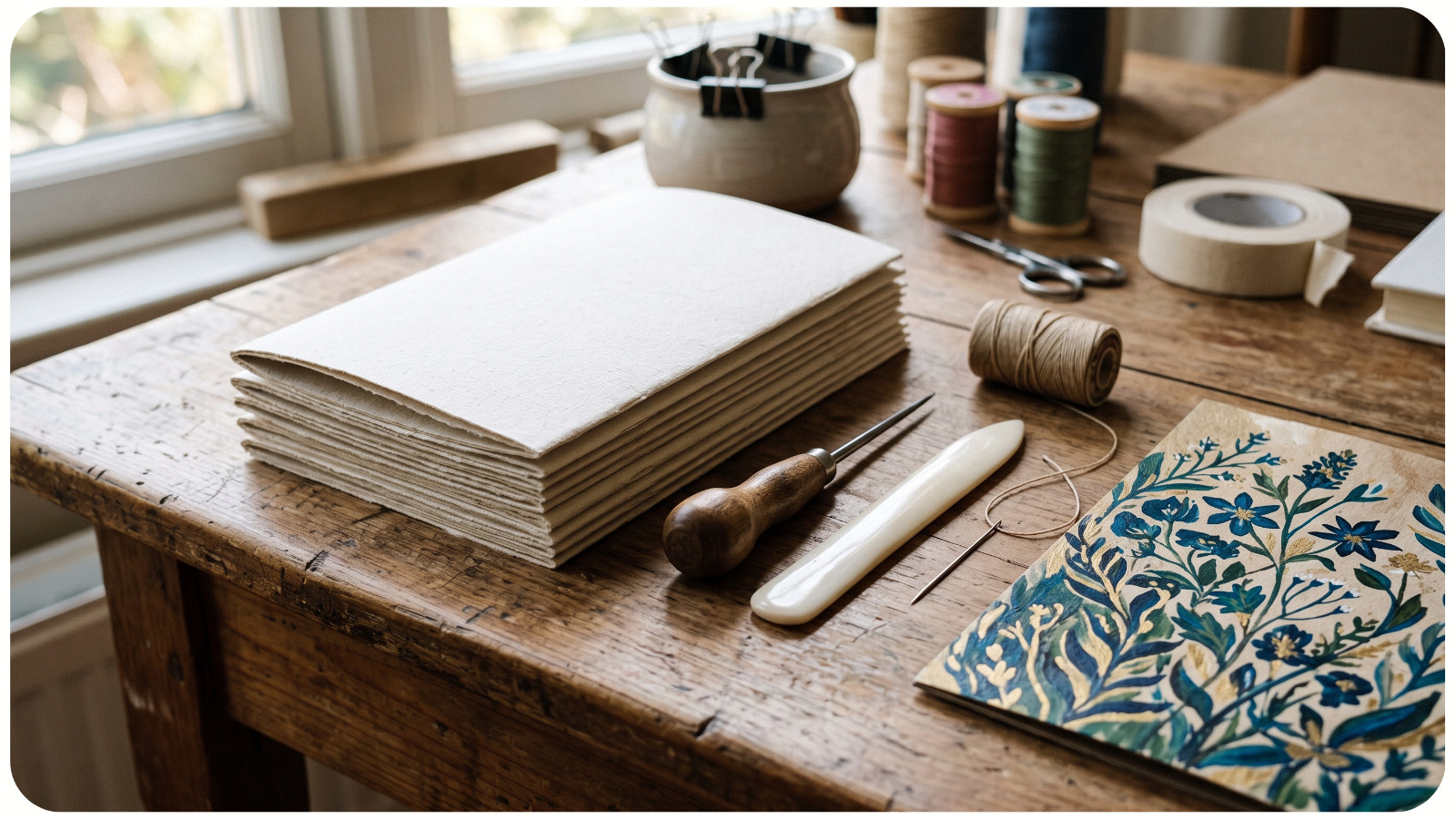
Bookbinding transforms paper, thread, and cardboard into something useful and personal.
A simple pamphlet-stitched notebook is an excellent first project. Fold several sheets of paper, create a cover, pierce evenly spaced holes, and stitch the pages together.
Once you understand the basic structure, you can experiment with handmade paper, fabric covers, decorative endpapers, pockets, or ribbon closures.
The finished journal can hold sketches, recipes, garden notes, memories, or future craft ideas.
Try this: Bind a pocket-size notebook using recycled paper and a painted cardstock cover.
Best for: Paper lovers, writers, and anyone who enjoys precise but manageable projects.
14. TRY VISIBLE MENDING
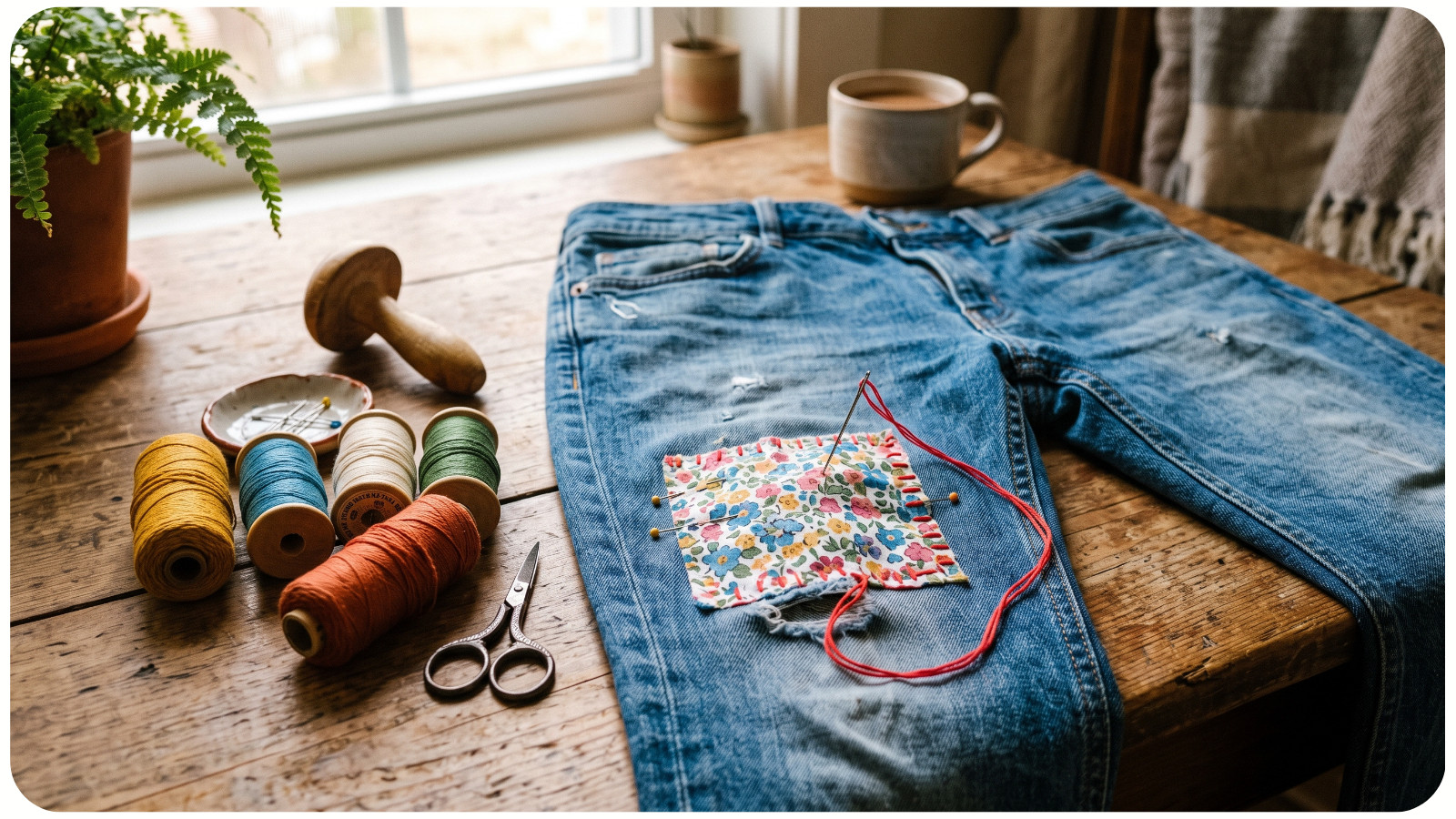
Visible mending turns clothing repair into a creative act. Instead of hiding worn areas, highlight them with colorful thread, decorative patches, or rows of sashiko-inspired stitches. Repair a denim jacket, favorite jeans, sweater, tote bag, or well-loved apron.
Visible mending encourages you to care for what you already own. It can also help you view wear and age as part of an object’s story rather than a reason to discard it.
Try this: Place a contrasting fabric patch behind a small tear and secure it with neat running stitches.
Best for: Sustainable crafting, practical creativity, and extending the life of favorite clothes.
15. BUILD A SLOW SCRAPBOOK
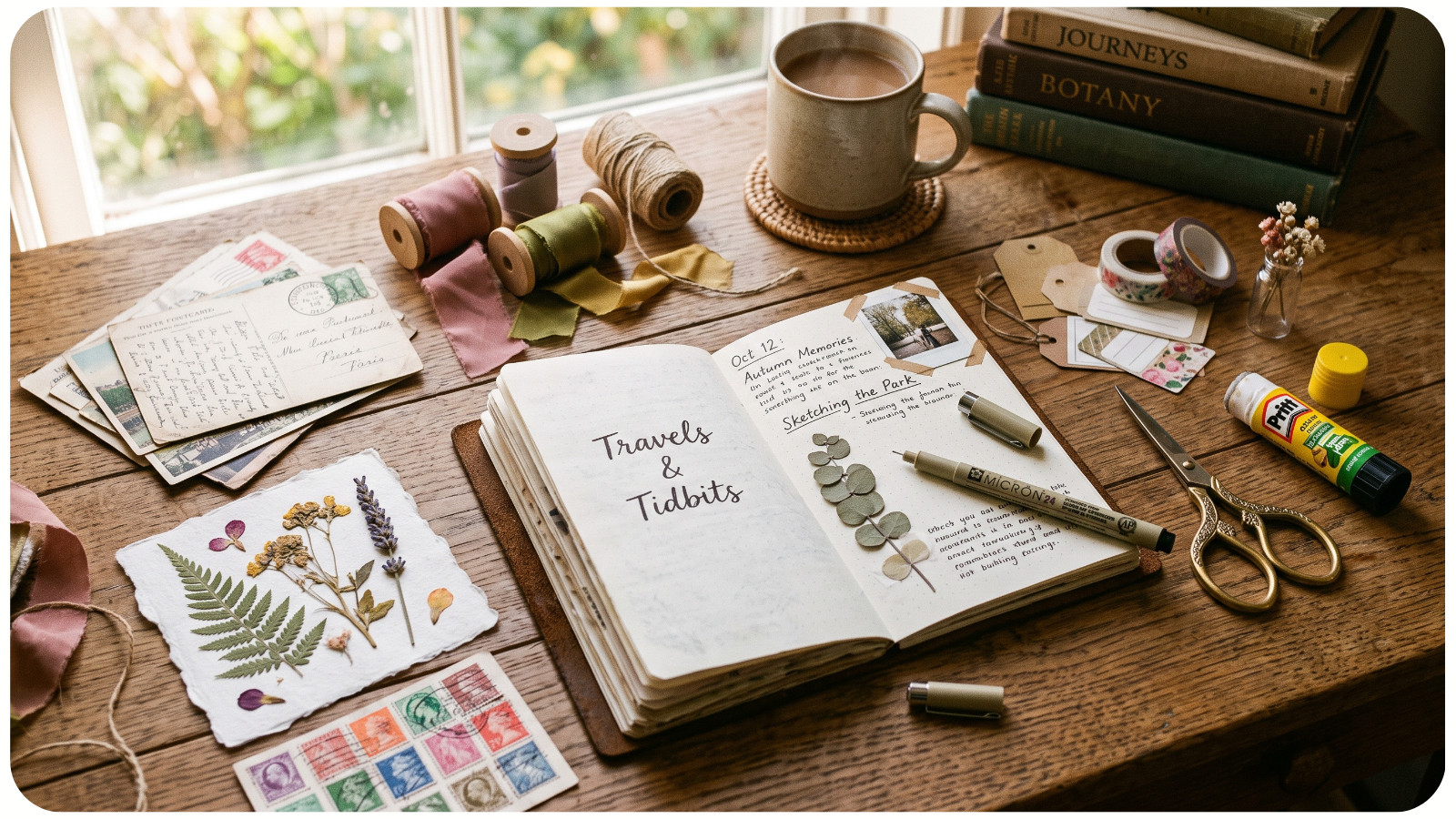
A slow scrapbook is less about documenting every event and more about preserving small, meaningful details.
Collect ticket stubs, handwritten notes, pressed leaves, wrapping paper, photographs, postcards, packaging, and bits of ribbon. Add them to a journal gradually, leaving room for captions, memories, sketches, and reflections.
Unlike a perfectly coordinated scrapbook, this version can feel layered, personal, and spontaneous. There is no deadline and no need to finish every page.
Try this: Create one spread about a recent weekend, season, or ordinary day you want to remember.
Best for: Memory keeping, paper ephemera, and creative reflection.
HOW TO MAKE SLOW CRAFTING FEEL MORE RELAXING
The setting can be just as important as the project. Choose a comfortable place with good lighting. Put away unnecessary devices, prepare your materials before you begin, and give yourself permission to stop whenever your hands feel tired.
A cup of tea, soft music, an audiobook, or an open window can make the experience feel even more restorative. Keep your project visible and easy to reach so returning to it feels inviting rather than complicated.
Most importantly, avoid turning slow crafting into another standard you have to meet. You do not need to make something impressive, useful, or shareable. The time you spend creating is already worthwhile.
FINAL THOUGHTS
Slow crafts remind us that creativity does not have to be fast, flawless, or productive.
A few embroidered stitches, a loosely painted flower, a row of knitting, or a small piece of shaped clay can create a welcome pause in a busy day. The project may eventually become a keepsake, gift, or piece of home decor, but its first purpose is to give you space to breathe.
Choose one craft that feels comforting, gather a few simple materials, and begin without worrying about how long it will take. In slow crafting, the process is not something to rush through. It is the reason to start.