


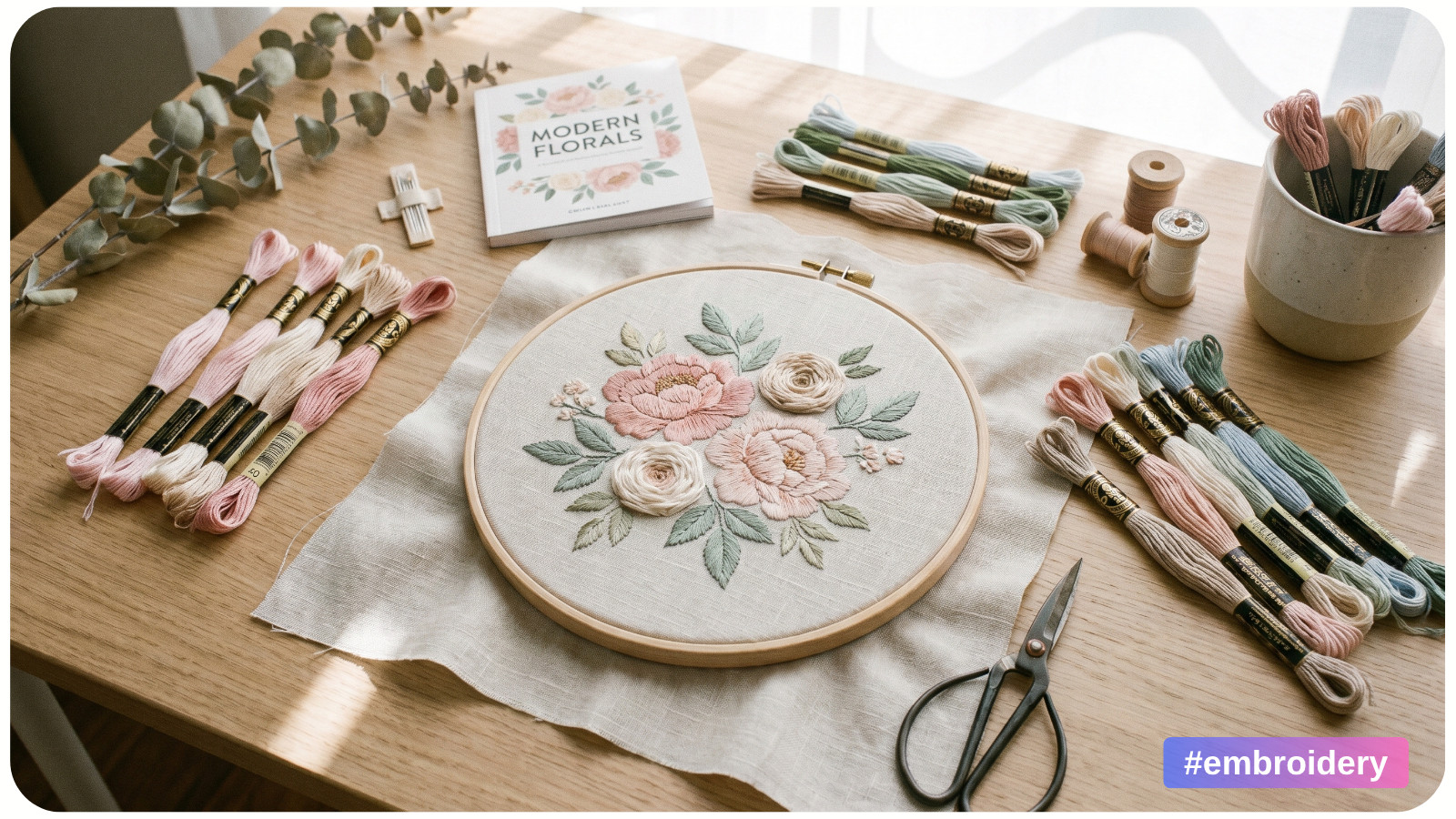
Embroidery is often seen as a delicate, almost mystical craft – one where perfection, talent, and pricey supplies seem like prerequisites. But in reality, many of the beliefs beginners hold are simply myths passed down through trial, error, and a bit of intimidation.
As a modern embroidery artist, understanding the technical truth behind these myths can dramatically improve your stitching skills and creative freedom. Let’s unravel the most common misconceptions and replace them with accurate, practical knowledge.
MYTH #1: “YOUR STITCHES MUST BE PERFECT TO LOOK GOOD”
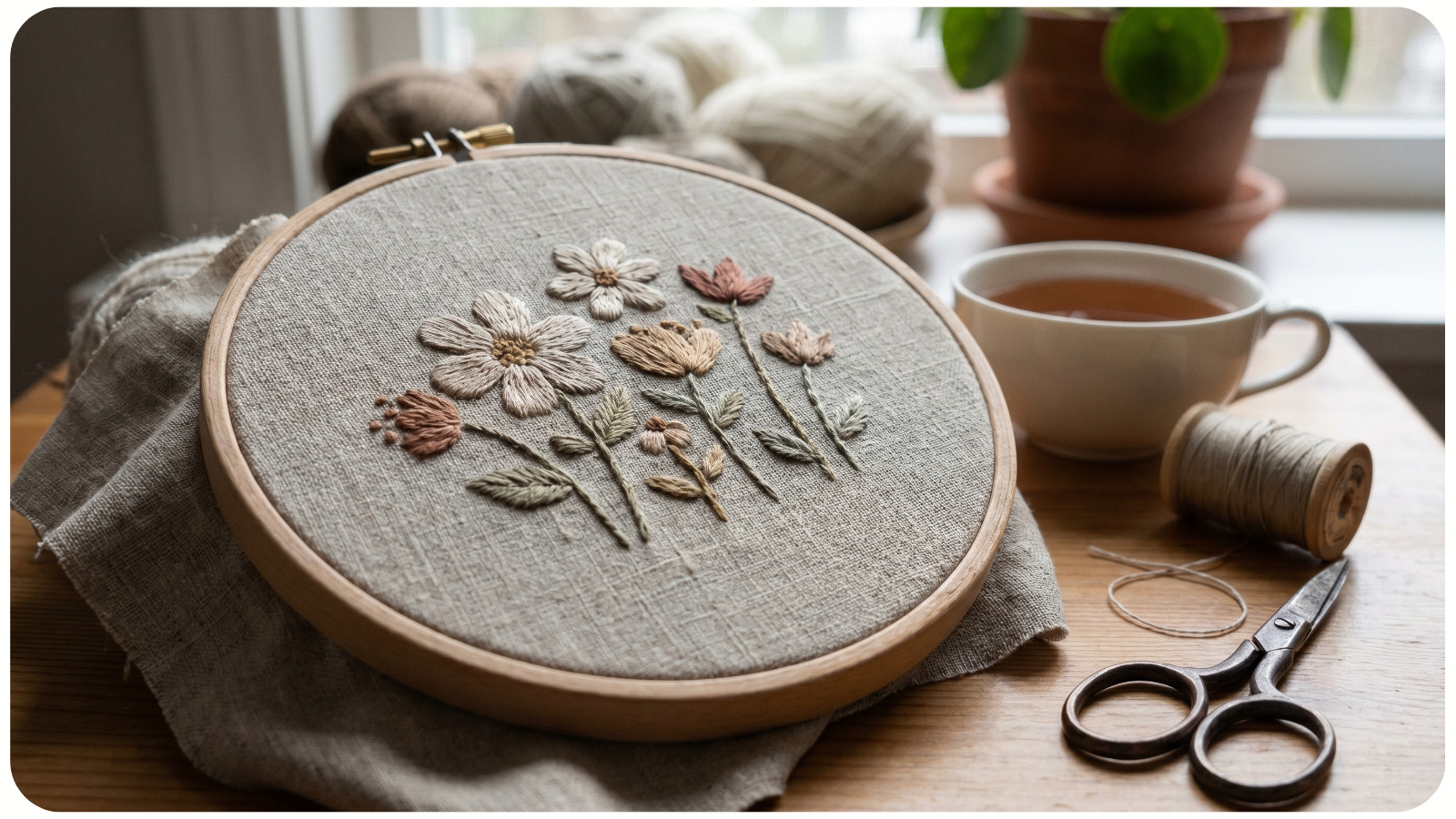
This is one of the most limiting beliefs in embroidery. In reality, slight variations in stitch length and tension add texture and personality – especially in techniques like satin stitch and long and short stitch. Perfect uniformity is not only difficult but often unnecessary unless you're working on highly geometric or traditional designs.
Modern embroidery embraces organic flow. For example, when working satin stitch, the angle and direction of your needle entry matter more than identical stitch length. Consistency in direction creates visual harmony – not perfection.
MYTH #2: “EXPENSIVE SUPPLIES = BETTER RESULTS”
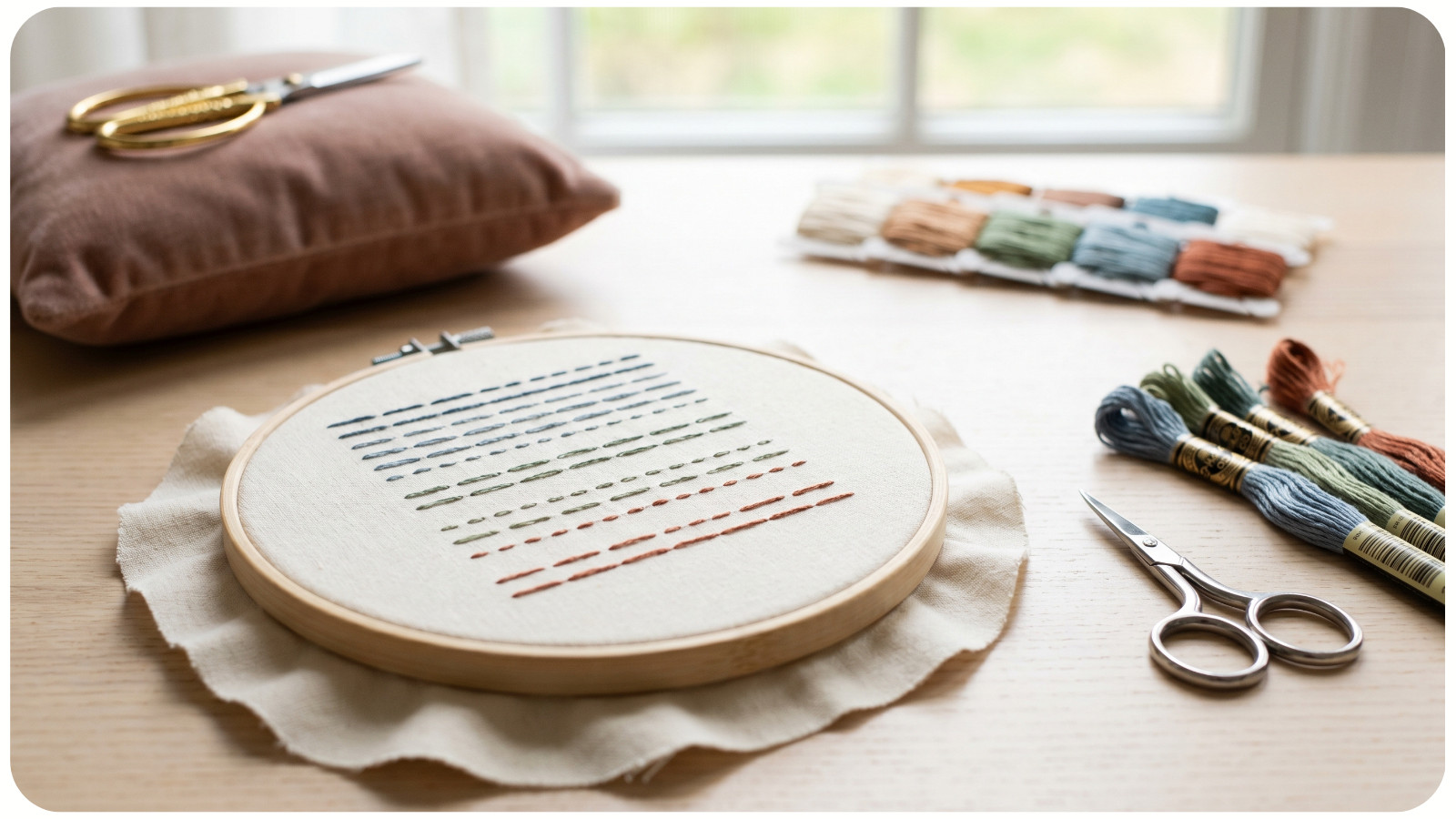
High-end materials can be enjoyable, but they are not a requirement for quality work.
What truly matters:
- Proper thread tension;
- Correct needle size (matched to fabric and floss strands);
- Stable fabric (well-hooped);
A beginner using standard cotton floss and a basic hoop can achieve excellent results if they understand how to control thread twist and avoid pulling too tightly.
That said, investing in well-designed patterns – like those from Awesome Pattern Studio – can elevate your outcome far more than premium tools alone.
MYTH #3: “YOU SHOULD ALWAYS USE ALL 6 STRANDS OF FLOSS”
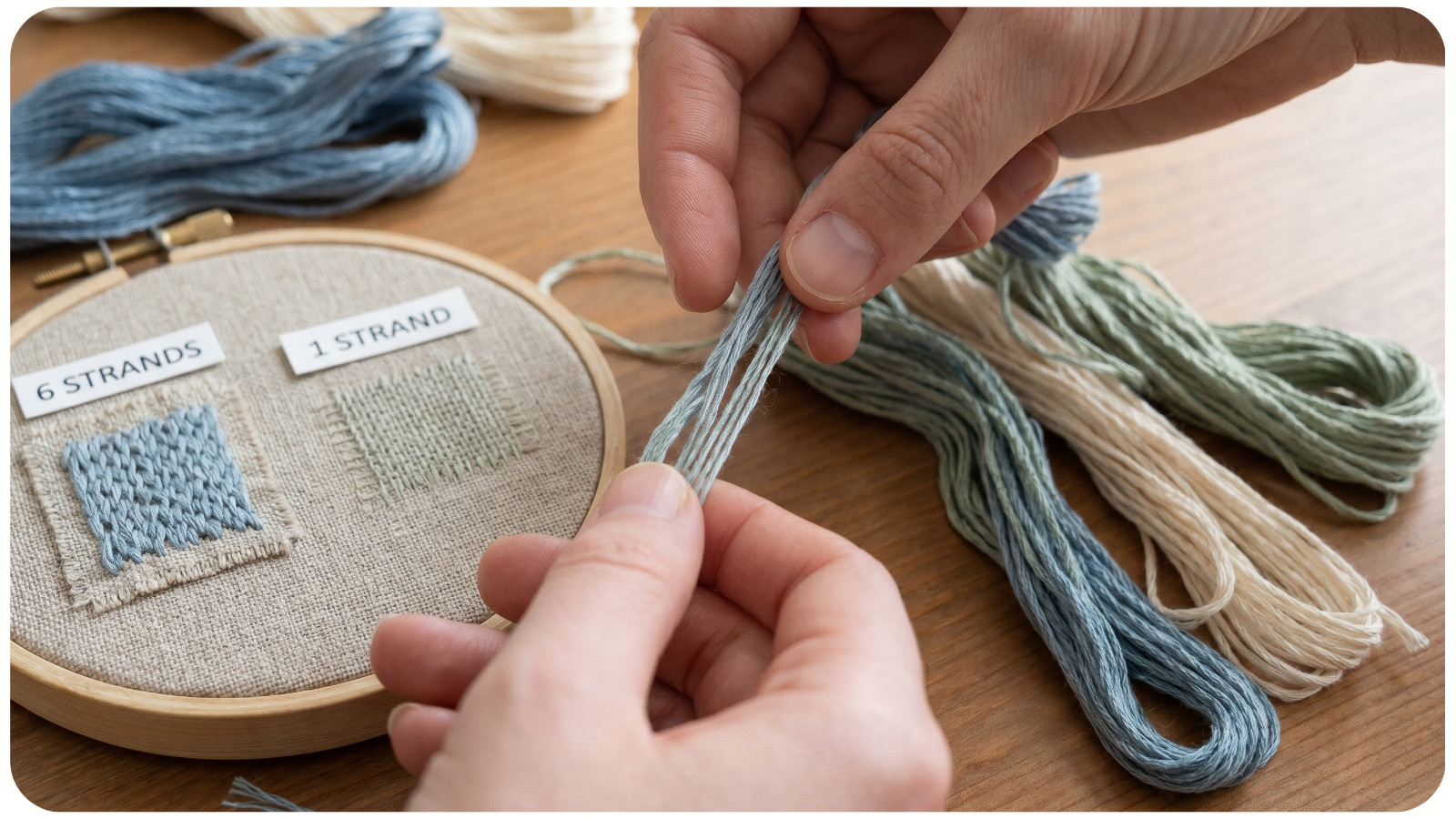
Embroidery floss typically comes with six separable strands, but using all six is rarely ideal.
Different techniques require different strand counts:
- Satin stitch: 2-3 strands for smooth coverage;
- French knots: 2-4 strands depending on size;
- Fine details: 1 strand for precision;
Using too many strands can cause:
- Bulky stitches;
- Poor fabric penetration;
- Uneven surface texture;
Separating strands also reduces thread twist, resulting in smoother stitches.
MYTH #4: “BACK OF THE WORK MUST BE NEAT”
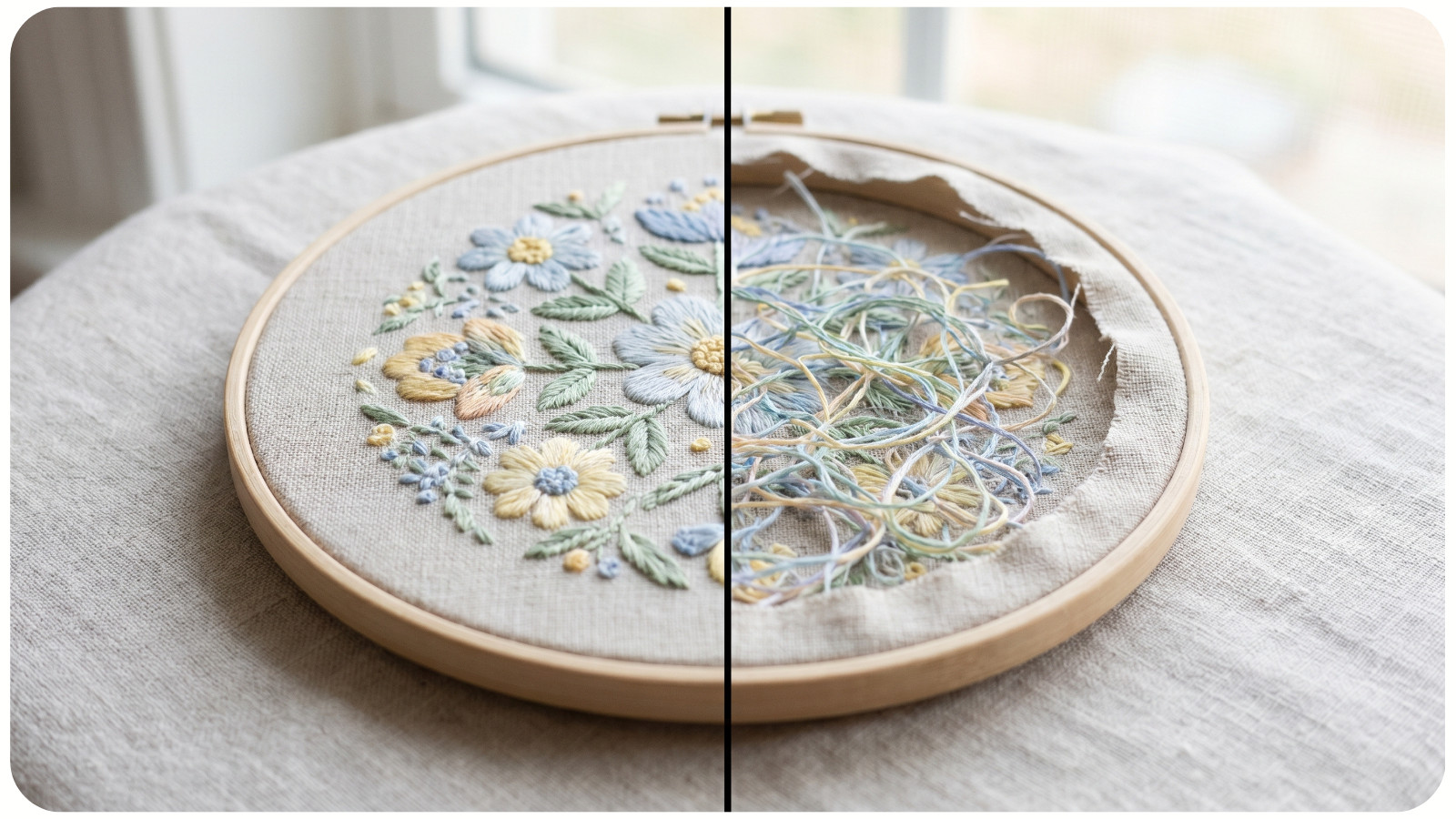
While a clean back can indicate good technique, it is not the ultimate measure of skill.
What matters more:
- Secure thread starts and finishes;
- Minimal knots to prevent bulk;
- Even tension on the front;
In decorative embroidery (especially hoop art), the back is rarely visible. Prioritize efficiency and front-facing aesthetics over perfection behind the fabric.
MYTH #5: “YOU MUST FOLLOW PATTERNS EXACTLY”
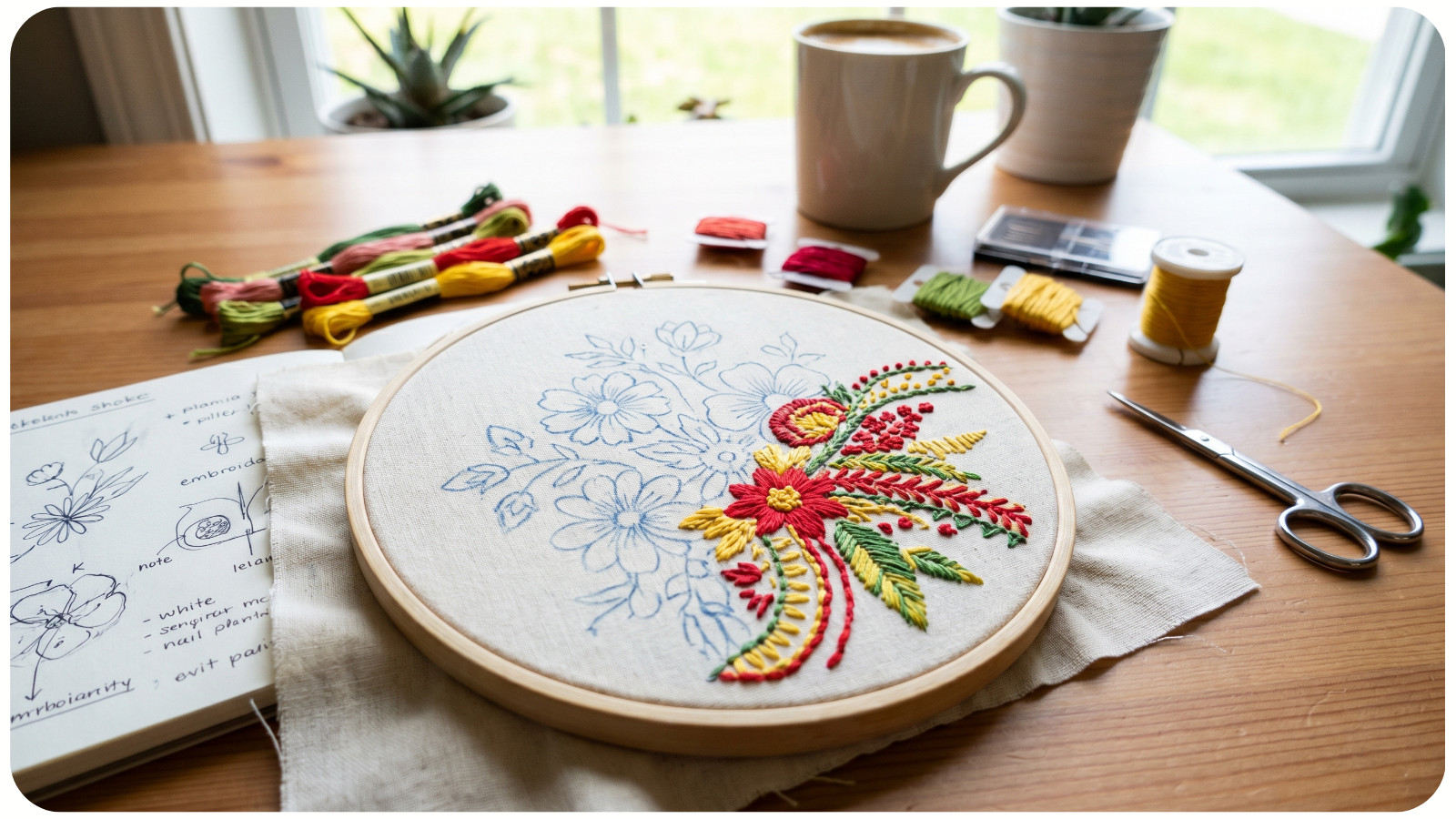
Patterns are guides – not rules.
Advanced embroidery involves:
- Adjusting stitch types;
- Changing color palettes;
- Modifying density and direction;
For example, swapping a satin stitch for a split stitch fill can create a more textured, painterly effect. Changing thread colors can shift the entire mood of a piece – from soft and minimalistic to bold and vibrant.
Creative freedom is a technical advantage, not a mistake.
MYTH #6: “TIGHTER STITCHES ARE BETTER”
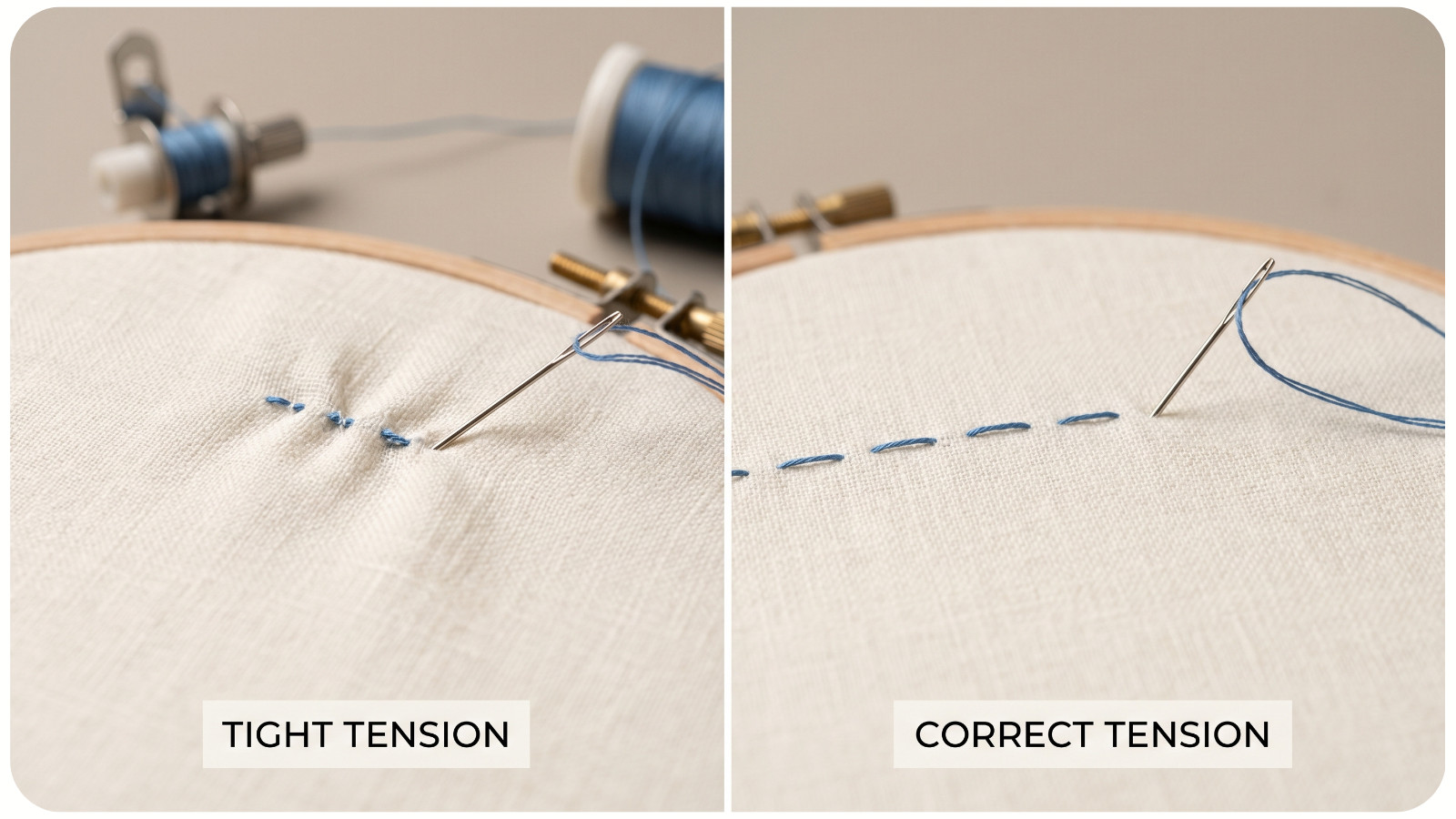
This myth leads to one of the most common beginner mistakes: over-tightening.
Excess tension causes:
- Fabric puckering;
- Distorted designs;
- Difficulty inserting the needle;
Correct tension means the thread lies smoothly on the fabric without pulling it inward. Your stitches should rest on the surface, not sink into it.
A good test: the fabric should remain flat inside the hoop even after multiple stitches.
MYTH #7: “EMBROIDERY IS JUST ABOUT DECORATION”
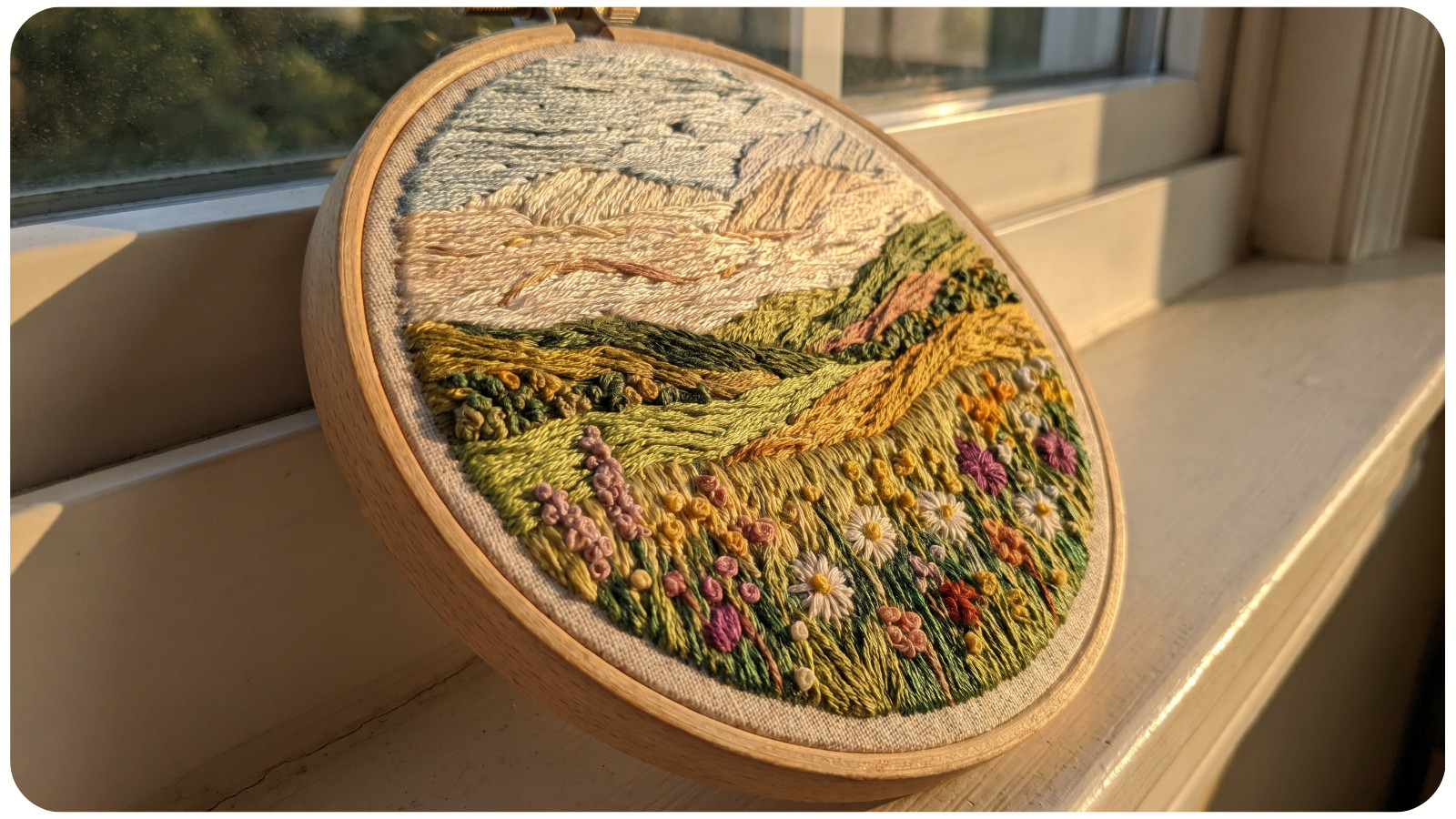
Embroidery is often underestimated as purely decorative, but technically, it’s a highly controlled fiber art.
It involves:
- Directional stitching (affects light reflection and texture);
- Layering techniques (depth and dimension);
- Thread behavior (twist, sheen, fiber type);
For example, the angle of satin stitches changes how light hits the thread, creating subtle shading effects. French knots can act as raised texture points, adding dimension similar to brushstrokes in painting.
Understanding these technical elements transforms embroidery from simple decoration into expressive textile art.
PRO-TIP
Control your thread twist for smoother stitches. As you stitch, floss naturally twists and tightens, which can cause uneven texture – especially in satin stitch. Every few stitches, let your needle dangle freely to allow the thread to untwist.
This small habit dramatically improves:
- Stitch smoothness;
- Thread sheen;
- Overall finish quality;
CONCLUSION
Embroidery isn’t about rigid rules or flawless execution – it’s about understanding the mechanics behind each stitch and using that knowledge creatively.
By letting go of these myths, you gain:
- Better control over your technique;
- More confidence in your creative choices;
- A smoother, more enjoyable stitching process;
So next time you pick up your needle, remember: accuracy matters, but freedom makes it beautiful.