


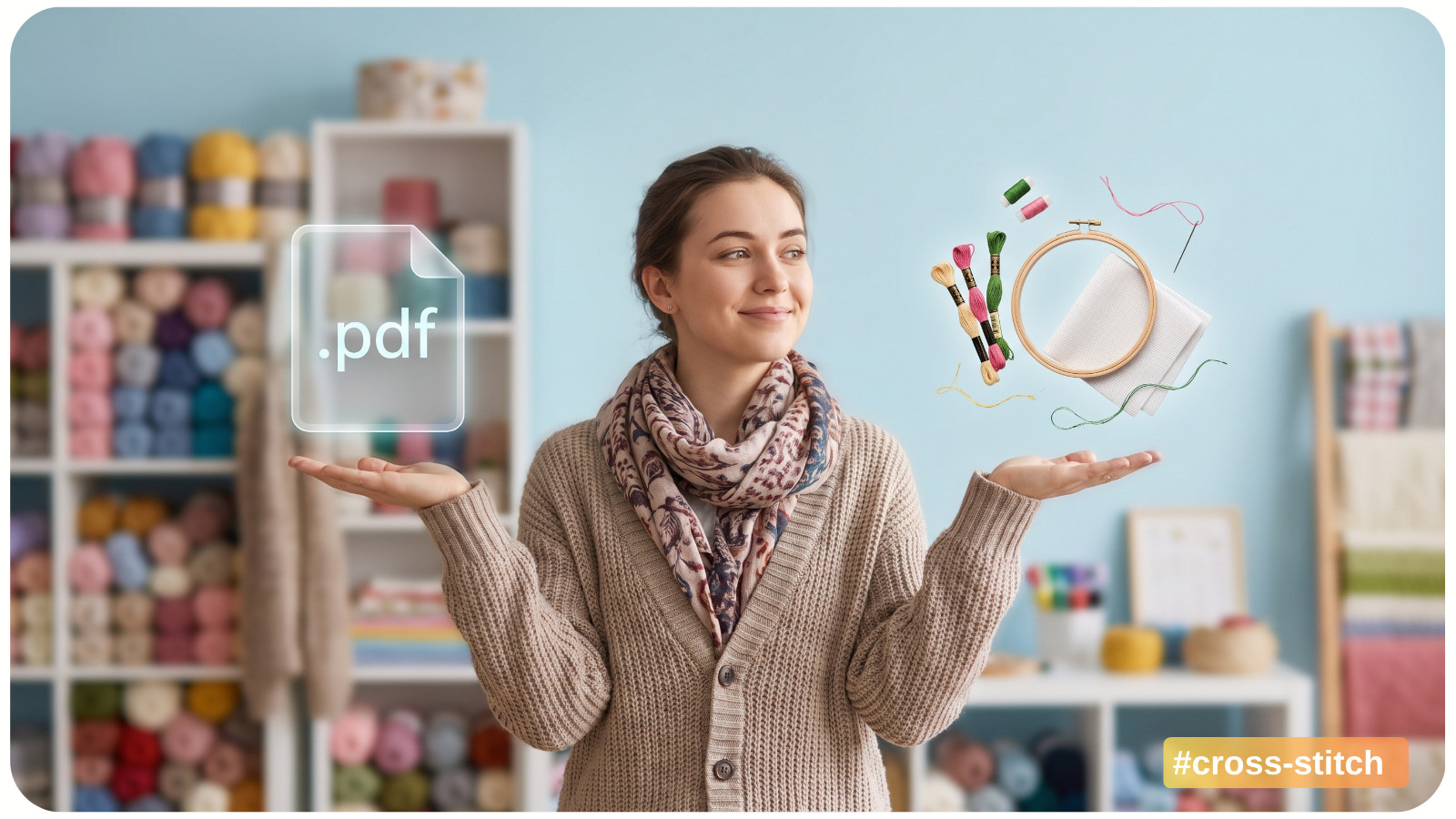
When you start a new cross-stitch project, one of the first decisions is whether to buy a complete cross-stitch kit or download a PDF pattern. Both options can produce beautiful results, but they serve different stitchers, budgets, and working styles.
A kit gives you a pre-selected bundle: chart, fabric, floss, needle, and sometimes finishing materials. A PDF pattern gives you the design file only, leaving you to choose your own Aida, floss brand, fabric count, needle size, and organization method.
Neither option is automatically better. The right choice depends on how much control you want, how comfortable you are sourcing supplies, and how precise you need the finished size and color outcome to be.
MATERIALS NEEDED
1. If You Choose a Cross-Stitch Kit
A typical kit may include:
- Printed chart or instruction sheet
- Pre-cut Aida or evenweave fabric
- Pre-sorted or bundled floss
- Embroidery needle
- Color key
- Basic stitching instructions
- Hoop, frame, or finishing materials in some kits
2. If You Choose a PDF Pattern
For a PDF pattern, you usually need to provide:
- Printed or digital pattern chart;
- Aida, linen, or evenweave fabric;
- DMC or equivalent embroidery floss;
- Tapestry needle;
- Hoop, Q-snap, or scroll frame;
- Floss organizer or bobbins;
- Fabric scissors;
- Needle minder;
- Highlighter, tablet app, or pattern-tracking software.
Awesome Pattern Studio offers downloadable cross-stitch patterns that are especially practical for stitchers who already have favorite fabrics, floss brands, and stitching tools.
STEP-BY-STEP GUIDE/MAIN ADVICE
1. UNDERSTAND WHAT YOU ARE ACTUALLY BUYING

A cross-stitch kit is a supply package. Its main advantage is convenience. The designer or manufacturer has already selected the fabric count, floss colors, and project dimensions for you.
A PDF pattern is a digital chart. It usually includes a symbol chart, color legend, stitch count, finished size information, and floss list. It does not include physical materials.
From a technical standpoint, this matters because the pattern itself is only one part of the final result. Fabric count, floss quality, stitching tension, and color substitutions can all affect how the finished piece looks.
2. COMPARE FABRIC CONTROL
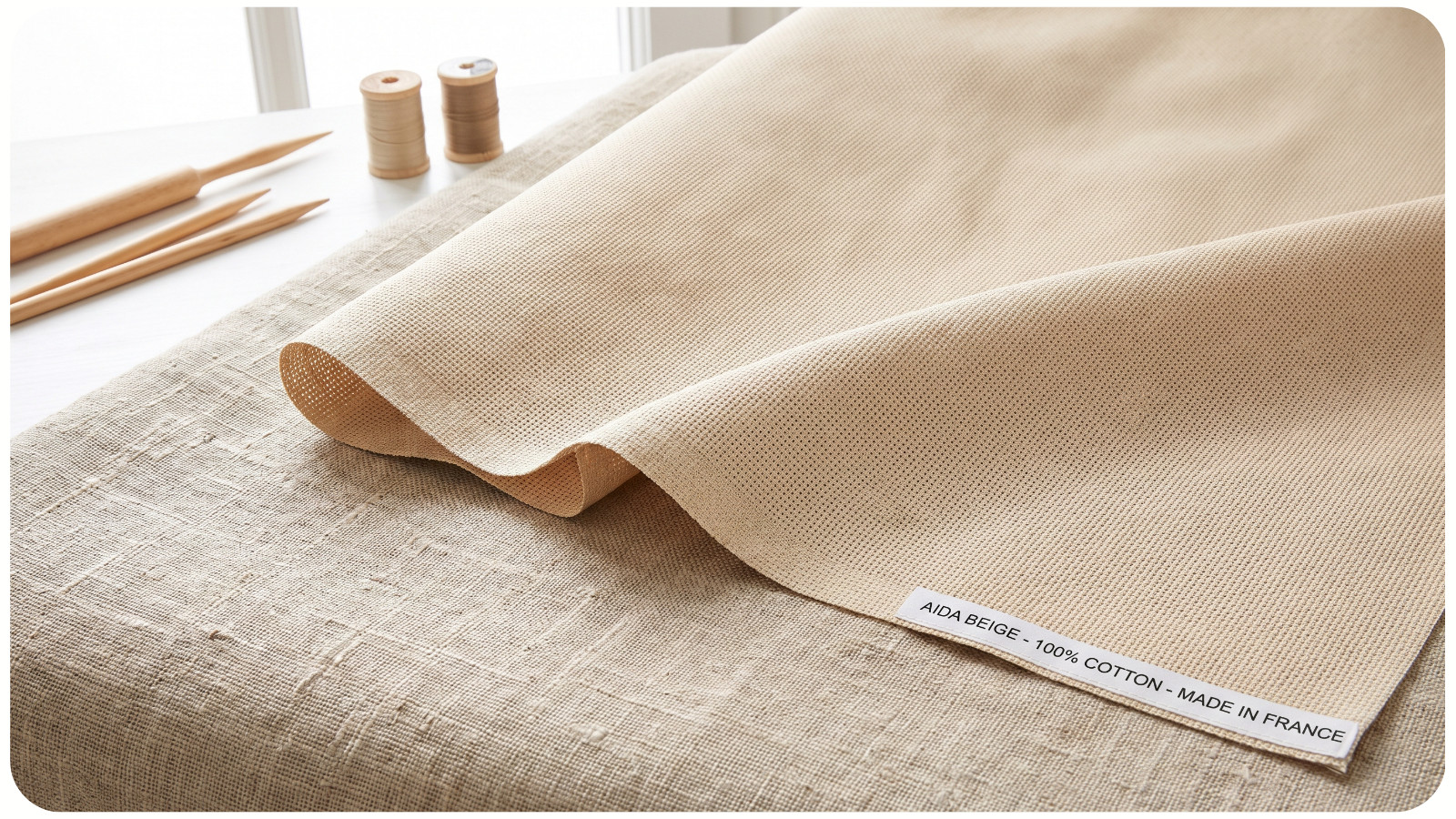
One major difference is fabric choice. With a kit, the fabric is usually fixed. For example, a kit may include 14-count white Aida. If the design is calculated for that fabric, the finished size is already determined. This is convenient for beginners because there is less math involved.
With a PDF pattern, you can choose your own fabric count:
Common Finished Size Differences. If a design is 140 stitches wide:
- On 14-count Aida, it will be 10 inches wide
- On 16-count Aida, it will be 8.75 inches wide
- On 18-count Aida, it will be about 7.78 inches wide
The formula is simple: Stitch count ÷ fabric count = finished design size in inches
This flexibility is valuable for advanced stitchers, HAED fans, sampler lovers, and anyone who wants a specific framed size. However, it also means you must calculate margins correctly. For framing, most stitchers add at least 2 to 3 inches of extra fabric on each side.
3. EVALUATE FLOSS ACCURACY AND QUANTITY
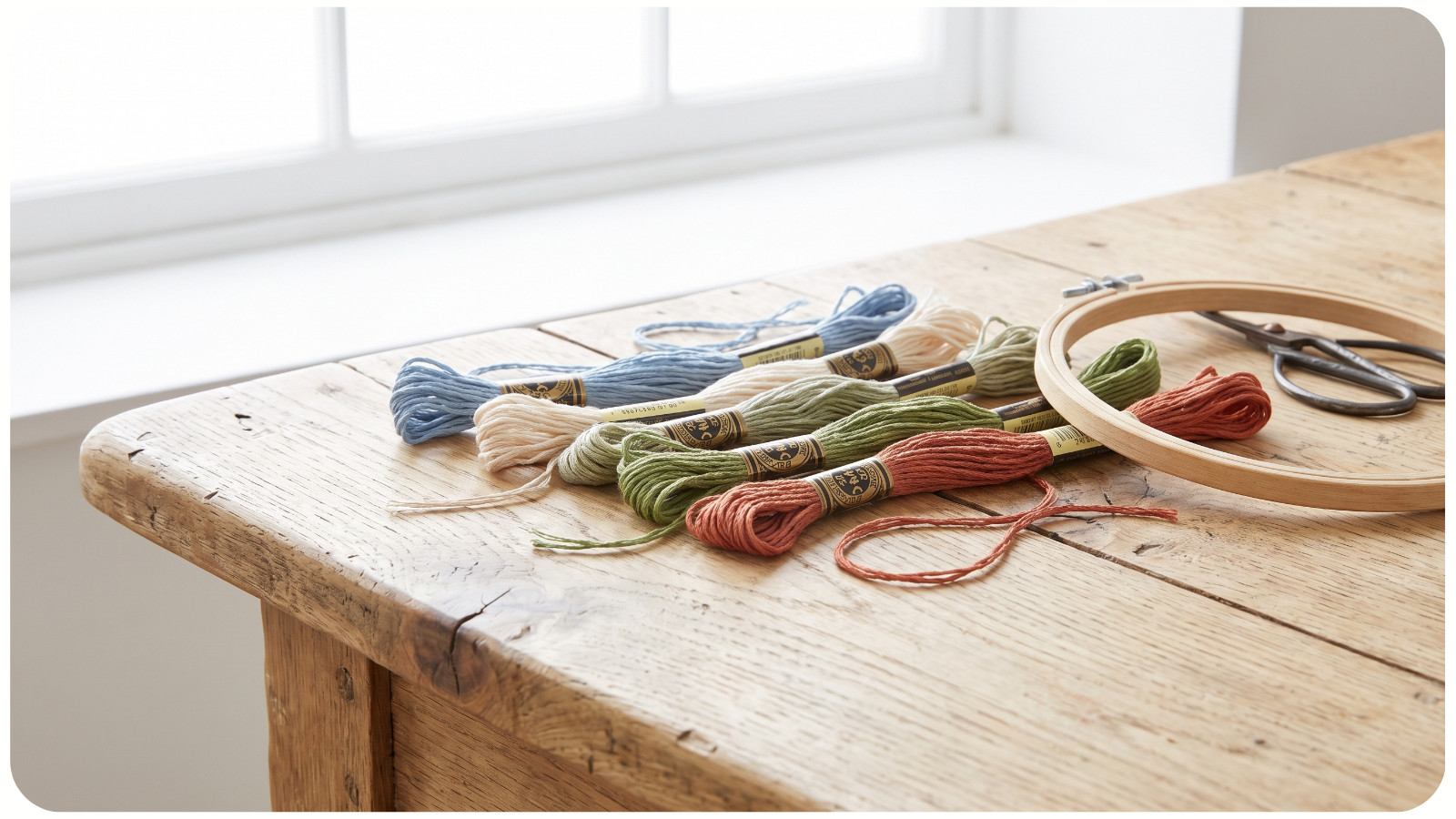
Kits usually include the amount of floss needed for the project. That is convenient, but there are two technical concerns.
First, some kits use proprietary floss rather than standard DMC numbers. If you run out, matching the exact shade can be difficult. Second, if floss is not clearly labeled, re-sorting colors after a mistake can become frustrating.
PDF patterns usually list standard floss numbers, often DMC. This gives you better long-term control. You can replace a color, buy extra skeins, or use floss already in your stash.
For large full-coverage designs, PDF patterns may be more practical because you can buy additional skeins by dye lot when needed. For smaller beginner projects, a kit’s pre-selected floss is usually enough.
4. CONSIDER CHART READABILITY
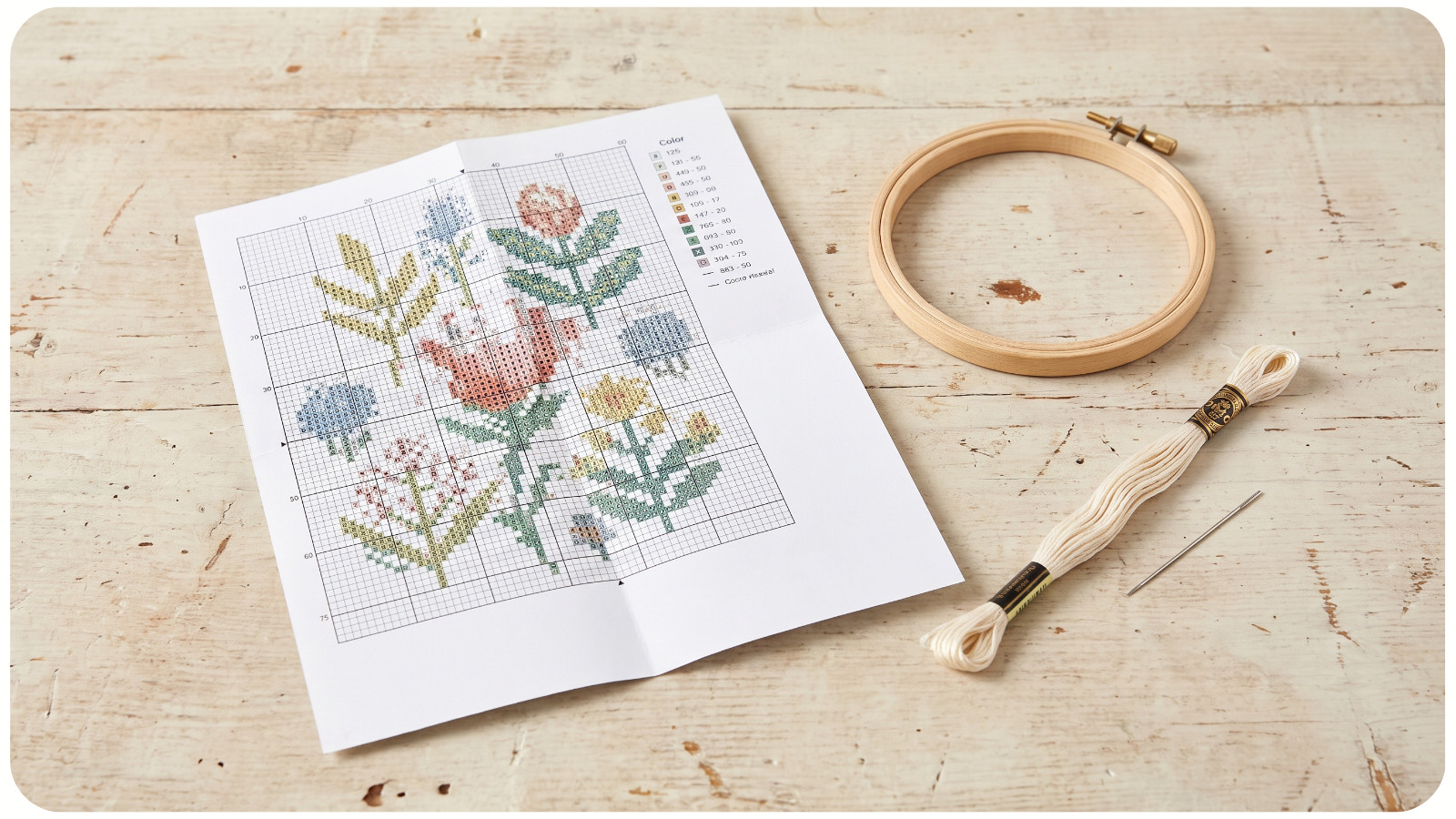
Printed kit charts vary widely in quality. Some are large and easy to read. Others may be folded, small, or printed in low contrast. If the chart is damaged, replacement options may be limited.
PDF patterns are more flexible. You can print them enlarged, view them on a tablet, or import them into pattern-tracking apps. This is especially helpful for complex counted cross-stitch patterns with many symbols, blended colors, backstitching, or confetti-heavy areas.
For stitchers who mark progress digitally, a PDF pattern is usually the stronger option.
5. THINK ABOUT BEGINNER-FRIENDLINESS
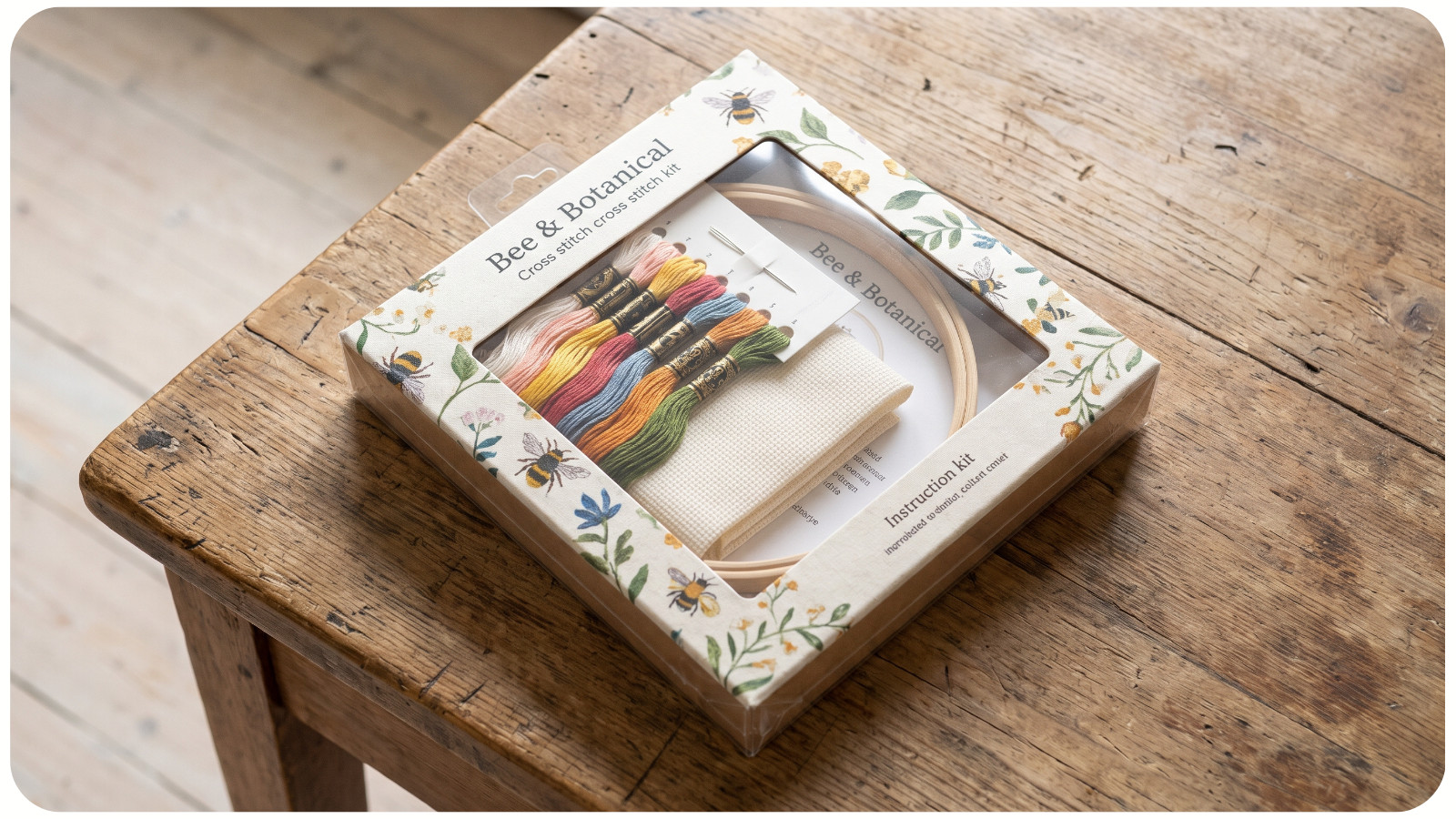
For absolute beginners, a kit can reduce decision fatigue. You do not need to choose fabric count, buy floss, or worry about whether your needle is the right size. Everything is packaged together, so you can start stitching faster.
However, kits do not always teach supply knowledge. A beginner may finish a kit without fully understanding fabric count, floss strands, or how to substitute materials.
PDF patterns require more preparation, but they build stronger technical skills. You learn how to read a floss key, calculate fabric size, choose Aida, and organize colors. For a stitcher who wants to grow beyond one project, that knowledge is extremely useful.
6. COMPARE COST
A kit often has a higher upfront price because it includes physical materials, packaging, and shipping. It can still be cost-effective if you do not own any supplies yet.
A PDF pattern usually costs less at checkout, but the total project cost depends on what you already have. If you need to buy fabric, floss, needles, and a hoop, the final cost may equal or exceed a kit.
The best value depends on your stash. If you already own Aida and common DMC shades, PDF patterns are often more economical. If you are starting from zero, a kit may be simpler.
7. CONSIDER SPEED AND ACCESS
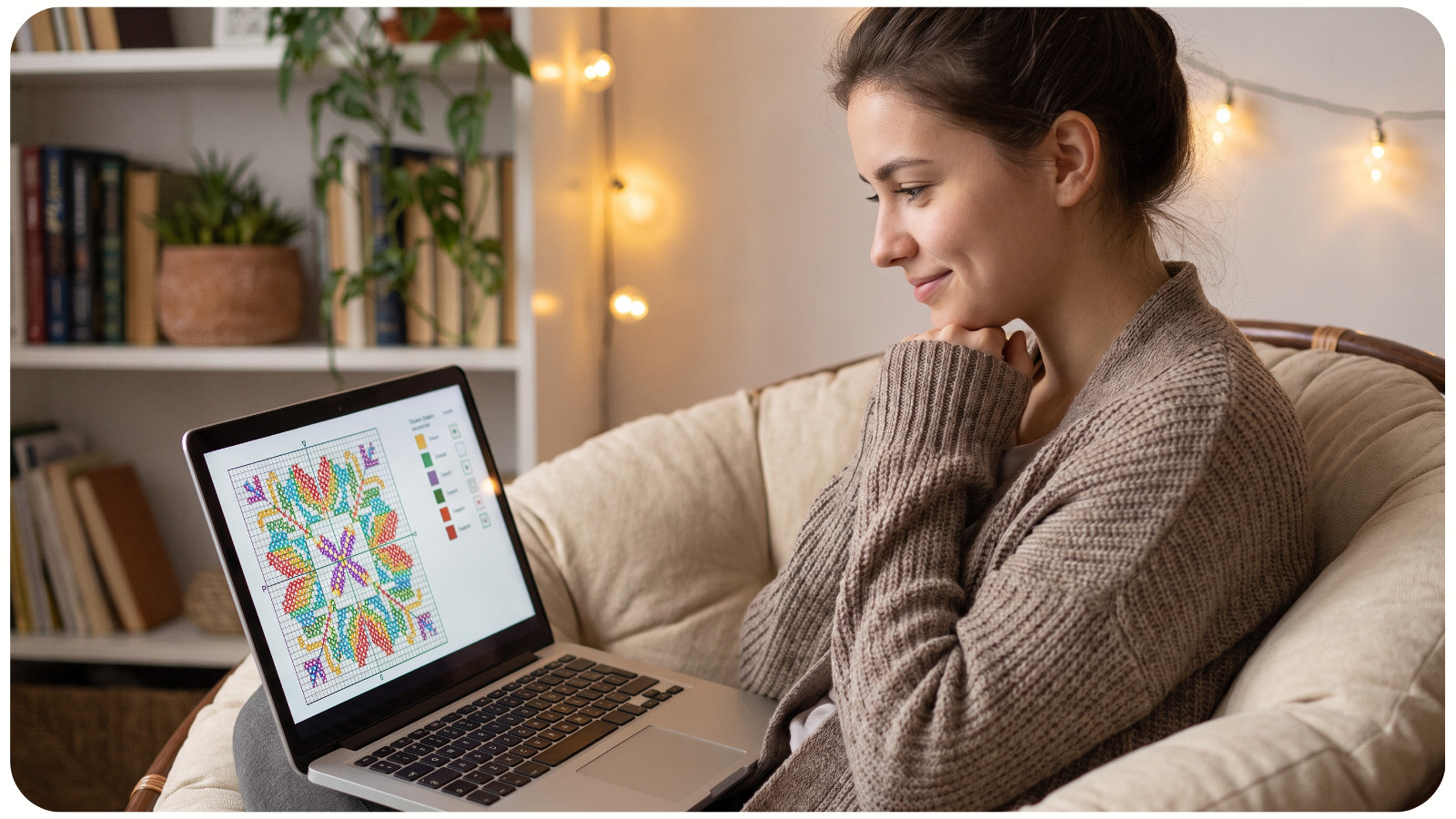
PDF patterns are available immediately after purchase. This is ideal when you want to start planning the same day or shop your stash before ordering supplies.
Kits require shipping time, but once they arrive, everything is physically ready. There is no need to print a chart or make a separate floss order.
For last-minute stitching, a PDF pattern is faster. For giftable, all-in-one convenience, a kit may feel more polished.
8. LOOK AT CUSTOMIZATION POTENTIAL
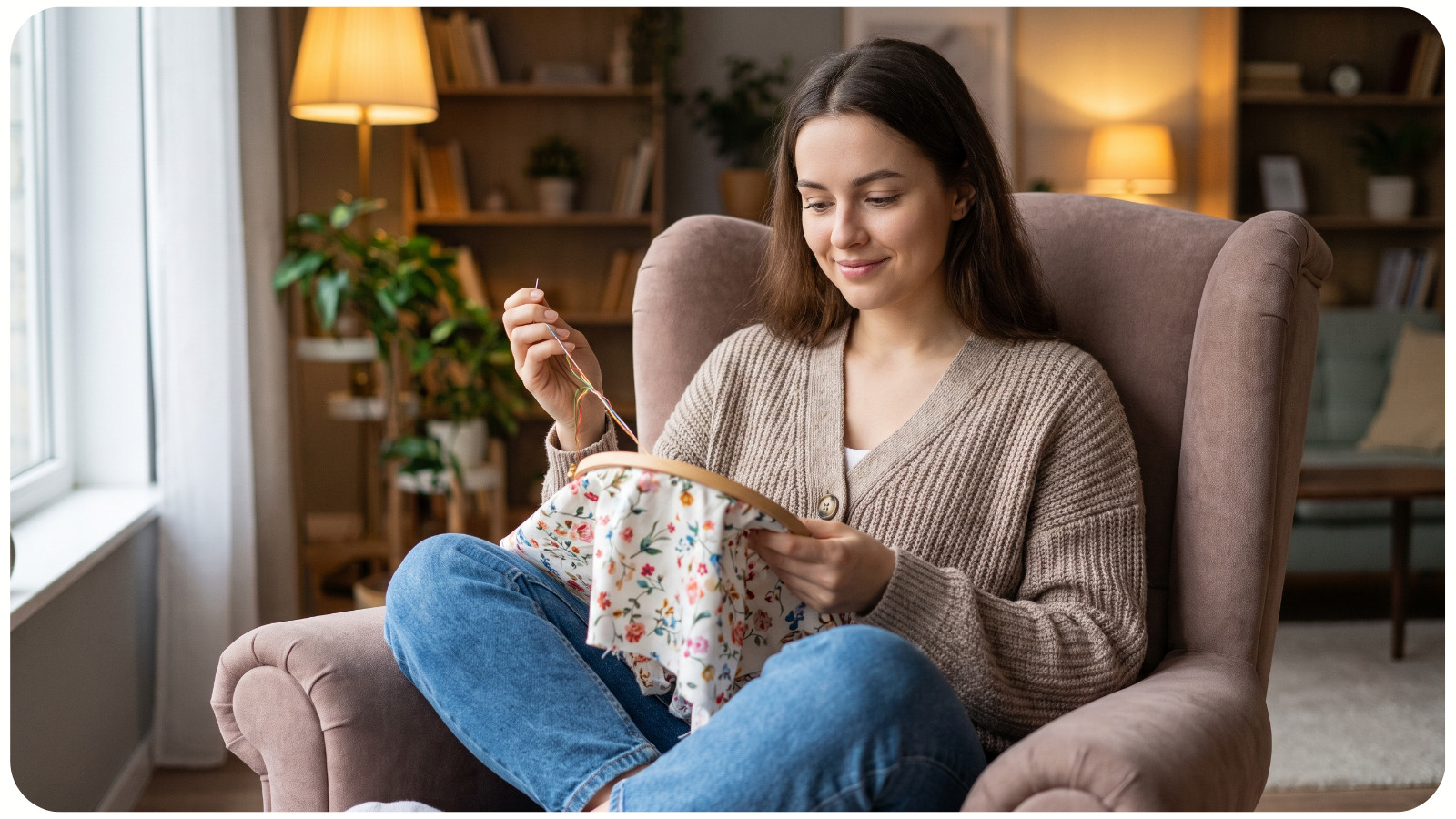
PDF patterns offer more creative control. You can change fabric color, switch from 14-count Aida to 18-count Aida, adjust floss shades, or stitch over two on linen.
This is especially useful for samplers, seasonal decor, and personalized gifts. You can choose antique white Aida for a traditional look, black Aida for dramatic contrast, or hand-dyed fabric for a more artistic finish.
Kits are less flexible because the materials are already chosen. You can still customize them, but doing so may make the included supplies less useful.
9. ACCOUNT FOR MISTAKES AND FROGGING
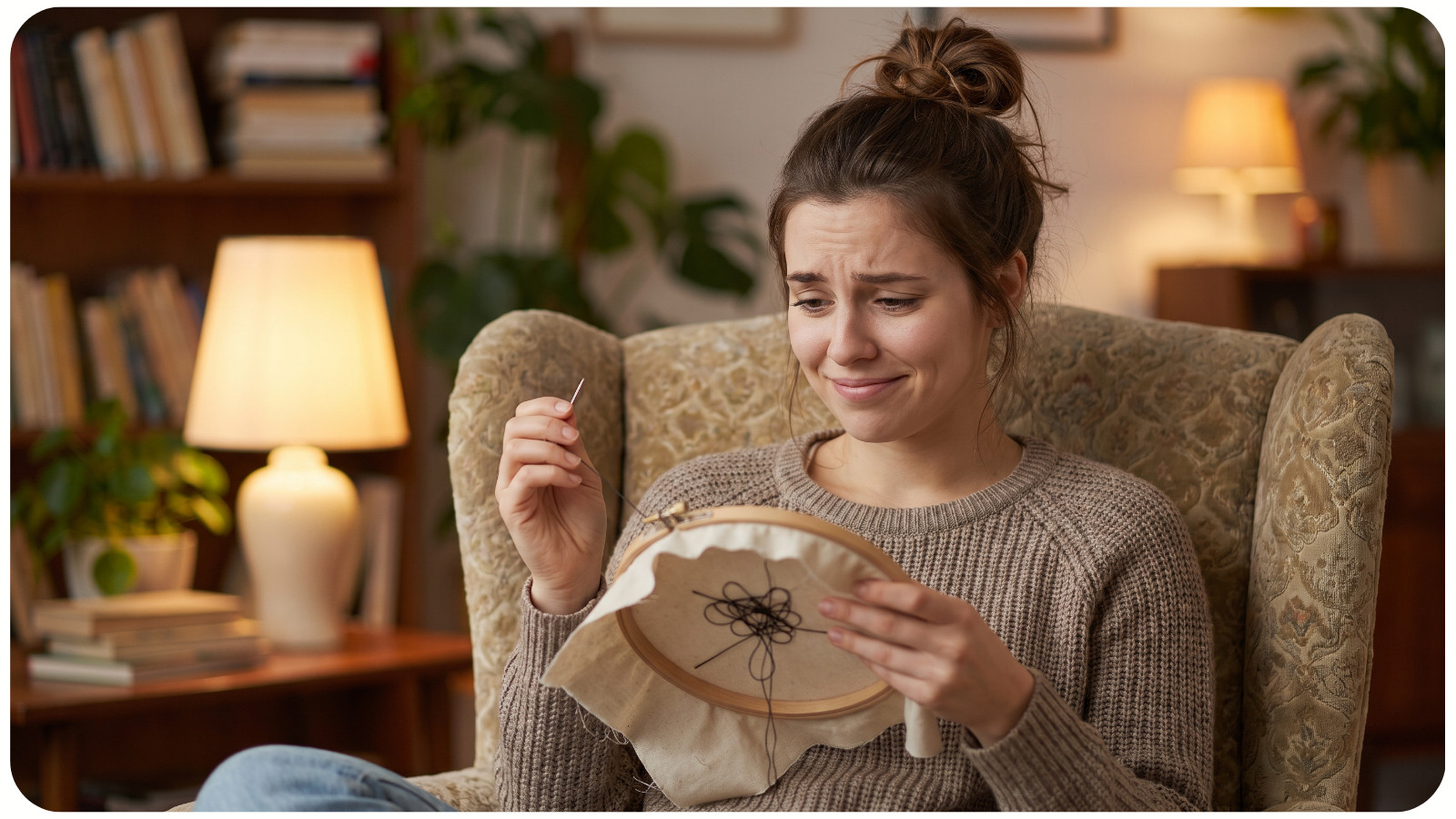
Frogging happens to every stitcher. The question is how easy it is to recover.
With a kit, extra floss may be limited. Heavy frogging, long thread tails, or repeated mistakes can increase the risk of running short.
With a PDF pattern, you can usually buy more floss in the listed colors. This makes PDF patterns more forgiving for large projects or designs with dense stitching.
If you are working on a high-detail design, having access to standard floss numbers is a major advantage.
10. CHOOSE BASED ON PROJECT TYPE
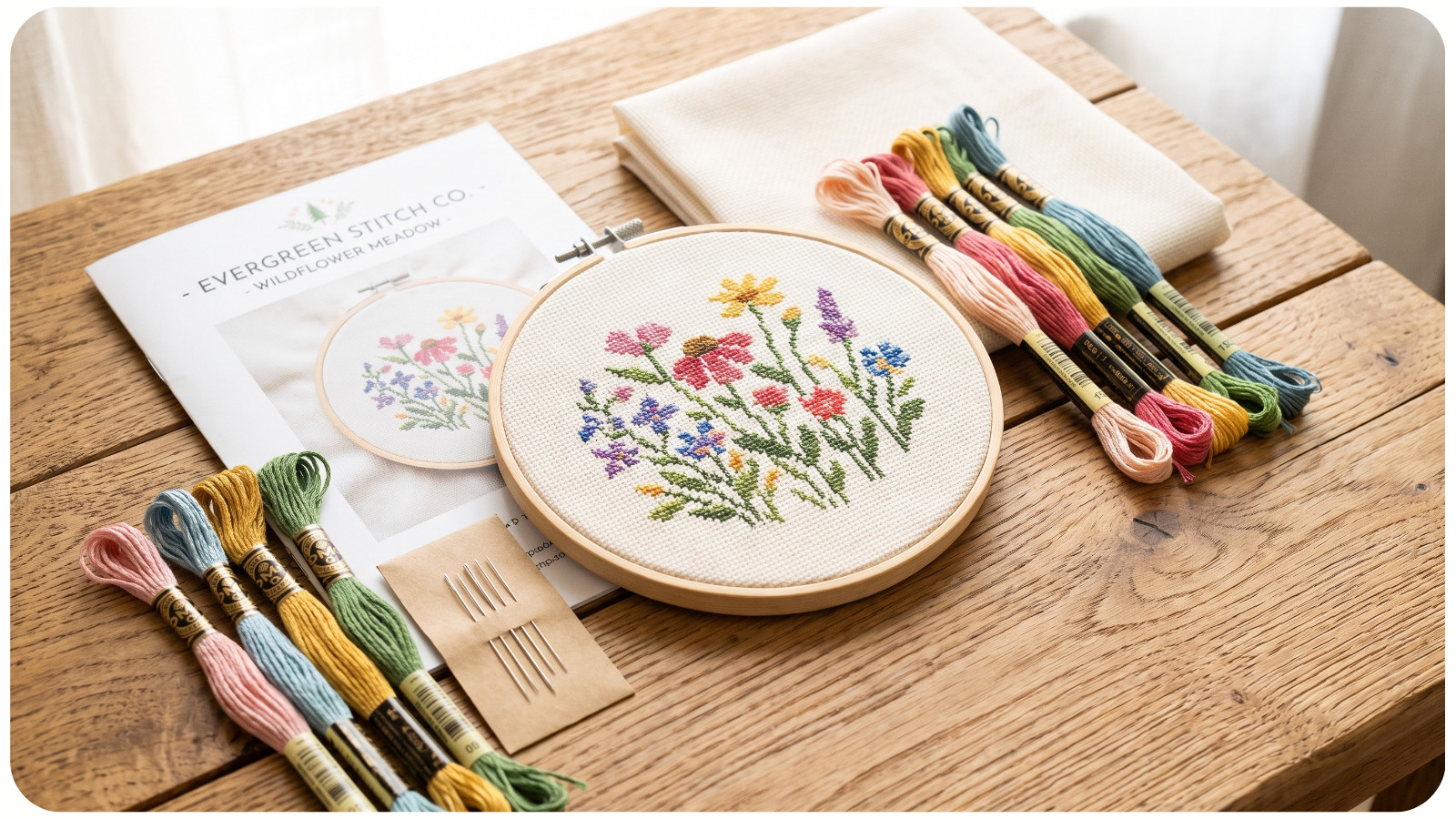
Choose a Cross-Stitch Kit If: You want a simple, all-in-one project with minimal preparation. Kits are excellent for beginners, travel stitching, gifts, and small seasonal pieces.
Choose a PDF Pattern If: You want flexibility, better supply control, digital chart access, and the ability to customize fabric and floss. PDF patterns are ideal for experienced stitchers, stash users, full-coverage projects, samplers, and stitchers who like planning every technical detail.
Awesome Pattern Studio patterns are a strong choice for stitchers who enjoy downloadable charts, clear project planning, and the freedom to match each design with their preferred fabric and floss setup.
CONCLUSION
The choice between a cross-stitch kit and a PDF pattern comes down to convenience versus control.
A kit gives you a ready-made stitching package. It is simple, beginner-friendly, and efficient. A PDF pattern gives you technical flexibility. You choose the Aida, fabric count, floss, needle, and final presentation.
For new stitchers, a kit can be a comfortable first step. For stitchers who want more creative and technical control, a PDF pattern is usually the better long-term option.
The best project is the one that matches your stitching style. Whether you love the simplicity of a kit or the freedom of a downloadable chart, the goal is the same: steady stitches, fewer mistakes, and a finished piece you are proud to display.