


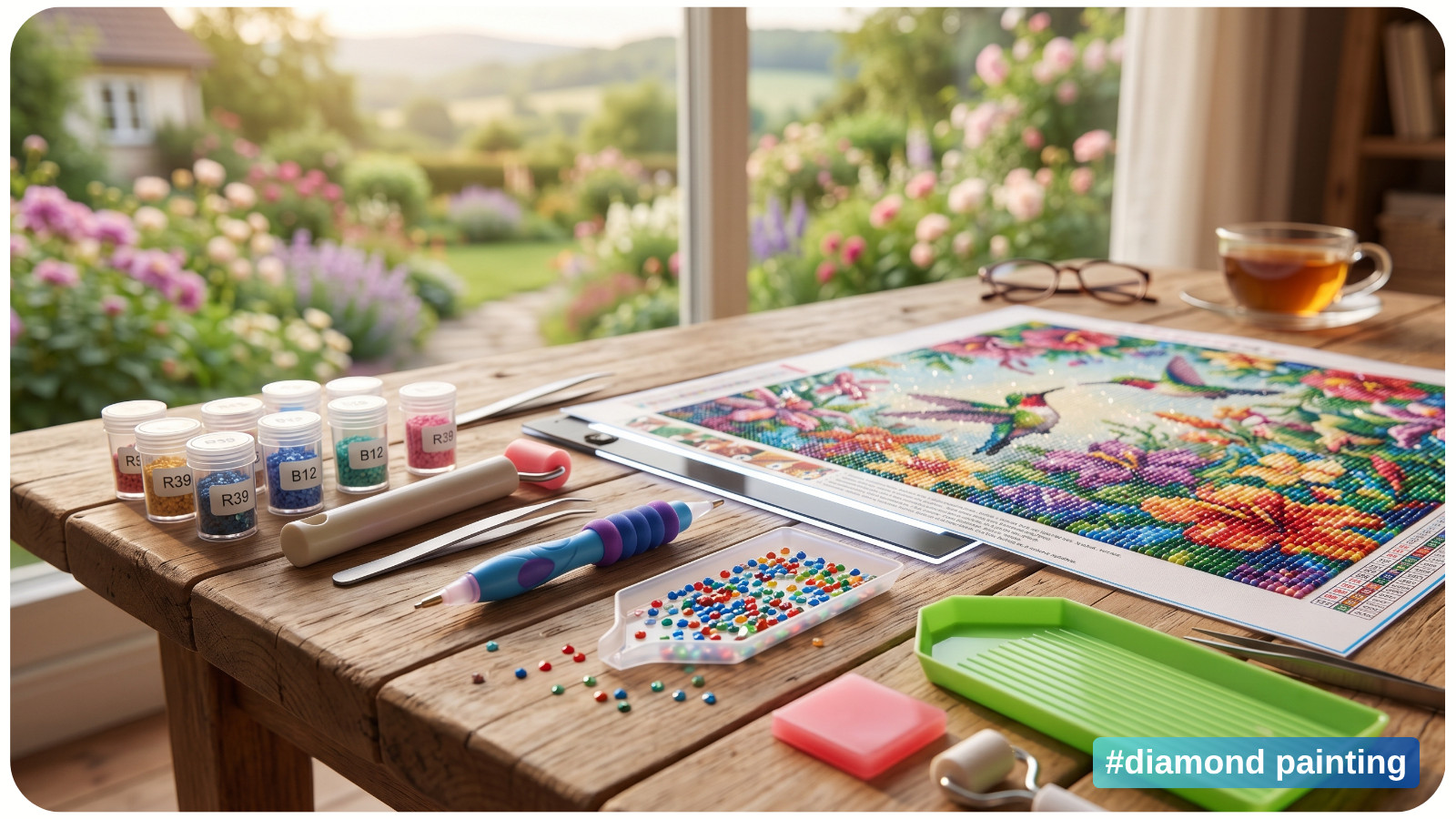
WHY DIAMOND PAINTING TOOLS MATTER
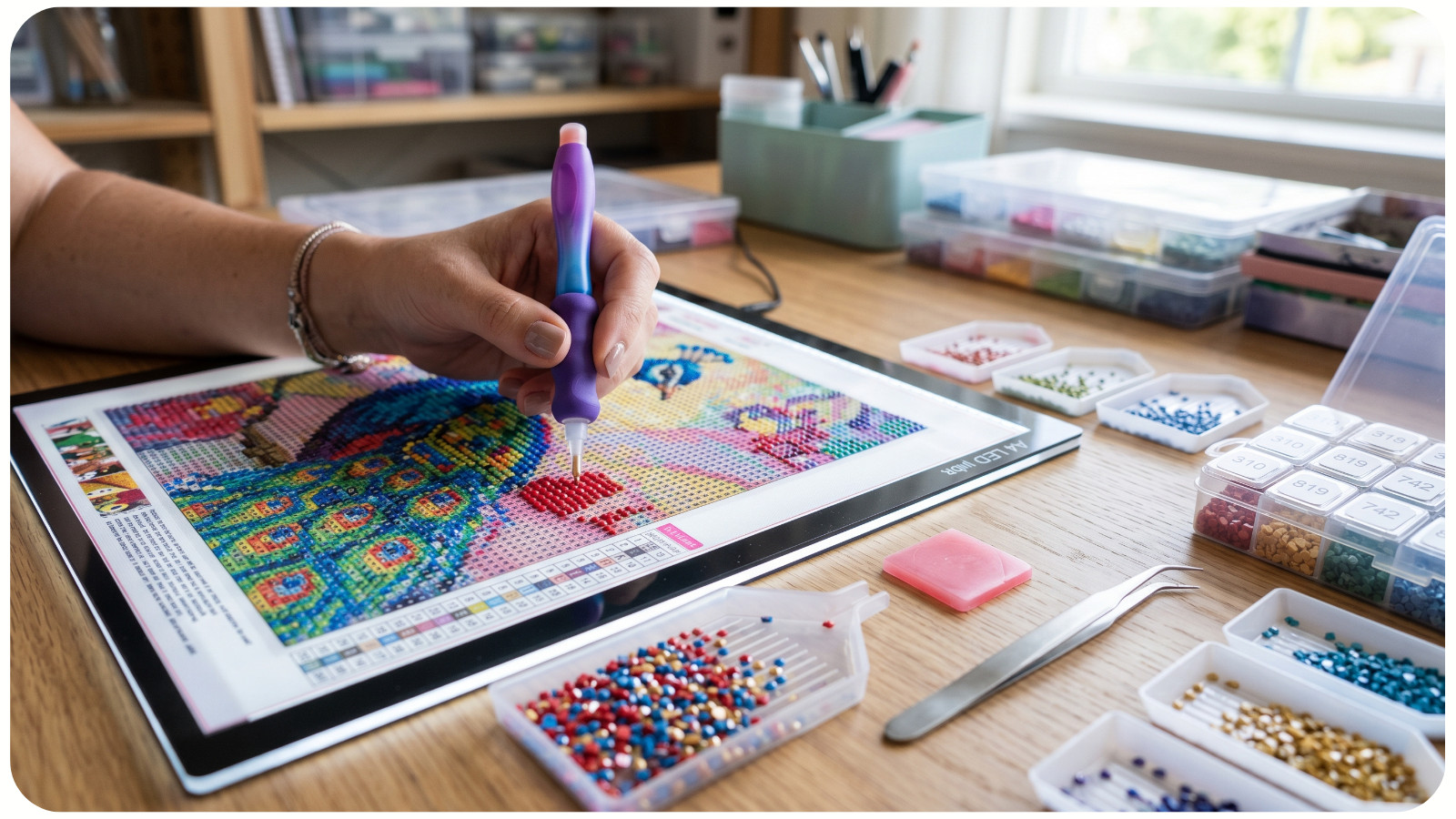
Diamond painting looks simple at first: pick up a drill, place it on the canvas, repeat. But the quality of your tools has a direct effect on speed, accuracy, comfort, and the final look of your artwork.
A well-prepared tray helps drills face the right direction. A reliable pen gives you control. Pink wax creates the grip needed to lift each drill cleanly. A light pad improves symbol visibility, especially on detailed canvases.
For hobbyists who want crisp lines, even sparkle, and fewer mistakes, understanding your tools is just as important as choosing the right design.
TOOLS LIST
- Diamond painting tray;
- Diamond painting pen;
- Pink wax or adhesive putty;
- Light pad;
- Multiplacer tips;
- Single-placer tip;
- Canvas with printed symbols;
- Round or square drills;
- Release paper or cover film;
- Storage containers;
- Roller or brayer;
- Tweezers.
1. DIAMOND PAINTING TRAY: THE DRILL ORGANIZER
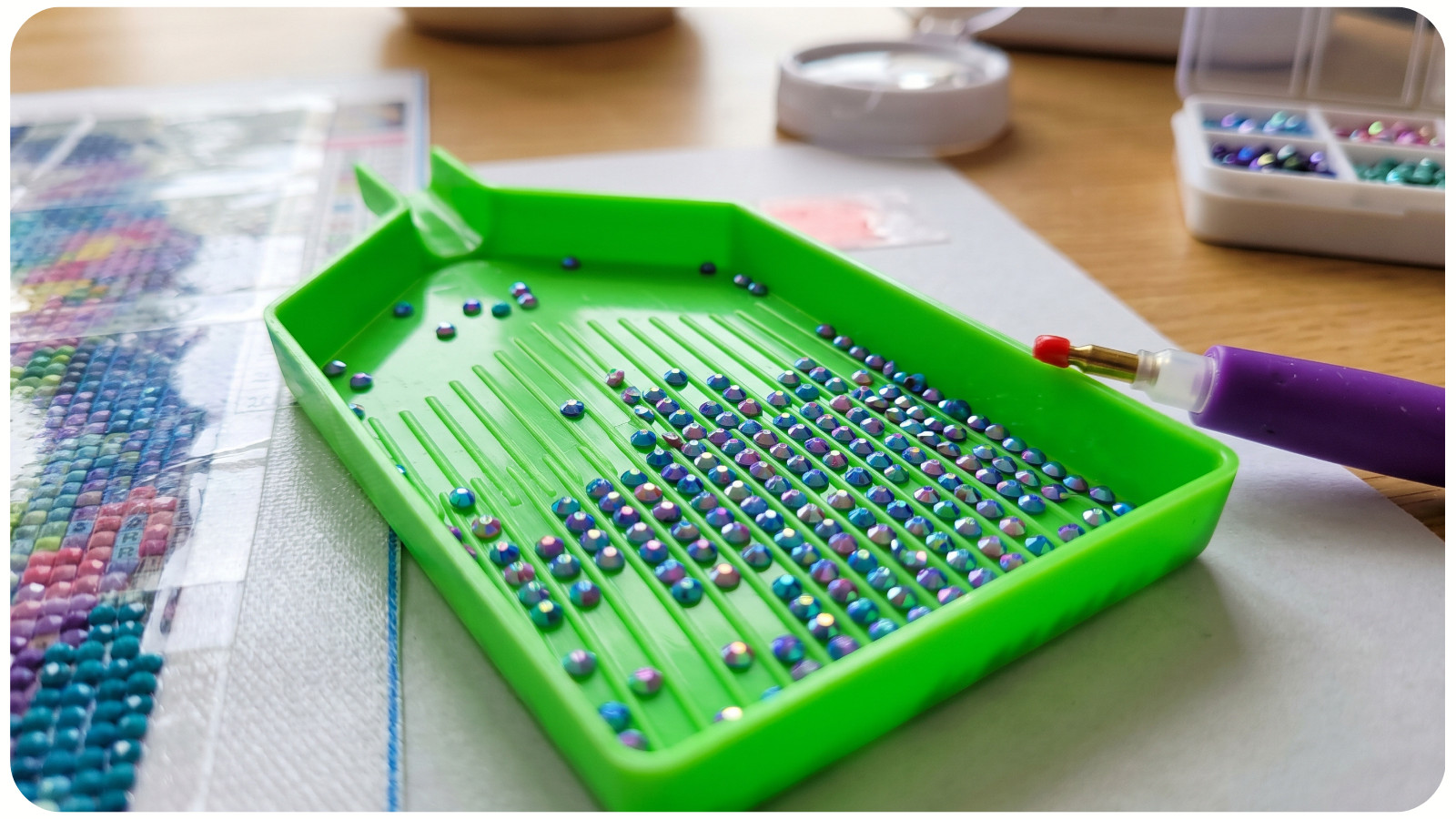
The tray is more than a small plastic dish. Its job is to orient your drills so the faceted side faces upward and the flat side stays down. This makes each drill easier to pick up and place accurately.
Most trays have shallow ridges across the base. When you gently shake the tray side to side, the drills settle into these grooves. Correctly aligned drills reduce wasted motion and help you maintain a steady rhythm.
Tray Features to Look For. A good tray should have clean ridges, smooth edges, and a narrow spout for pouring leftover drills back into storage. Large trays are useful for big color blocks, while small trays give better control when working with limited colors.
For square drills, a well-ridged tray is especially helpful because orientation matters. Square drills need to sit evenly on the canvas to avoid gaps, crowding, or uneven rows.
Common Tray Mistake. Overfilling the tray makes drills stack on top of each other instead of lining up properly. Use a modest amount of drills and shake gently. The goal is alignment, not speed alone.
2. DIAMOND PAINTING PEN: THE PLACEMENT TOOL
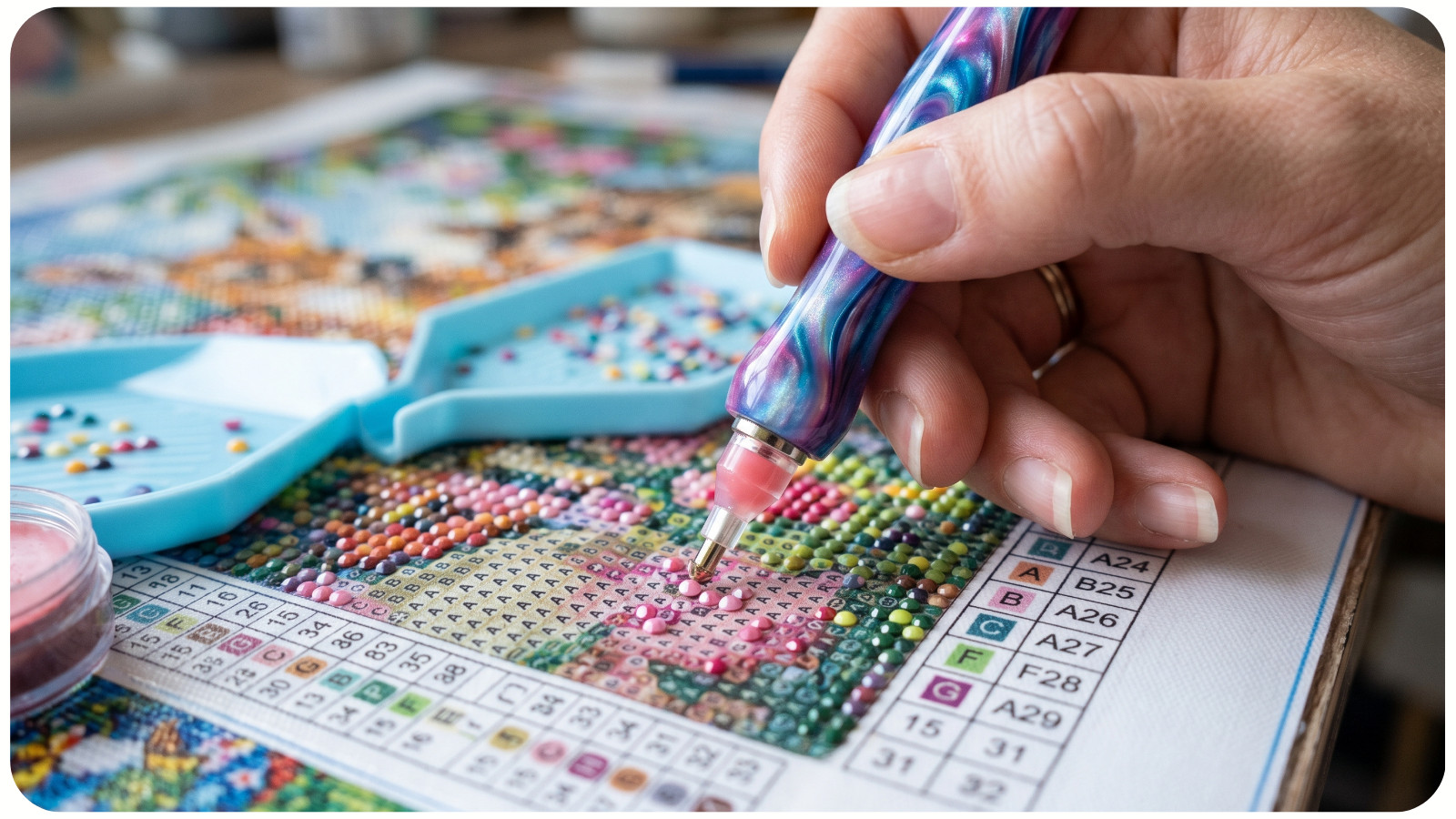
The diamond painting pen is the main tool used to pick up and place drills. Standard pens are lightweight and usually come with a single-placer tip. This is the most accurate option and is best for outlines, small details, confetti areas, and symbol-heavy sections.
Single-Placer Tip. The single-placer tip picks up one drill at a time. It gives maximum control and is essential for detailed artwork. Use it when working near edges, lettering, faces, animals, or shaded areas where color changes are frequent.
Multiplacer Tip. A multiplacer tip allows you to pick up several drills at once, usually 3, 6, 9, or more. This is useful for large blocks of the same color. However, multiplacers require careful pressure and alignment. Pressing too hard can push drills out of place or create uneven spacing.
For expert results, use a multiplacer only when the symbols are clearly lined up and the adhesive is clean. Switch back to a single placer for precision areas.
Comfort and Grip. Long diamond painting sessions can strain your fingers. Thicker ergonomic pens help reduce hand fatigue by giving you a wider grip. This is especially useful for large canvases or complex Awesome Pattern Studio designs intended as finished home decor.
3. PINK WAX: THE GRIP MECHANISM
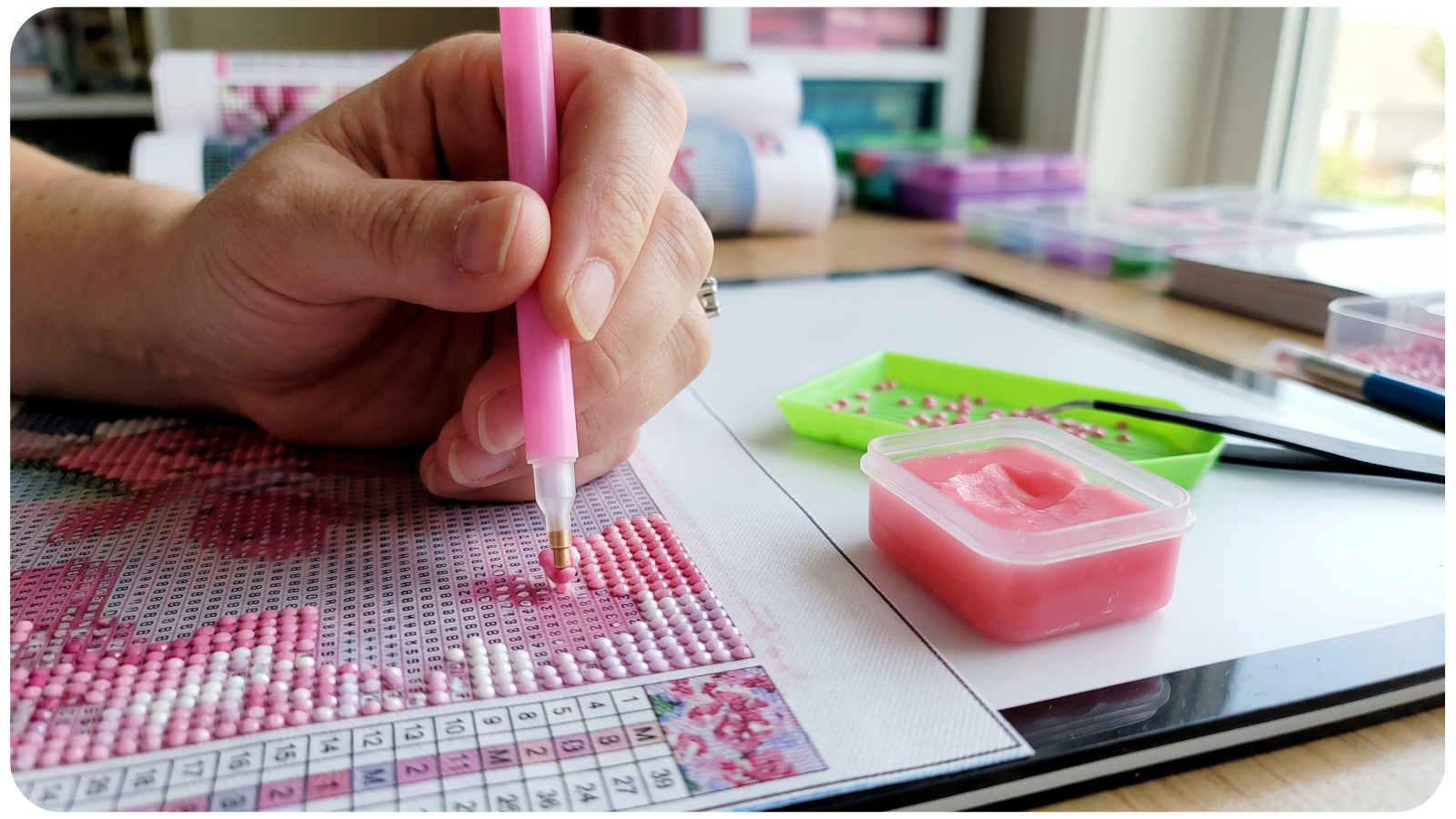
Pink wax is the adhesive material inserted into the hollow tip of the pen. It creates temporary tackiness so the pen can lift a drill from the tray and transfer it to the canvas.
To use it, press the pen tip gently into the wax, then lift. The wax should fill the tip without overflowing. Too much wax can leave residue on drills. Too little wax can cause drills to fall off before placement.
How Often to Refill Wax. Refill when the pen stops picking up drills cleanly or when drills begin dropping mid-placement. Frequency depends on pressure, drill type, humidity, and how many drills you place.
Round drills often pick up more easily than square drills because of their shape. Square drills may require slightly fresher wax for consistent grip.
Wax Troubleshooting. If drills stick too firmly to the pen, the wax may be overfilled or too soft. Dab the pen lightly on scrap release paper before continuing.
If drills will not pick up, the wax may be dry, dirty, or compressed too deeply into the tip. Clean the tip and reload with fresh pink wax.
4. LIGHT PAD: SYMBOL CLARITY AND EYE COMFORT
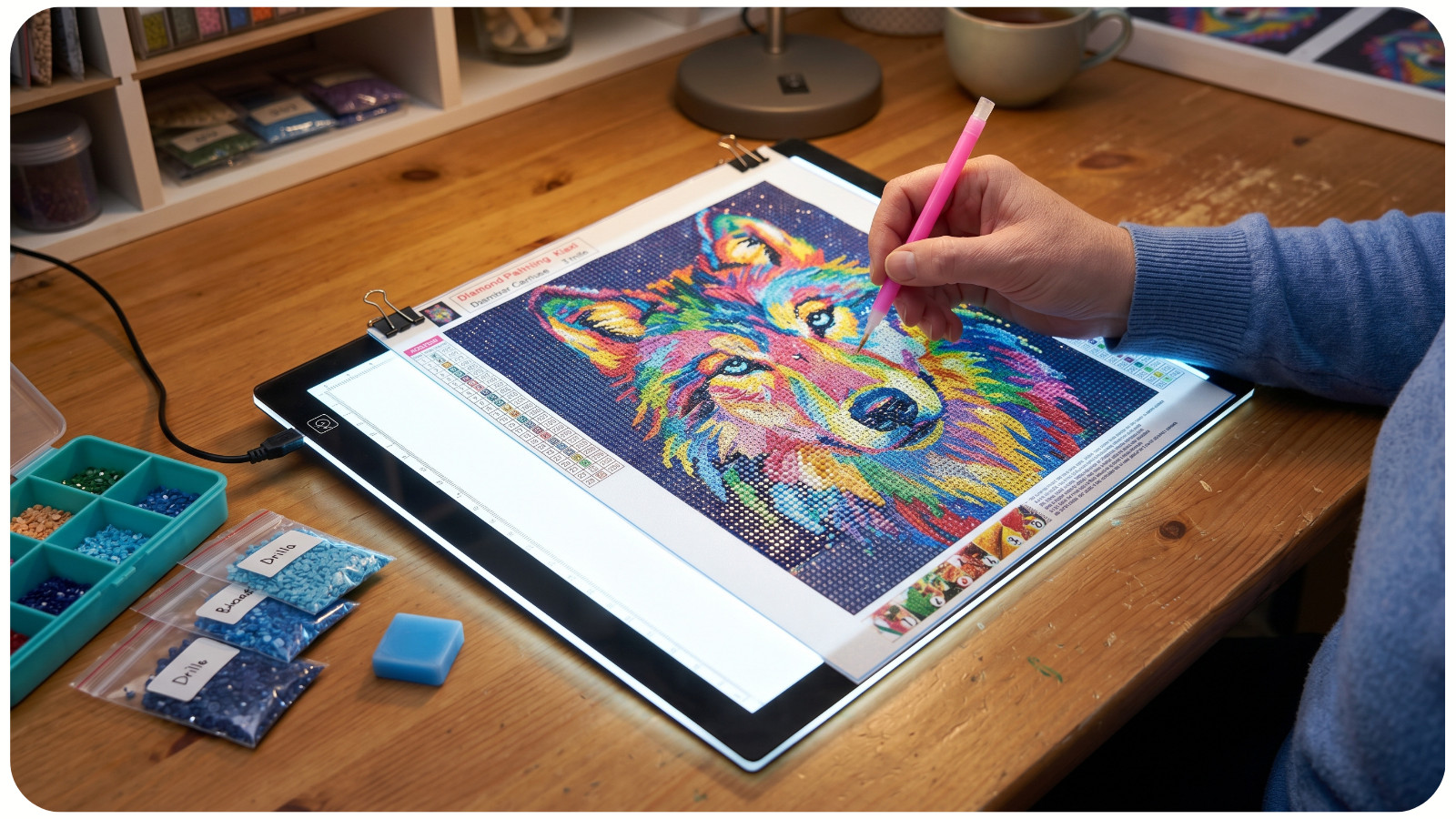
A light pad sits underneath the canvas and shines light through the printed symbol layer. This makes symbols easier to see, especially in darker sections or complex color areas.
Light pads are especially helpful for large canvases, detailed portraits, fantasy scenes, floral designs, and any diamond painting with many similar symbols.
Technical Benefits of a Light Pad. A light pad improves contrast between symbols and canvas background. This reduces eye strain and helps prevent symbol confusion. It also makes it easier to spot skipped squares before the adhesive is covered.
For best results, use adjustable brightness. Too much light can cause glare, while too little may not improve visibility enough. Medium brightness is usually ideal for long sessions.
Light Pad Size. Choose a light pad based on your canvas size and workspace. An A4 light pad works well for most hobby projects. Larger pads are better for oversized canvases but require more table space.
5. HOW THESE TOOLS WORK TOGETHER
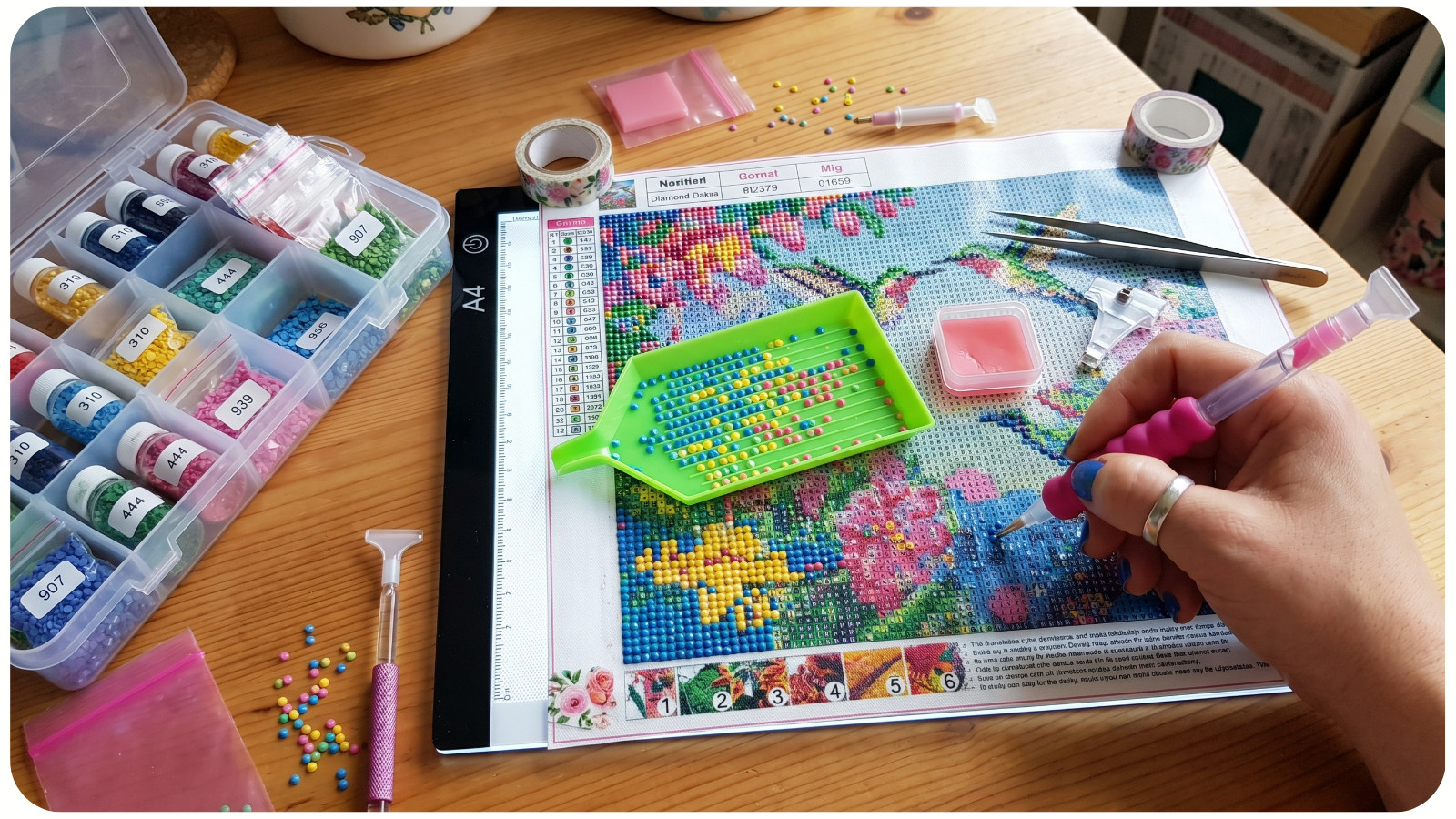
Each diamond painting tool supports a different part of the process.
The tray prepares the drills. The pen transfers them. Pink wax creates the temporary grip. The light pad improves visibility and accuracy. When all four tools work well together, the process becomes smoother, quieter, and more satisfying.
That satisfying ASMR rhythm of shake, pick, place, and press comes from proper tool use. It is also what makes diamond painting such an effective stress-relief hobby.
6. PREVENTING COMMON PROBLEMS
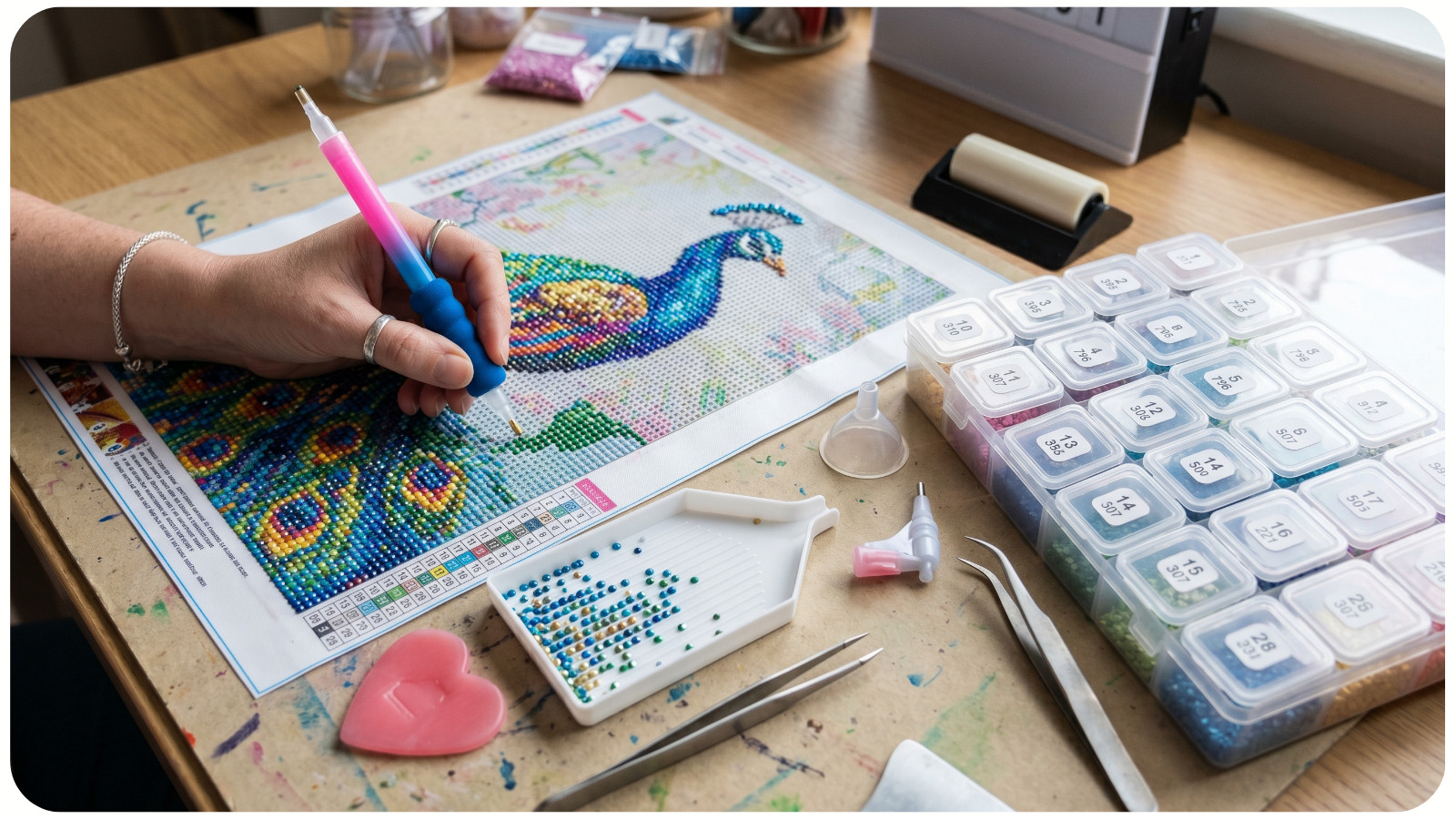
1. Popping Drills. Popping drills happen when drills do not sit correctly, the canvas is crowded, or square drills are slightly misaligned. Use a straightener tool, place drills with gentle pressure, and avoid forcing drills into tight spaces.
A roller can help press finished sections into the adhesive, but use light pressure. Excessive force may damage drill facets.
2. Canvas Creases. Canvas creases can affect adhesive contact and drill alignment. Flatten the canvas before starting by placing it under clean, heavy books for a day or two. Never iron directly over the adhesive area.
If the canvas has a protective film, peel it back gradually instead of removing it all at once. This keeps the adhesive clean and prevents dust from reducing stickiness.
3. Wax Residue. Wax residue can dull sparkle if it transfers onto drill surfaces. Use less wax, avoid pressing the pen too deeply, and gently wipe finished sections with a soft, dry cloth if needed.
7. CHOOSING BETTER TOOLS FOR BETTER RESULTS
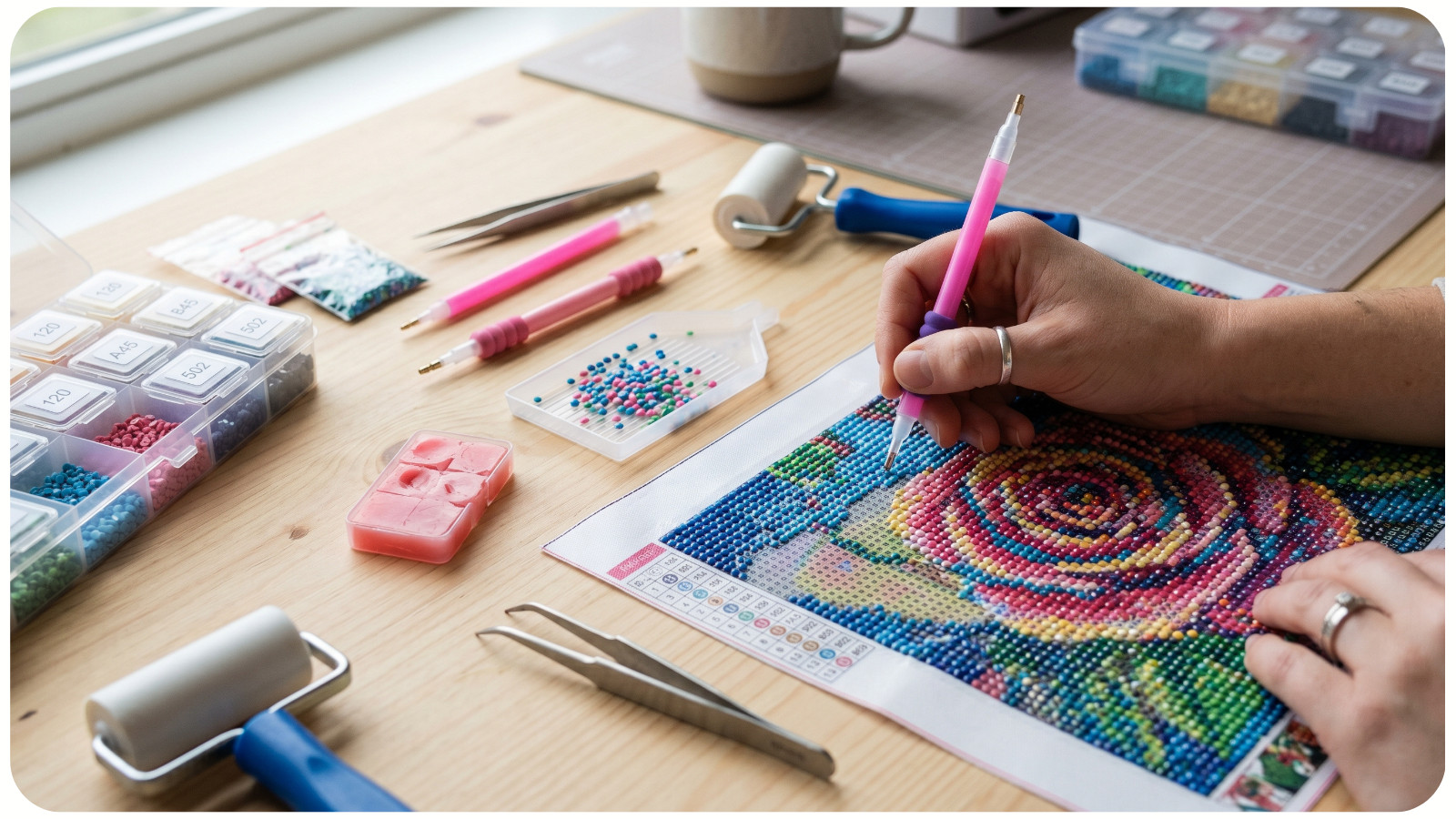
Beginners can complete a diamond painting with basic kit tools, but upgrading certain items can improve comfort and precision. A better tray, ergonomic pen, quality multiplacer, and adjustable light pad are practical upgrades.
For display-worthy results, tool quality matters most on complex designs. Detailed Awesome Pattern Studio diamond painting designs can become beautiful wall decor when drills are aligned cleanly and the sparkle is even across the canvas.
CONCLUSION
Diamond painting tools may look simple, but each one plays a technical role in the final result. The tray organizes your drills, the pen controls placement, pink wax provides grip, and the light pad improves symbol accuracy.
When you understand how these tools work, diamond painting becomes more relaxing, efficient, and precise. Whether you are working on a cozy weekend project or a large Awesome Pattern Studio design for your home, the right tools help every drill shine.