


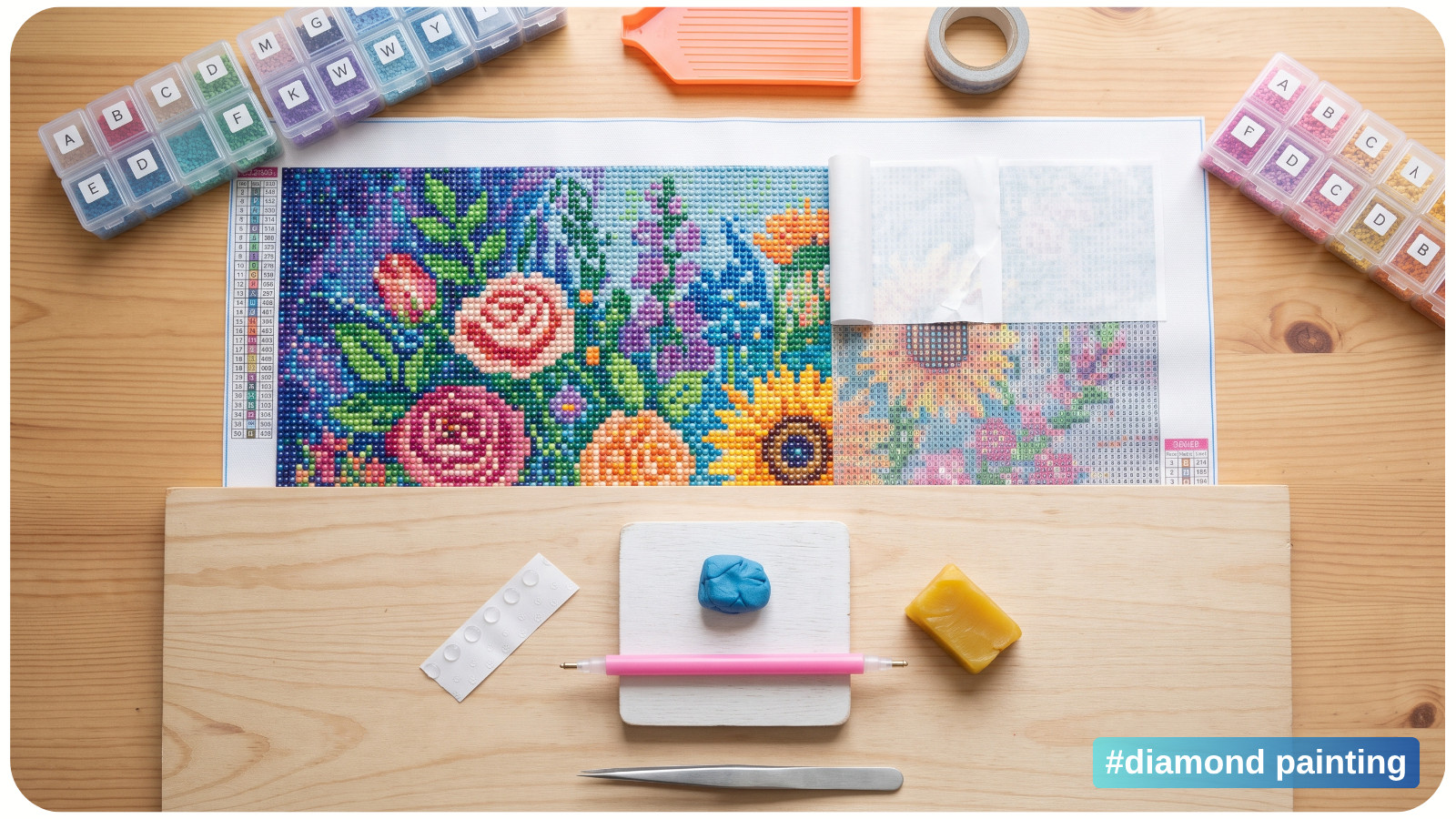
The wax in a diamond painting pen has one specific job: it creates enough temporary grip to lift a drill, carry it to the canvas, and release it onto the adhesive. It does not hold the drill in the finished painting - the canvas adhesive does that. If you are new to the basic setup, this guide to diamond painting tools and how they work explains the role of the pen, tray, wax, and light pad.
A material can feel sticky between your fingers and still perform badly in a pen. Some substitutes squeeze around the drill, grip too aggressively, or leave oil, color, and crumbs where you do not want them.
The short professional answer is this: diamond painting putty, a carefully chosen reusable mounting putty, and—in the right type of tip - a tiny glue dot can all work well. Lip balm, chewing gum, candle wax, and most modeling compounds are poor substitutes. Here is how to tell the difference.
What a Good Wax Alternative Must Do
A useful pickup material needs a balance of five properties. Stickiness alone is not enough.
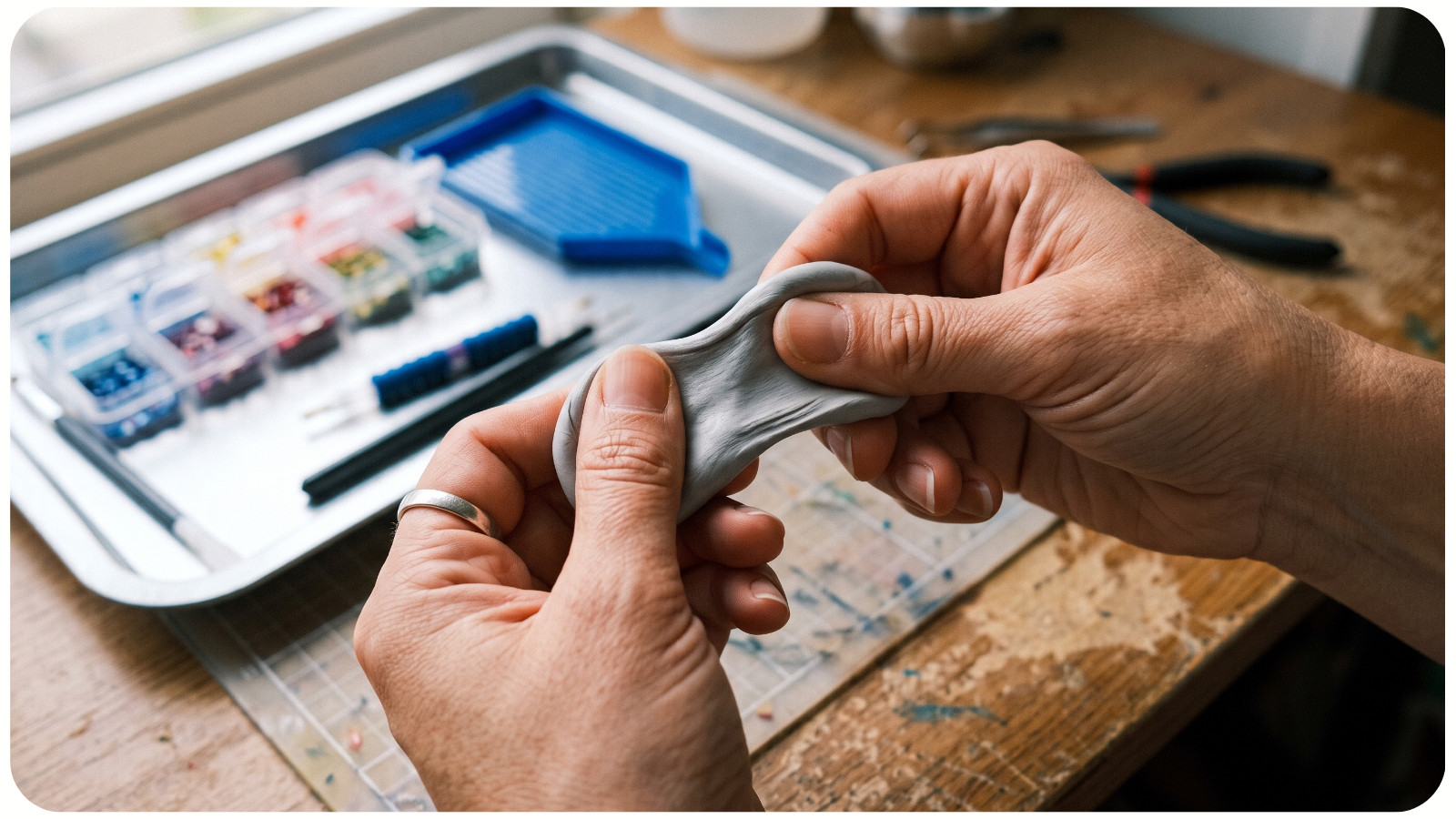
• Controlled tack: It must lift a drill without gripping it more strongly than the canvas adhesive does.
• Clean release: The drill should leave the pen with light placement pressure, without strings or residue.
• Cohesion: The material should stay together inside the tip instead of crumbling or smearing.
• Shape stability: It should remain seated in a single placer or multiplacer rather than being pushed out after a few drills.
• Material compatibility: It should not stain light drills, cloud special coatings, or introduce oil and moisture to the canvas.
Temperature also changes the result. A putty that feels perfect in a cool room may become soft in a warm hand. Performance also varies with pen-tip shape, drill finish, and pressure. Understanding the surface and shape of different diamond painting drills makes those differences easier to diagnose.
The Best Overall Option: Diamond Painting Putty
Putty made specifically for diamond painting is usually the most dependable step up from pink wax. It holds its shape longer, so you reload less often, and comes in consistencies intended for single placers, multiplacers, or both.
The tradeoff is stronger tack. Condition a fresh load by picking up and releasing several spare drills in the tray. If the pen lifts drills back off the canvas, pops as it releases, or disturbs neighboring rows, reduce your pressure or use a less aggressive formula.
Putty is convenient for repeated multiplacing because it can remain evenly packed across the tip. With AB, iridescent, metallic, or other surface-treated drills, test first and use very light pressure. Touch the top surface; do not compress putty around the drill. For more help controlling longer rows, see these multiplacer and drill-placement techniques.
Verdict: Excellent for regular use, especially if you want longer intervals between refills. Choose the tack level for your tip and working conditions rather than assuming the stickiest product is the best.
Reusable Mounting Putty: Effective but Brand-Dependent
Reusable poster or mounting putty is a practical household alternative. It stays pliable, can be kneaded, and often lasts much longer in a pen than basic kit wax.
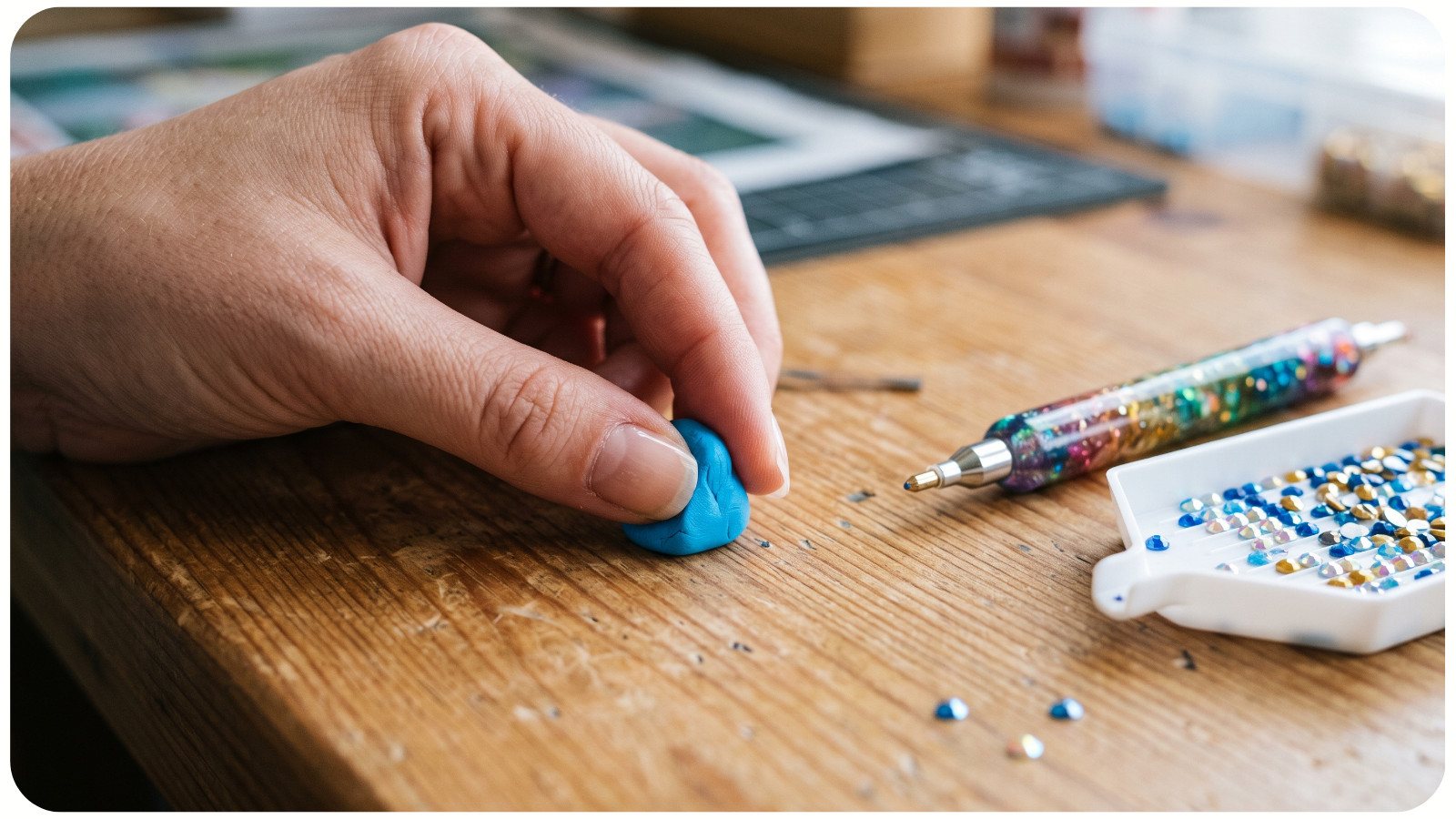
Its weakness is inconsistency: brands, colors, and older versus newer pieces vary in firmness and tack. Some mounting putties can leave oily marks on porous surfaces in household use. Keep them away from exposed canvas adhesive and test before working over a large pale area.
Knead a piece smaller than a pea, press it into the clean tip, and remove anything bulging beyond the rim. Condition it on spare drills. If it stretches into threads, transfers color, or leaves a film, discard the load.
Firm mounting putty can be excellent in a single placer. It may be harder to pack evenly into a thin multiplacer, particularly at the corners, and a dense formula can create uneven pickup across a row.
Verdict: A strong budget alternative, but test the exact product. Keep it contained inside the pen and use a light hand.
Glue Dots: Very Good in a Single Placer, Awkward Elsewhere
Pressure-sensitive glue dots can last through a long session. Instead of filling the tip with a soft mass, you seat a thin piece of adhesive inside the opening.
For a single placer, use a tiny piece of a removable or low-profile dot. Push it fully inside with a spare drill or clean tool; do not leave adhesive around the outside. Pick up drills repeatedly until the initial grab becomes controlled.
Glue dots are less forgiving in multiplacers. They can bunch up or create unequal tack, so a row lifts unevenly. Levelable putty is usually easier.
Avoid forceful pickup. If a drill snaps onto the pen, refuses to release, or creates an adhesive string, replace the load rather than pressing harder.
Verdict: Excellent for many single-placer users; usually not the first choice for a multiplacer or delicate specialty drills.
Tweezers: The Cleanest Wax-Free Method
Tweezers remove pickup material from the equation. Fine, aligned tweezers are especially useful for square drills, corrections, checkerboard placement, and specialty drills.
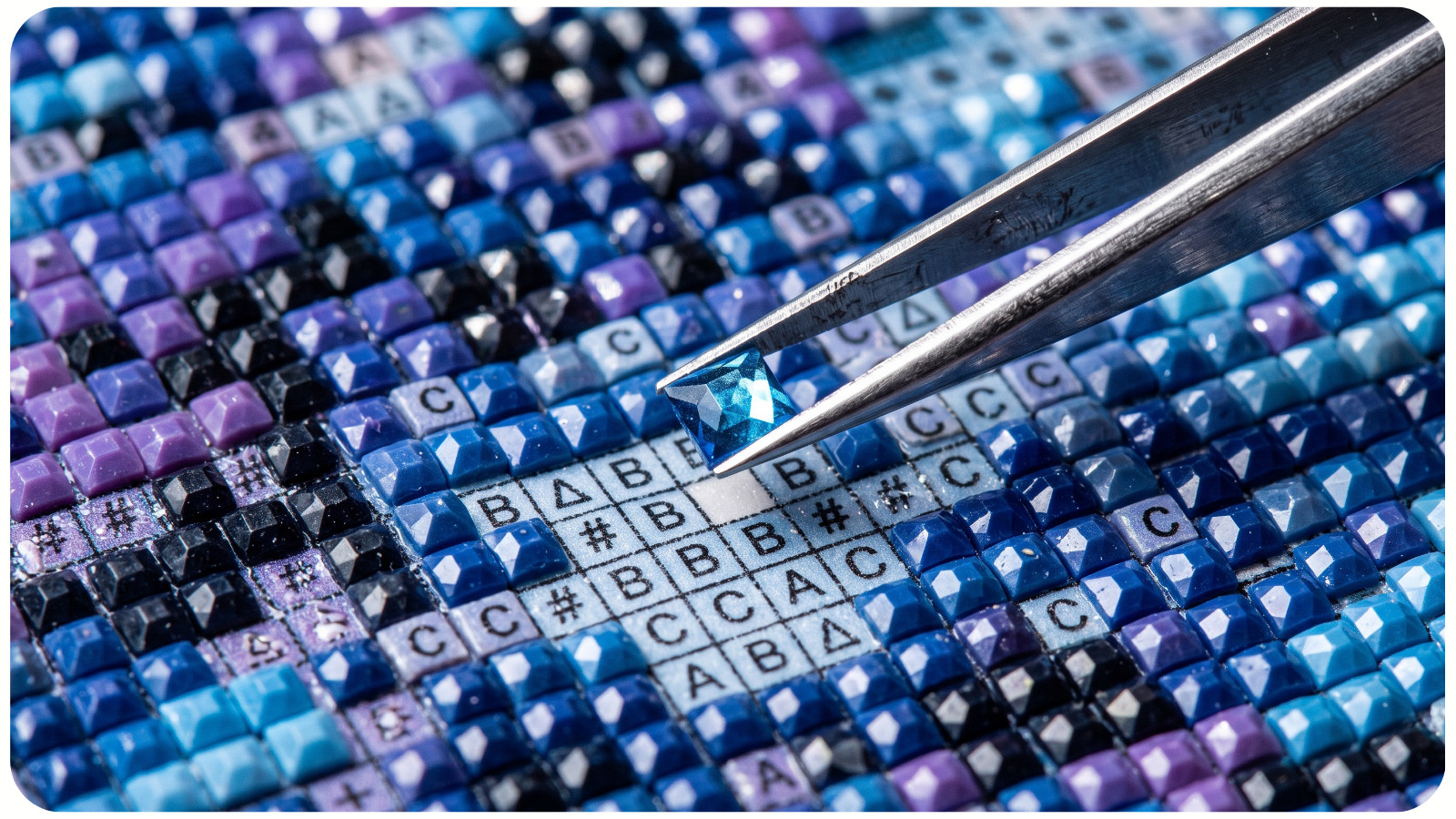
The disadvantages are speed and hand fatigue. Round drills are easier to drop or rotate, so tweezers are best treated as a precise secondary tool. They are also useful when following a careful process for fixing misplaced drills without damaging the canvas.
Verdict: Excellent for accuracy, corrections, and sensitive drills; inefficient for long sections of routine placement.
Alternatives That Work Only in an Emergency
A few familiar craft materials can lift drills briefly, but resemblance to wax or putty does not make them suitable for regular use.
Pure Beeswax
Pure beeswax is usually firmer and less predictably tacky than diamond painting wax. It may polish smooth instead of gripping or crack out of the tip. A purpose-made blend may behave differently, but candle or cosmetic beeswax is not an equivalent substitute.
Verdict: Possible in a tested blend; unreliable as a straight household swap.
Modeling Clay or Children’s Dough
Soft clay may pick up a few drills, but modeling compounds can contain moisture, oils, pigments, fillers, or particles. They may smear, dry out, crumble, or leave residue.
Verdict: It may get you through a few placements, but it is not a clean long-term solution.
Kneaded Eraser
A kneaded eraser is designed to absorb graphite or charcoal, not repeatedly release resin drills. A used one may also carry graphite, dust, or pigment.
Verdict: Too inconsistent and too easy to contaminate; use clean tweezers instead.
What Does Not Work and Why
Some substitutions fail because they introduce exactly the contaminants a diamond painting needs to avoid.
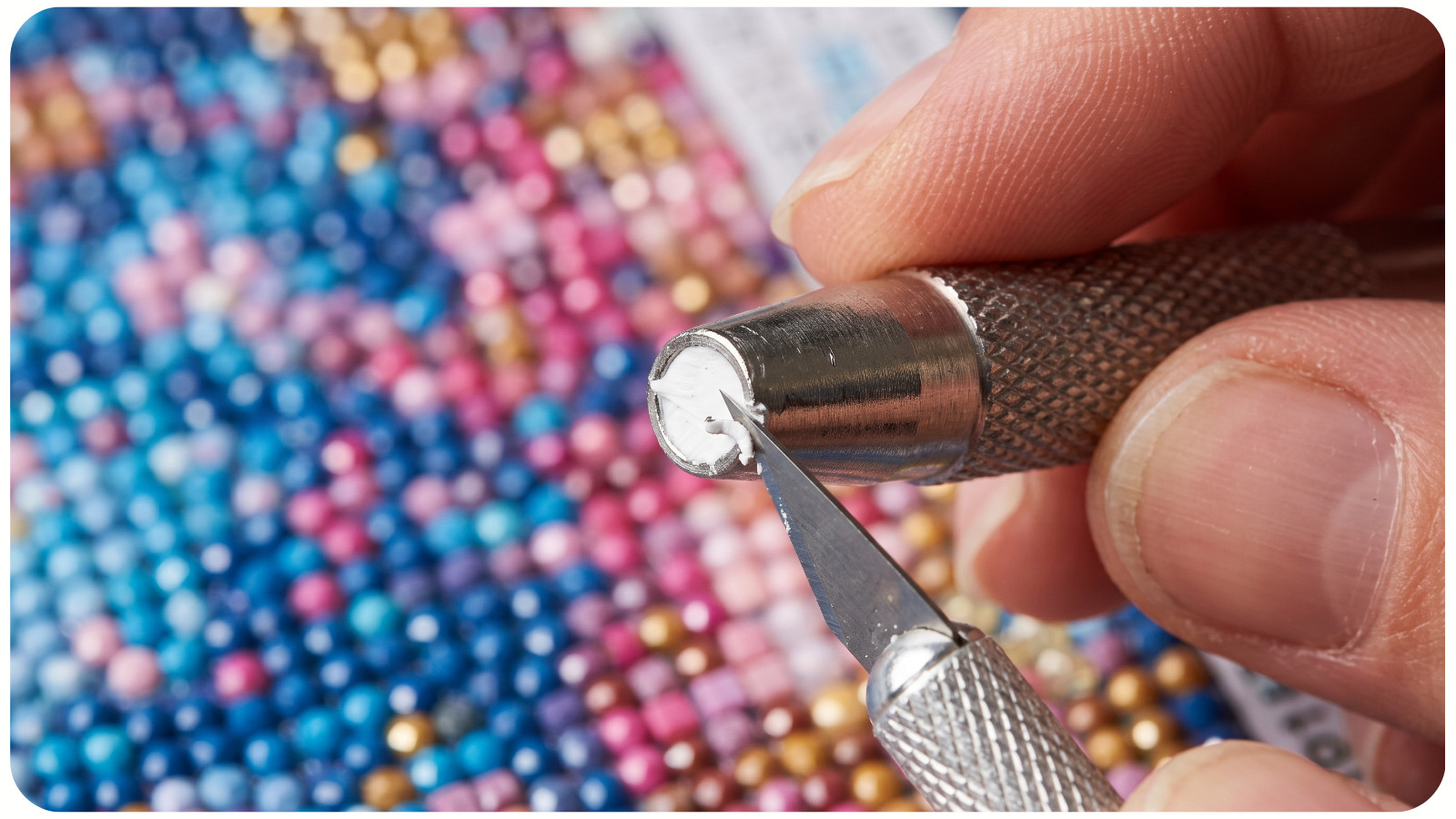
• Lip balm, petroleum jelly, and cosmetic waxes: These can leave an oily film on drills and the canvas. A slippery drill may not seat securely on the adhesive.
• Chewing gum: It is unhygienic, changes texture as it warms, stretches into strings, and may contain sugar, oils, color, or flavoring.
• Candle wax or crayons: These are generally too hard or slippery for reliable pickup and may leave flakes or pigment.
• Hot glue, craft glue, or super glue: These permanent adhesives can cure inside the tip, damage tools, transfer to drills, and contaminate the canvas.
• Double-sided tape wrapped around the pen: Exposed edges collect dust and can touch adjacent drills. Its thickness is also difficult to control.
• Silicone sealants and random household putties: If a product is designed to cure, seal, fill holes, or bond permanently, it does not belong in a diamond painting pen.
Do not judge a substitute only by whether it can lift one drill. The real test is whether it can complete repeated pickup-and-release cycles without depositing anything on the drill or canvas.
A Safe Five-Minute Test for Any New Material
Before committing to a new alternative, test it away from your main working area. Use spare drills and a small edge section of the canvas.
1. Clean old wax from the tip with a blunt tool. Avoid scratching or widening the opening.
2. Load only enough material to sit flush with the rim.
3. Pick up and release 20 spare drills in the tray to condition the surface.
4. Place 10 drills on a small edge section using your normal pressure.
5. Inspect under good light for residue, color transfer, strings, coating marks, tilted drills, or material squeezing from the tip.
Tap the placed drills gently with the side of the pen. They should remain on the canvas while the pen lifts away cleanly. If drills come back up, reduce tack or pressure. If pickup fails randomly, the material may be too hard, unevenly loaded, or contaminated with dust.
The Practical Selection Rule
For the easiest all-around replacement, choose a putty made for diamond painting. For an inexpensive household option, try clean reusable mounting putty and test it carefully. For a single placer and very long wear, a tiny glue dot can be excellent after conditioning. For square drills, corrections, or delicate finishes, keep fine tweezers nearby.
Whatever you choose, use the least tack and the least pressure that reliably lifts the drill. A good pen load should make placement feel quiet and controlled - not like you are pulling the drill away from the tool.
If a household material leaves oil, crumbs, pigment, or strings during the test, it has already answered the question: it does not belong on the canvas. Once you are ready to practice with a dependable setup, explore the complete collection of diamond painting kits from Awesome Pattern Studio.