



You stop in front of a painting because of one patch of blue. Across the room, a ceramic bowl has a border you can't stop looking at. You may not know the artist, the period, or the name of the technique. You already have enough to begin a project.
Museums offer more than finished works to admire. They are full of choices you can borrow as starting points: a color pairing, a repeated shape, a mood, or the way a maker solved a practical problem. You can find those ideas in a gallery or an online collection, then turn one small observation into something that feels like yours.
Start with what catches your eye
You don't need to understand an entire exhibition. Pick one object and give it a few minutes. The National Gallery of Art uses close looking in its learning activities, encouraging visitors to slow down and notice what they actually see.
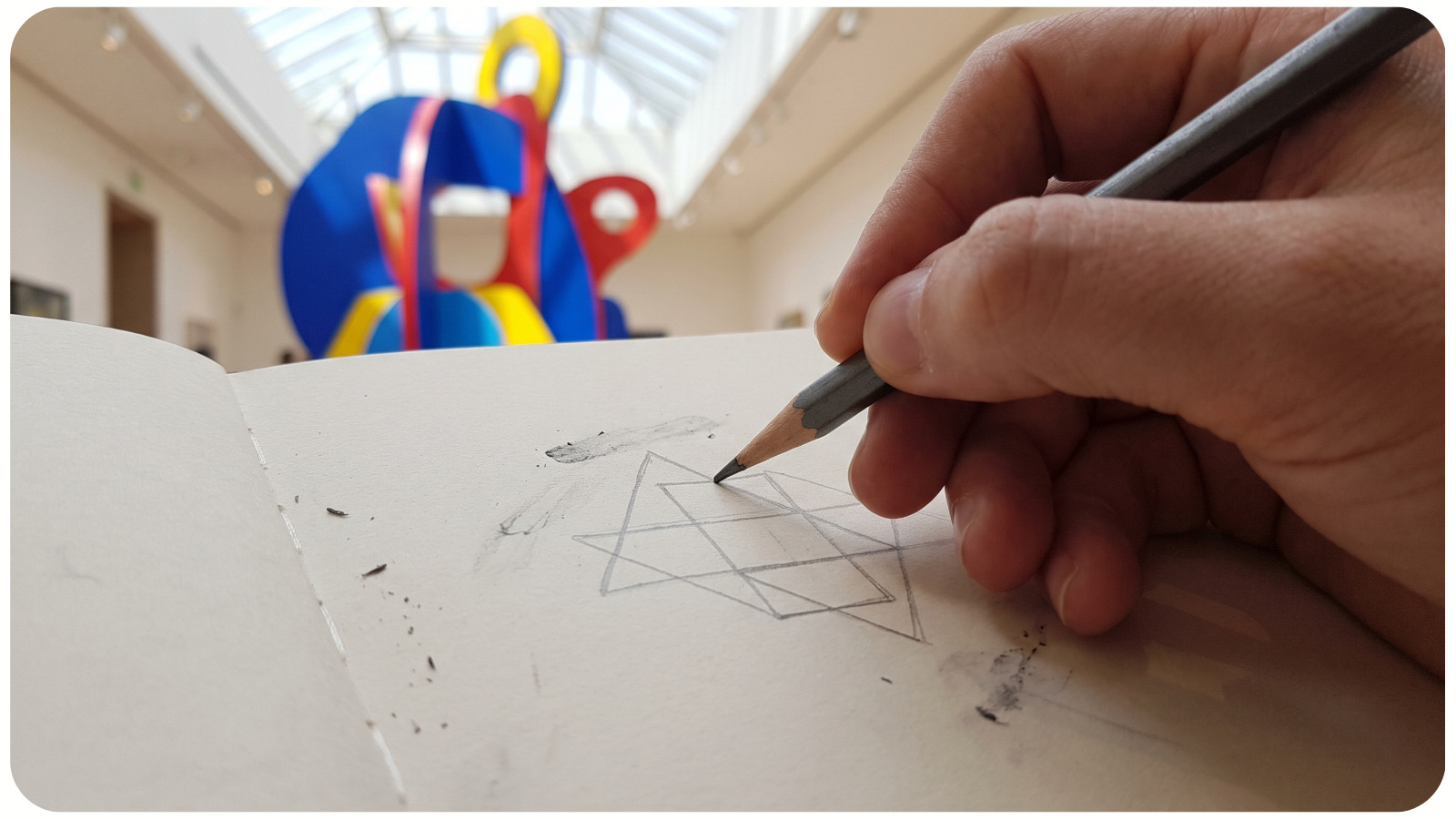
Try asking yourself:
• What did I notice first?
• Which two or three colors keep appearing?
• Is the work built from curves, straight lines, tiny details, or large open areas?
• What would I want to take home from it: its pattern, texture, feeling, or story?
There is no test at the end. “I like the little gold stars in the corner” is a more useful project note than a polished description of the whole painting. If the label adds something interesting, read it. The label can help you understand the object's maker, use, and cultural setting, but your first observation can remain your own.
Write down a few words before moving on. If the museum permits photography, take a photo of the object and its label. Photography rules vary by museum and exhibition, so check the signs. A quick sketch is another way to remember what drew you in, even if your sketch is only a row of circles and a color note.
Turn one detail into a manageable craft idea
The easiest museum-inspired projects usually begin with a detail, not a plan to reproduce a masterpiece. Give that detail a new job in a material you enjoy. If you like combining materials, this APS guide to mixing craft techniques offers more ways to build on a small idea.
Borrow a color relationship
Suppose a landscape combines dusty pink, olive green, and a narrow line of bright orange. Make a three-color paper collage or use the palette for a small embroidered bookmark. You can change the proportions: let olive cover most of the piece and save orange for a single accent. That decision makes the project your own while keeping the spark that started it.
If choosing exact shades feels hard, describe the colors in plain words and work with what you have. “Warm cream beside deep green” is enough direction for a first attempt.
Repeat a shape or rhythm
Look at a tile, textile, print, or carved frame. Does one leaf alternate with a dot? Do arches get smaller as they move across the surface? Translate the rhythm into a greeting card, stitched border, painted plant pot, or gift wrap stamped with simple shapes. Begin with a four-inch sample on scrap paper. You'll learn whether the pattern needs more space before committing to a larger piece.
Respond to a texture
A rough clay surface might suggest torn paper layered onto a card. If thread is your favorite material, browse APS embroidery articles for more stitching ideas. The crisp edge of a cut-paper work could lead to felt shapes sewn onto a pouch. A woven object might inspire strips of colored paper interlaced into a small panel. You aren't trying to imitate the original material perfectly. Ask what your own materials can do with the same feeling.
Take a cue from an object's purpose
Museums hold everyday objects as well as paintings. A decorated box can prompt you to cover a plain storage tin. A historic botanical print may lead to a set of hand-drawn gift tags. A vessel's silhouette might become the outline of a fabric appliqué. Think about the object as something made to be held, used, displayed, or given. That often leads to a more personal project than copying its surface.
Make a small museum idea notebook
Art inspiration can disappear by the time you get home, especially after a full day of galleries. Keep a page for each object that stays with you. Note the museum, object title or description, maker and date if provided, plus a link to its collection page when available. Then divide the rest of the page into three short lines:
I noticed: a blue border with uneven white dots.
I could try: a dotted border around a simple fabric patch.
First step: test white stitches on blue scrap fabric.
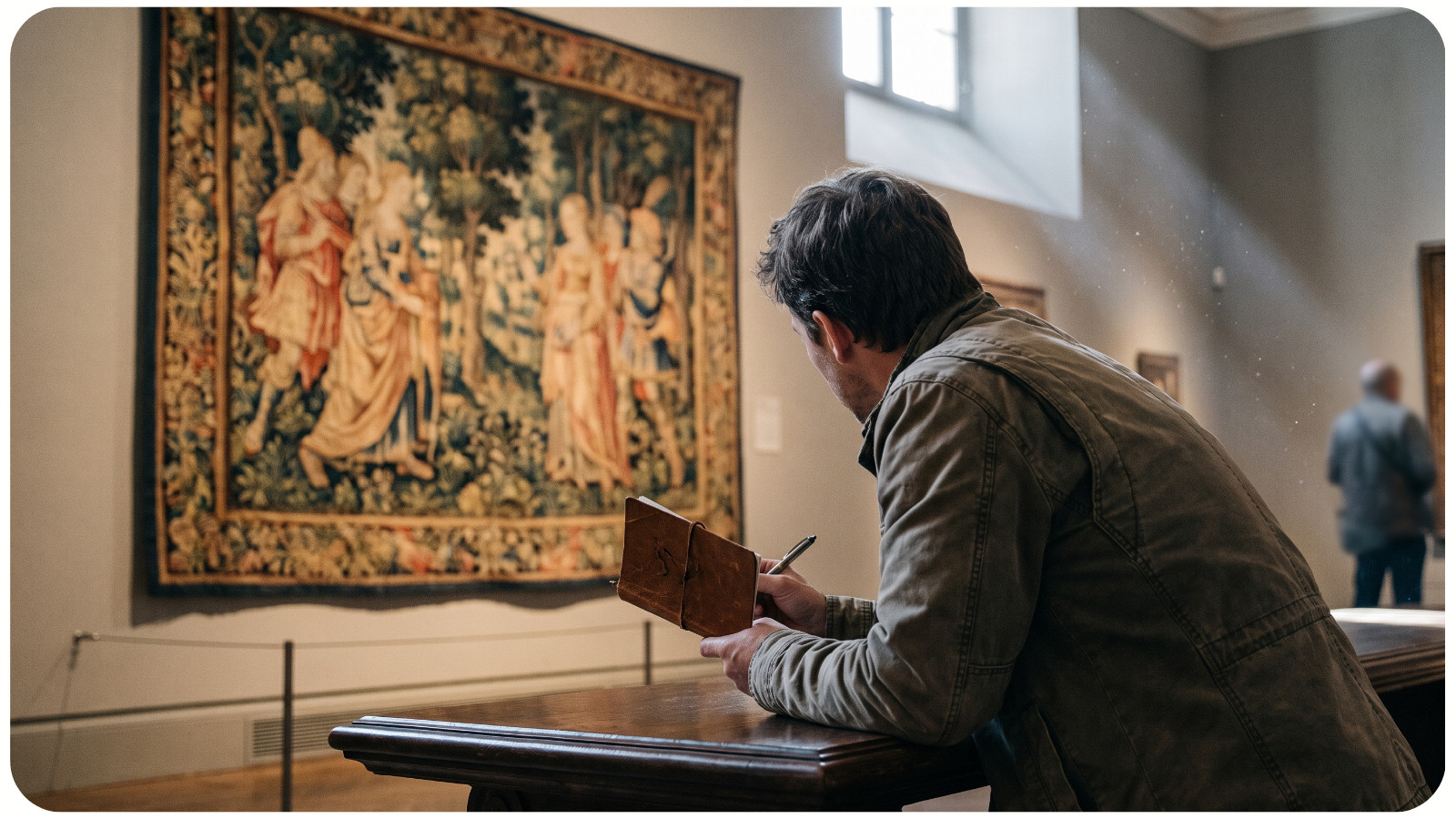
The first step matters. “Make a museum-inspired quilt” can sit in a notebook for years; “try a six-inch fabric square tonight” can happen after dinner. Keep the initial experiment small enough to finish or abandon without feeling that you wasted your supplies. New stitchers can also start with APS advice on beginner cross-stitch patterns before choosing a bigger stitched piece.
As you collect notes, look for your own habits. Maybe you always photograph painted skies, or perhaps your pages fill with bowls and decorative borders. Those repeats tell you which projects are likely to hold your interest.
Find inspiration even when you can't visit a museum
Many museums let you browse their collections online. Search by a subject you already like, such as birds, gardens, clothing, or ceramics, and save three objects that catch your eye. Then choose one feature shared by two of them. You might find a curved leaf in both an old print and a piece of pottery, or spot similar warm colors in objects made in very different places.
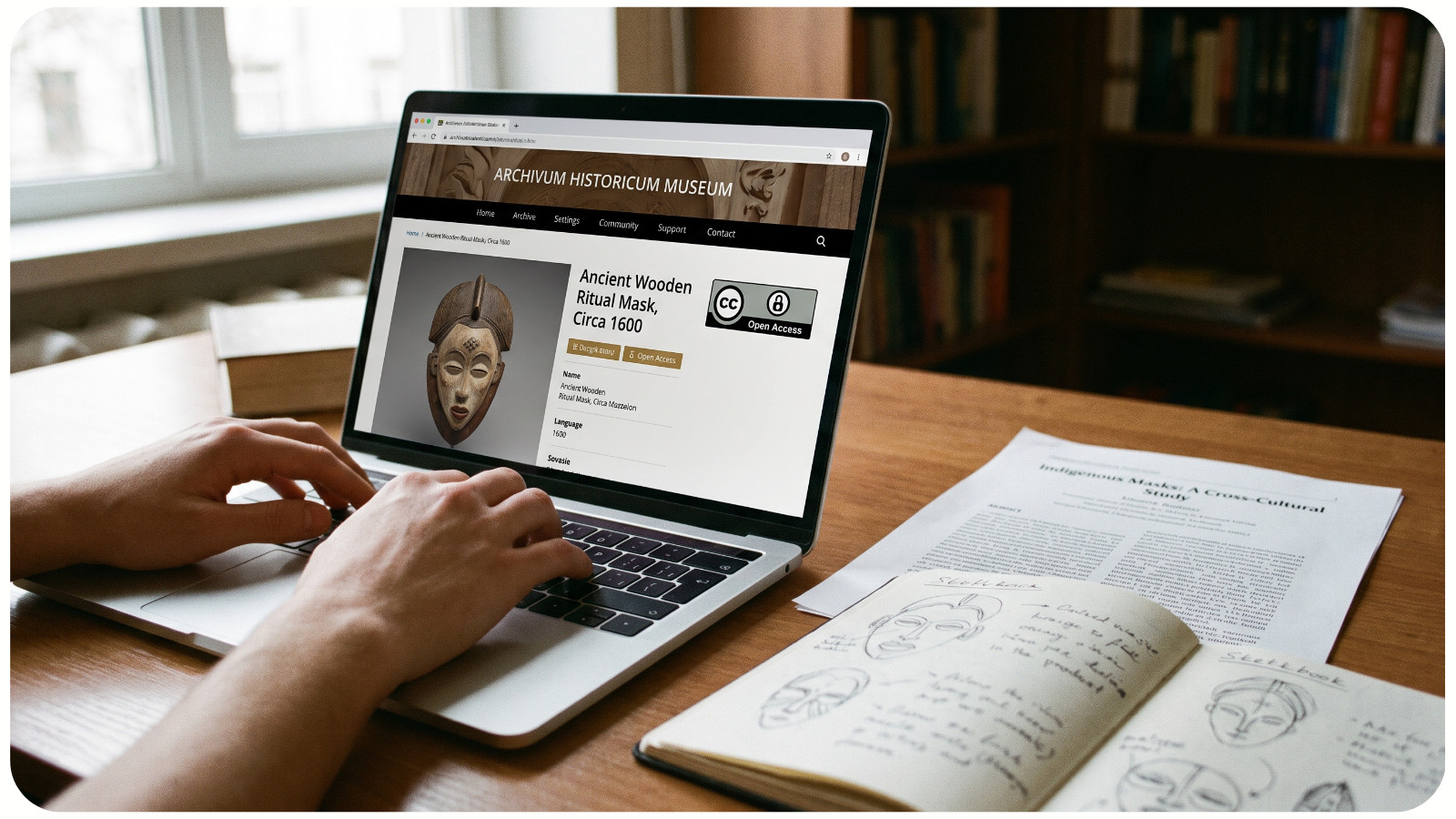
For a low-pressure exercise, open one object page and spend five minutes looking before reading the description. Write down what you notice, then read the museum's information. Your impression and the object's history can sit side by side. This is a way to practice looking, not a claim that you've understood everything about the work.
The Smithsonian Open Access collection and The Met's Open Access pages are useful places to explore. Open access applies to designated items, not automatically to every image on a museum website. Check the rights information for each object and image, particularly before reposting a museum image or using it in something you plan to sell.
Let the source inform you without flattening its story
There is a difference between using a color relationship as inspiration and lifting a distinctive design from an object with deep cultural meaning. Read the museum label and collection entry, especially when a work belongs to a living cultural tradition or has a ceremonial purpose. Learn who made it, where it comes from, and how it was used. If you share your project, name the work or collection that inspired you and link to its page when possible.
You can respond to what an object taught you without presenting its symbols as your own invention. For example, study the spacing of shapes in a textile, then draw shapes from your own garden for a new pattern. The underlying design choice gives you a direction while the final imagery grows from your experience.
If you want to reproduce an artwork or use a museum photo directly, check the rights information for that exact work and image. The Met identifies eligible images with an OA icon and makes them available under CC0. The Smithsonian also identifies its open access items as CC0. Giving credit is a thoughtful practice, but credit alone does not replace permission where rights apply.
A 20-minute project after your next visit
Choose one object. Spend three minutes looking, and write down a color, a shape, and a texture. At home, set a timer for 15 minutes and make a postcard-sized study using materials you already own. Cut paper, pencil, paint, thread, or fabric scraps all work. Use only one of your three notes as the main idea. Add the other two only if the piece needs them.
When the timer ends, give the study a name and jot down one change you'd try next time. It can stay a small experiment, or it can become the seed of a larger project. Either result counts: you went from noticing something in a museum to making a choice with your own hands.
Art expertise can deepen a visit, but it isn't an entry ticket to creativity. Curiosity, a few honest observations, and one modest first step are enough to start.