


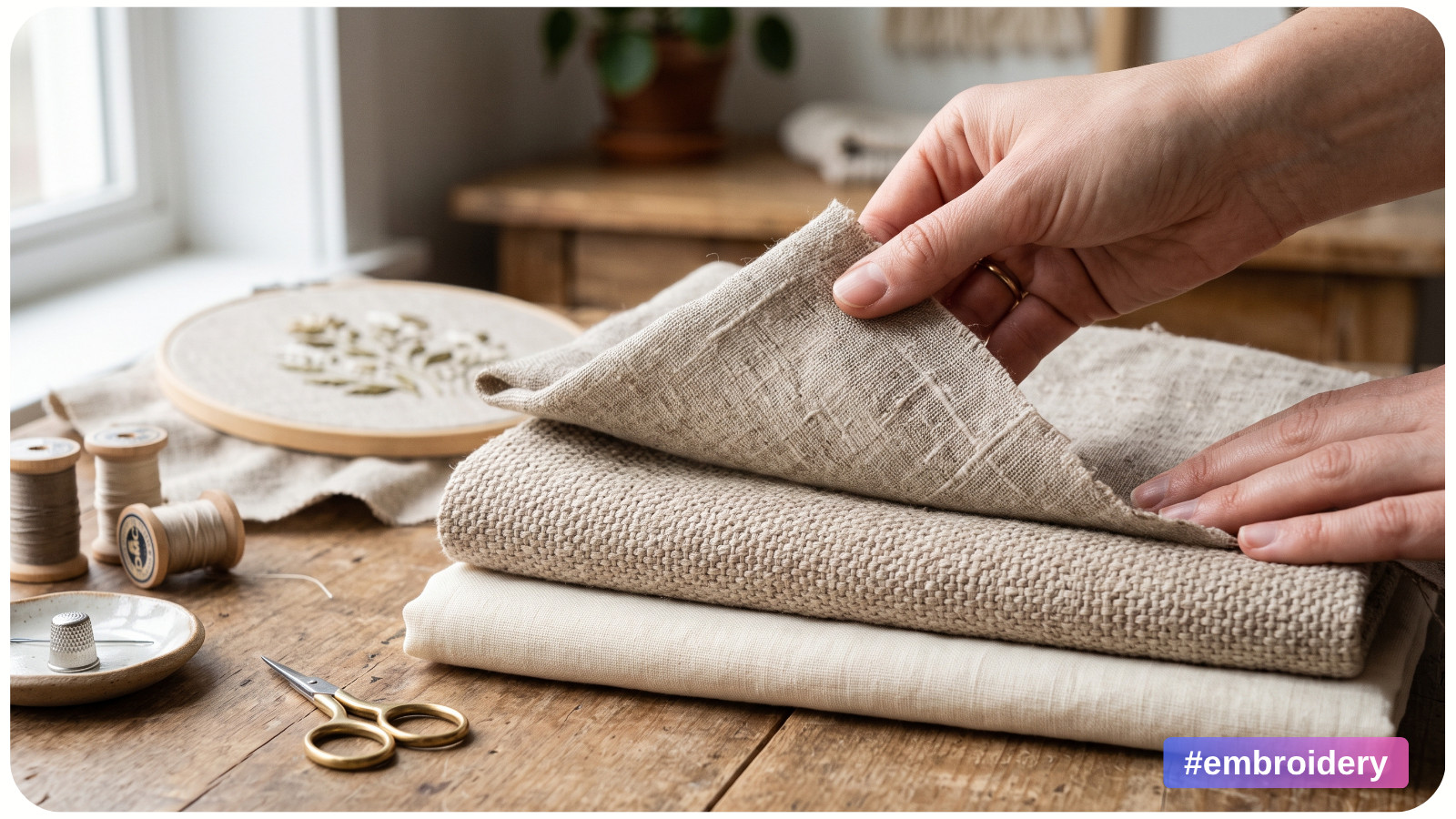
WHY FABRIC CHOICE MATTERS
Embroidery is a partnership between thread and fabric. Your stitches may be beautifully formed, but if the fabric is too loose, too stretchy, or too delicate, the finished design can pucker, distort, or lose its shape.
The best embroidery fabric should support the weight and density of your stitches without becoming stiff or damaged. It also needs to fit the purpose of the project. A fabric that works perfectly for framed hoop art may not be suitable for a frequently washed sweatshirt or a lightweight blouse.
Choosing fabric becomes much easier when you evaluate five technical qualities: Weave, Weight, Stability, Surface texture, Fiber content.
Let’s examine each one simply.
1. UNDERSTAND THE FABRIC WEAVE
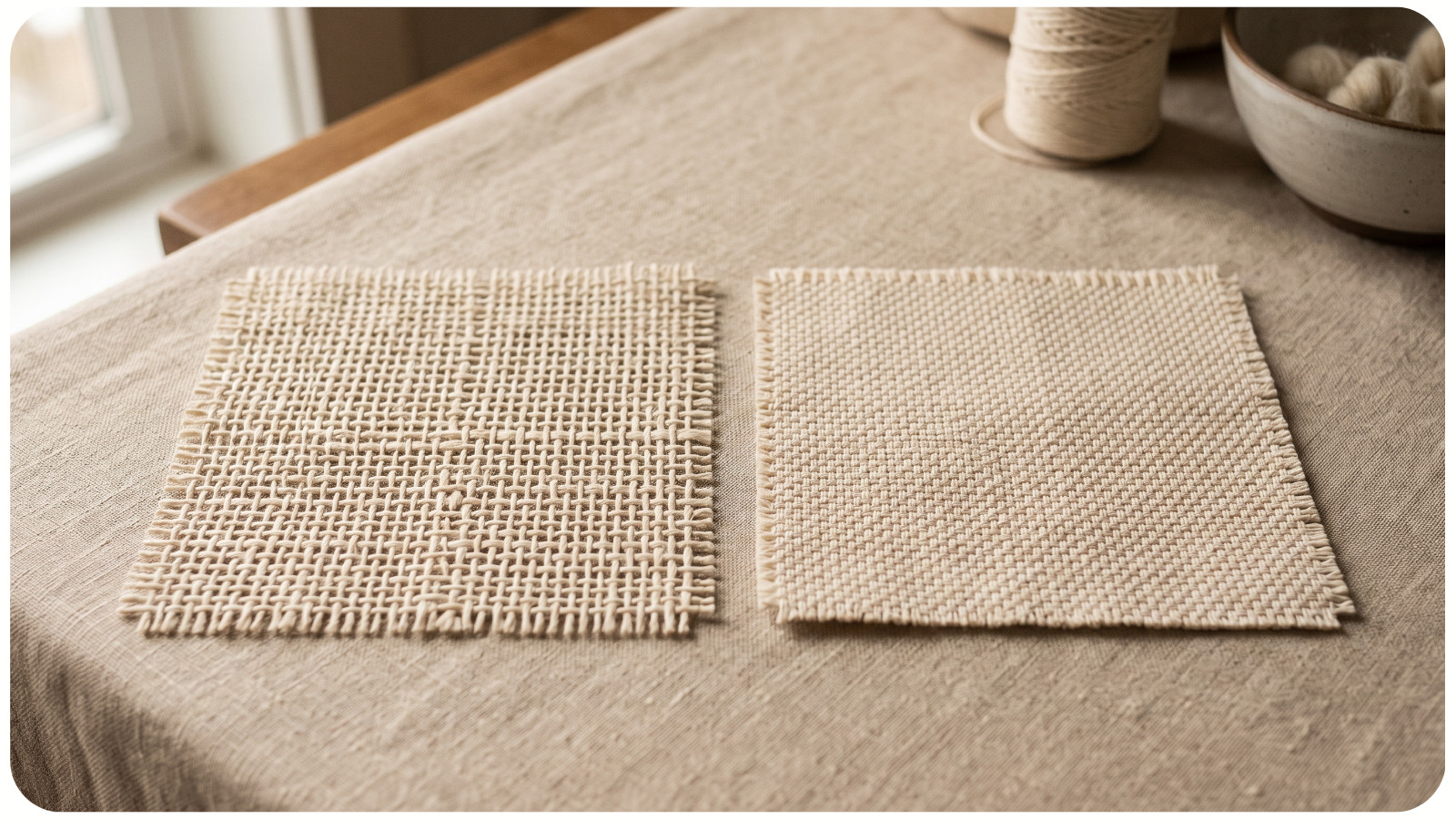
Fabric weave describes how the threads are arranged.
Even-Weave Fabrics. Even-weave fabrics have evenly spaced warp and weft threads. The warp threads run vertically, while the weft threads run horizontally.
Examples include linen, cotton-linen blends, and specialty embroidery fabrics.
Even-weave fabric is especially useful for counted embroidery because the consistent thread spacing helps you create uniform stitches. It also works well for decorative borders, geometric patterns, and precise layouts.
However, loosely woven fabric may not hold dense satin stitch securely. If the gaps between the fabric threads are too large, stitches can sink into the weave or pull the fabric out of shape.
Plain-Weave Fabrics. Plain-weave fabrics use a simple over-one, under-one construction. Cotton muslin, quilting cotton, canvas, and many linens fall into this category.
A tightly woven plain-weave cotton is one of the most reliable choices for surface embroidery. It supports outline stitches, satin stitch, French knots, seed stitch, and layered thread painting without excessive distortion.
For beginners, medium-weight quilting cotton is often easier to control than loosely woven linen.
2. MATCH THE FABRIC WEIGHT TO THE STITCH DENSITY
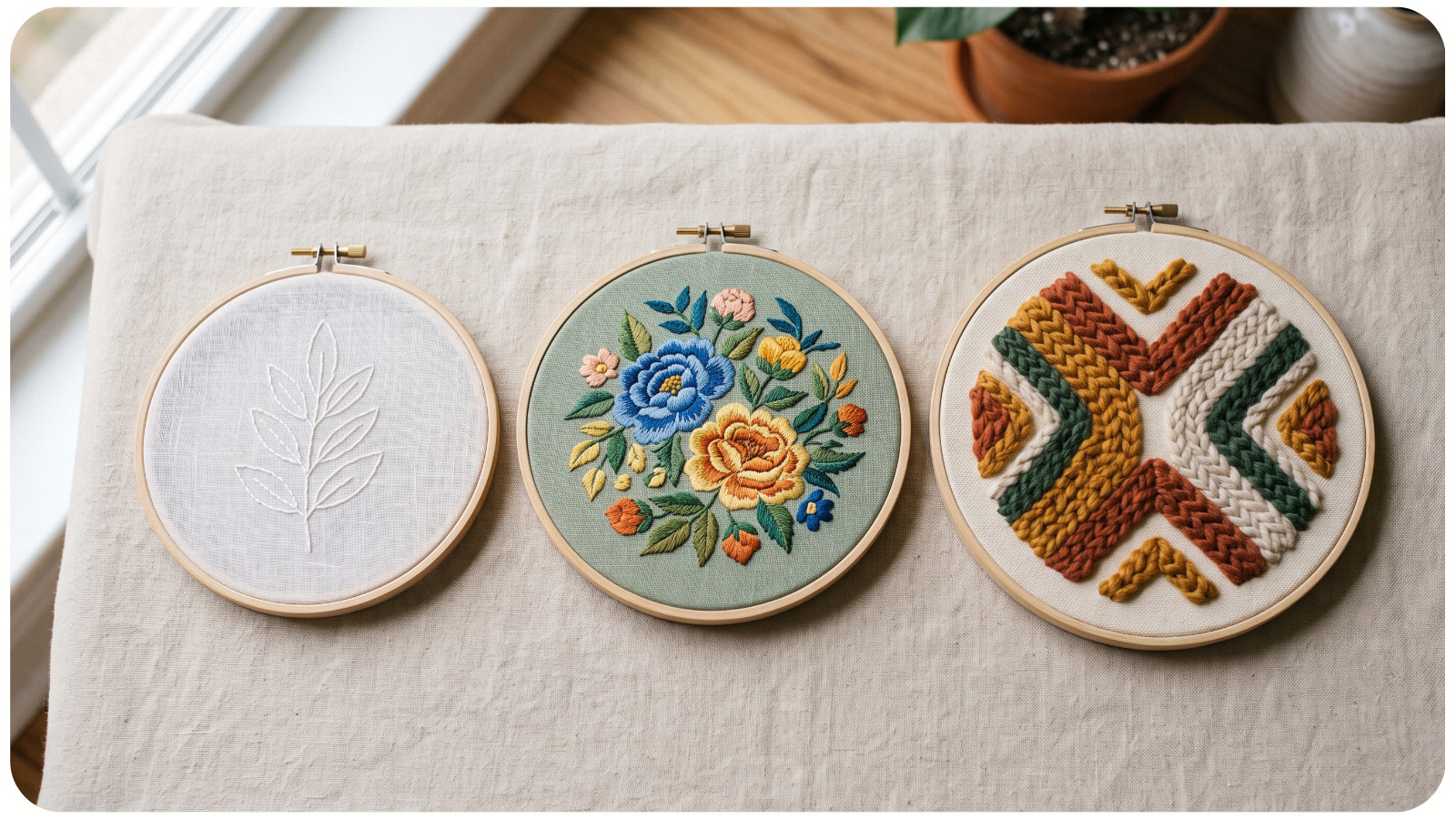
Fabric weight affects how much embroidery the material can support.
Lightweight fabrics include voile, organza, lightweight linen, and thin cotton lawn. These materials can produce delicate, elegant results, but they require careful handling. Heavy stitching may cause puckering, holes, or sagging.
Medium-weight fabrics include quilting cotton, cotton-linen blends, chambray, and many types of linen. These are versatile choices for hoop art, pillow covers, tote bags, wall hangings, and clothing embellishment.
Heavy fabrics include denim, canvas, duck cloth, and upholstery fabric. They can support bold stitches, thicker thread, and dense decorative areas. However, pushing a needle through them requires more force, so needle size becomes especially important.
As a general rule, the denser and heavier the embroidery, the more support the fabric needs.
A large filled area of satin stitch places much more tension on fabric than a simple line of backstitch. Dense designs usually perform better on medium-weight or heavyweight fabric, or on lightweight fabric reinforced with stabilizer.
3. CHECK FABRIC STABILITY AND STRETCH
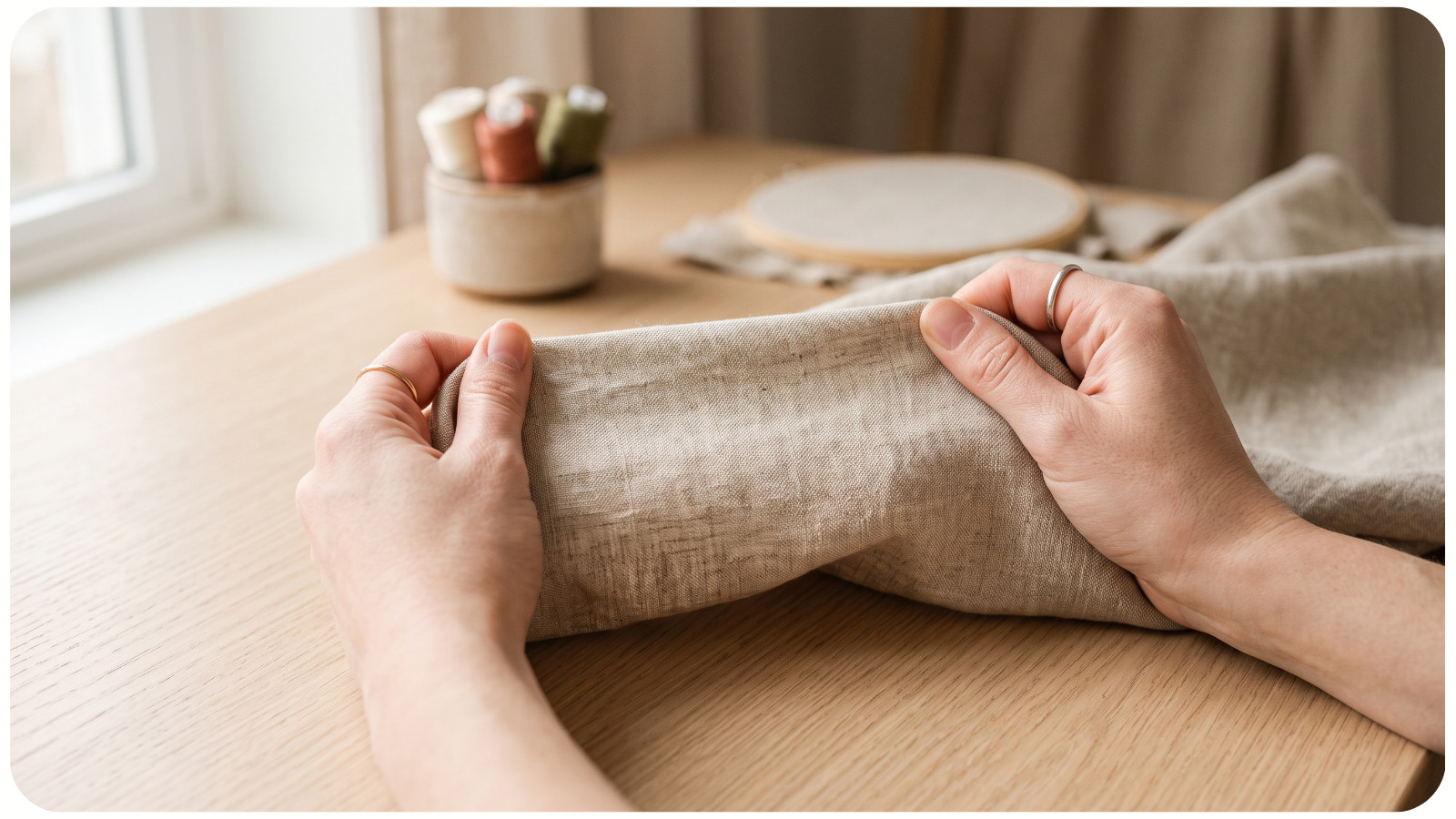
Stable fabric keeps its shape when pulled gently in different directions.
Woven cotton and linen are generally stable along the grain, although they may stretch slightly on the diagonal bias. Knit fabrics, jersey, fleece, and many activewear materials stretch significantly.
Stretch is not automatically a problem, but it changes the embroidery process. If a knit fabric is stretched tightly in the hoop, the design may wrinkle when the fabric is released. If it is not supported enough, the stitches may pull the knit out of shape.
For stretchy clothing, use an appropriate stabilizer and avoid over-tightening the hoop. The fabric should remain smooth, not stretched beyond its natural resting state.
A cut-away stabilizer is often suitable for knit garments because it continues supporting the embroidery after stitching. A tear-away stabilizer may be appropriate for stable woven fabrics when only temporary support is needed.
4. CONSIDER THREAD COUNT AND FABRIC DENSITY
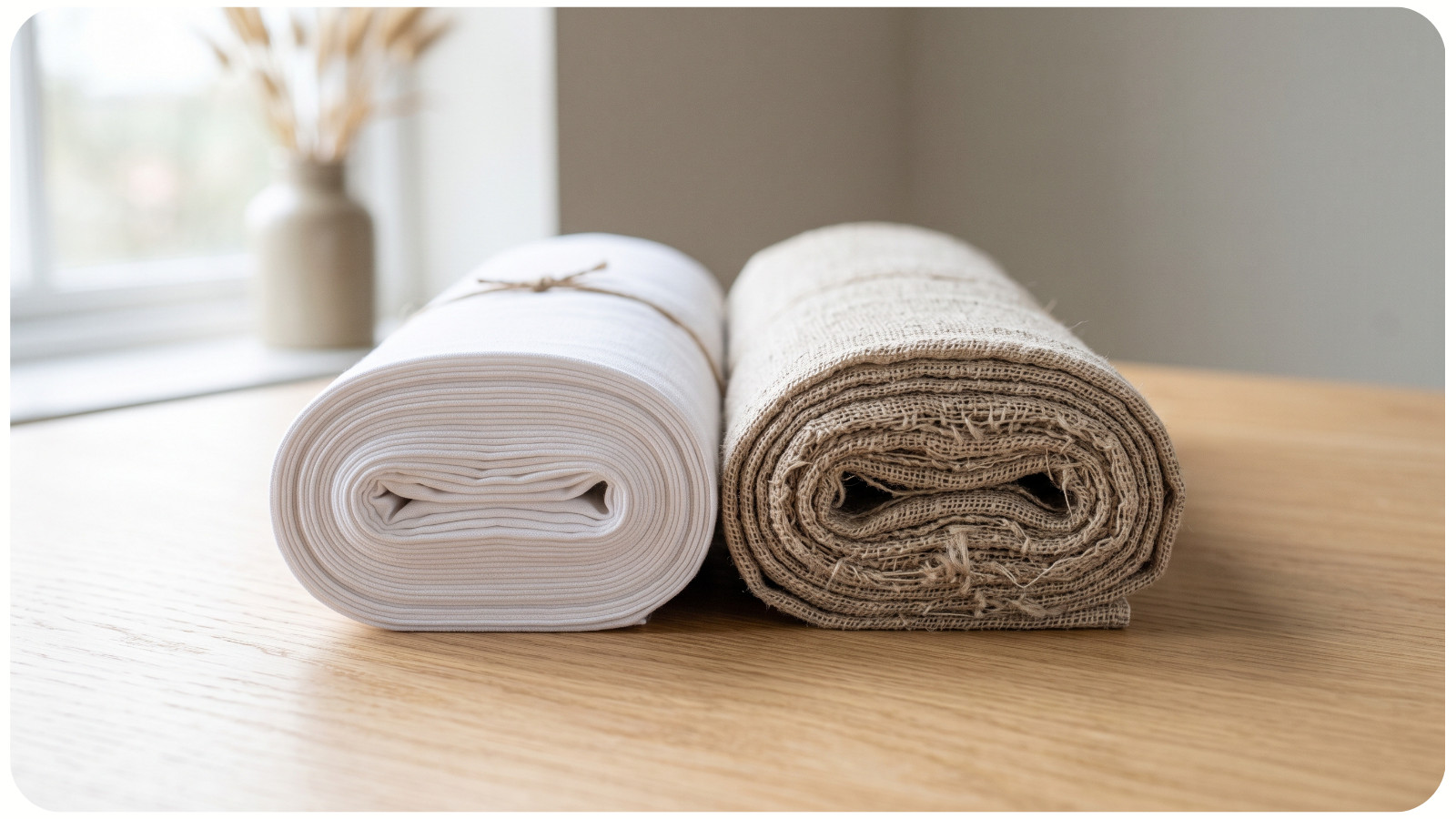
Thread count refers to the number of threads woven into a measured area of fabric. A higher thread count usually creates a smoother, tighter surface. A lower thread count produces a more open weave.
For surface embroidery, the exact number is less important than the visible density of the weave.
Hold the fabric up to the light. If you can easily see large gaps between the threads, the fabric may be too open for small, dense stitches. Fine details and French knots can become uneven because the thread may slip between the fabric fibers.
Tightly woven cotton provides a dependable surface for detailed designs. Linen offers beautiful texture and character, but its natural variations can slightly change stitch placement. This is not a flaw; it is part of linen’s organic appearance.
5. EVALUATE THE SURFACE TEXTURE
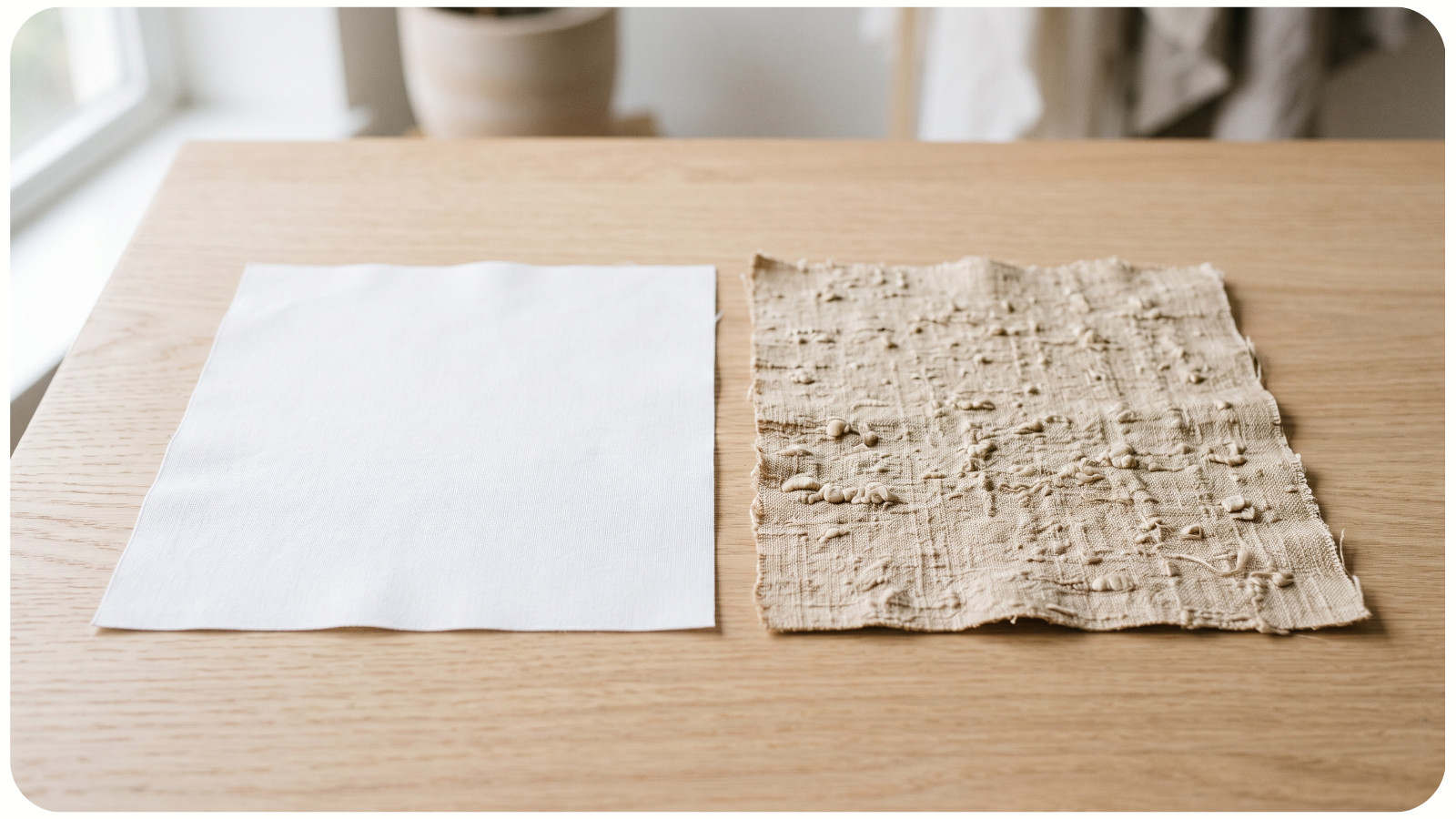
Texture affects both the look of the embroidery and the movement of the needle.
Smooth fabrics allow the needle to enter and exit predictably. They are ideal for detailed satin stitch, lettering, thread painting, and small motifs.
Textured fabrics create a more handmade, dimensional effect. Linen, raw silk, and some canvas fabrics can add visual interest even before stitching begins.
However, very rough or heavily textured fabric may interfere with precise outlines. Small stitches can disappear into the surface, and fine thread may catch on raised fibers.
Choose a smoother fabric when accuracy is essential. Choose a more textured fabric when you want the background to contribute to the overall aesthetic.
6. CHOOSE THE RIGHT FIBER CONTENT
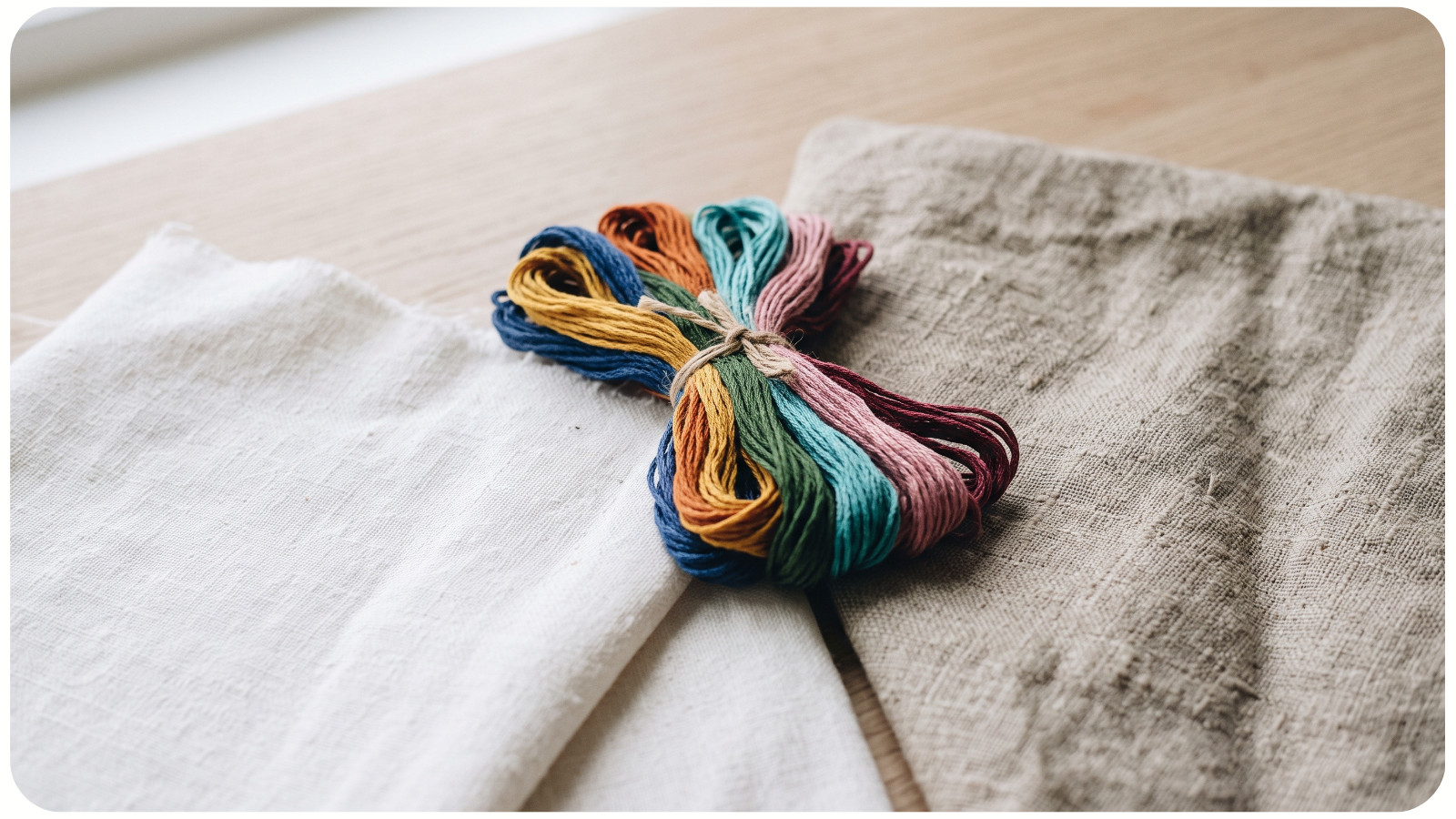
Cotton is durable, affordable, and easy to stitch. It is an excellent choice for beginners and experienced embroiderers alike.
Linen is strong, breathable, and naturally textured. It works beautifully for heirloom projects, botanical designs, and modern minimalist hoop art.
Cotton-linen blends combine the stability of cotton with the visual texture of linen. They are often easier to manage than pure linen.
Silk creates a refined, luminous background, but it can show needle holes and tension problems more easily. It should be handled with clean hands and a sharp, fine needle.
Synthetic fabrics such as polyester may be durable, but some are slippery or heat-sensitive. Always test your marking tools, stabilizer, and ironing temperature before beginning.
7. MATCH THE NEEDLE TO THE FABRIC
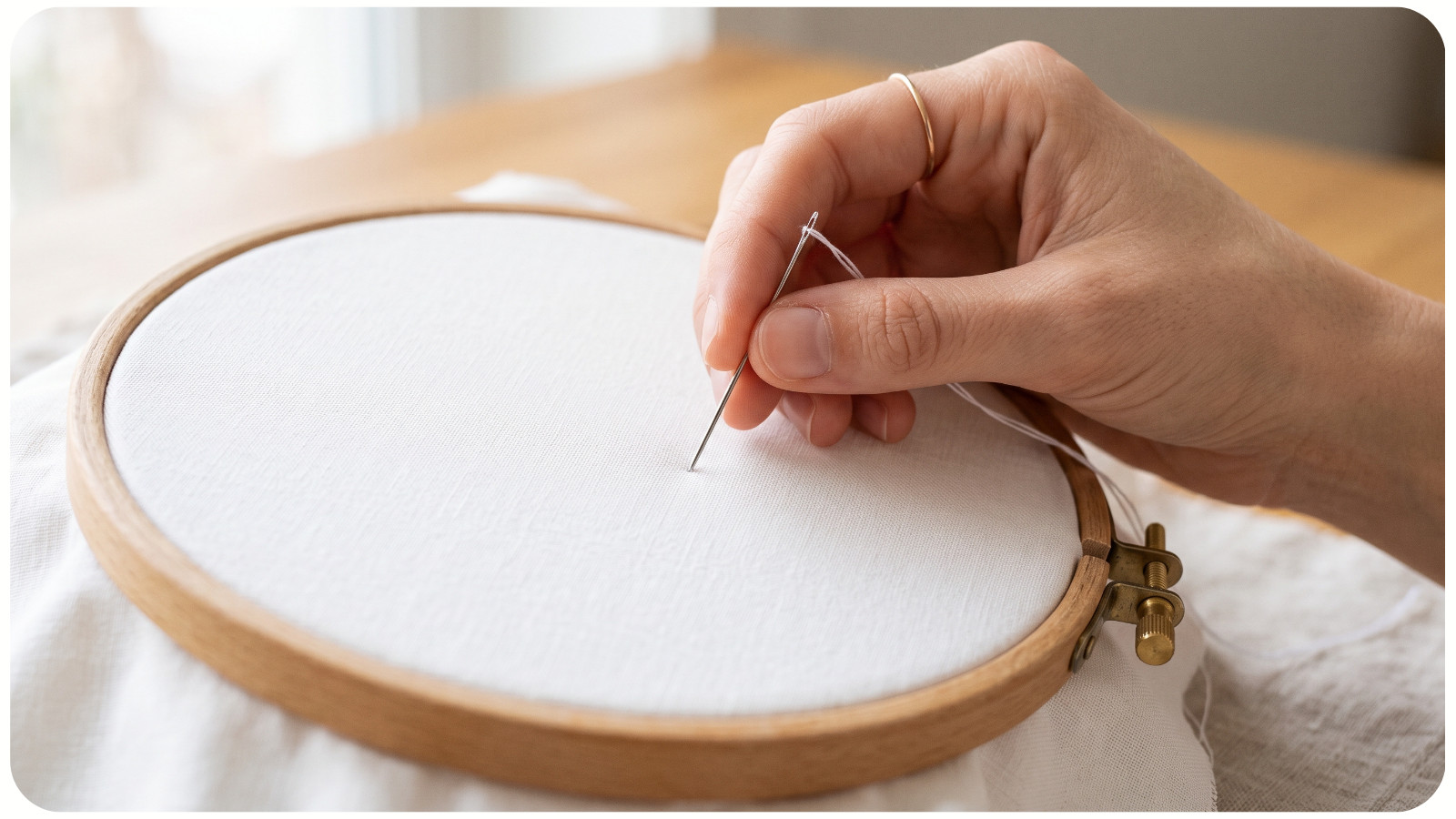
The needle should pass through the fabric without forcing the weave apart.
Use a sharp embroidery needle for tightly woven cotton, linen, and most surface embroidery projects. The sharp point pierces the fabric cleanly.
A larger needle creates a larger hole, so it should only be used when the fabric and thread thickness require it. Thick thread needs a needle with an eye large enough to prevent abrasion.
If the thread frays near the needle eye, the needle may be too small. If visible holes remain around the stitches, the needle may be too large.
PRO-TIP: ALWAYS STITCH A TEST SAMPLE
Before starting the main design, place a small piece of the chosen fabric in a hoop and test several stitches.
Try an outline stitch, a filled satin stitch, and a few French knots. Check whether the fabric puckers, whether the thread sits on the surface, and whether the needle leaves visible holes.
Wash or press the sample if the finished project will receive the same treatment. This simple test can reveal shrinkage, color bleeding, stabilizer marks, or tension problems before they affect the final piece.
PREPARE THE FABRIC BEFORE EMBROIDERING
Prewash washable natural fabrics before transferring the design. Cotton and linen can shrink, and untreated fabric may tighten around the embroidery after the first wash.
Press the fabric carefully so it lies flat. Cut it several inches larger than the finished design to leave enough room for hooping, finishing, and framing.
For accurate pattern transfer, test your marking tool on a scrap. Some disappearing inks react to heat, moisture, or time differently depending on the fabric.
FINAL RECOMMENDATION
For most modern surface embroidery projects, a medium-weight, tightly woven cotton or cotton-linen blend is the safest and most versatile choice. It provides enough stability for detailed stitching while remaining comfortable to handle.
Once you understand how fabric weight, weave, stretch, and texture affect your stitches, you can experiment with linen, denim, silk, organza, and customized clothing more confidently.
Pair your chosen fabric with an Awesome Pattern Studio embroidery pattern to explore color, texture, satin stitch, French knots, and layered details in a carefully planned design. The right fabric will not compete with your embroidery – it will support every stitch and help the finished artwork look polished, balanced, and durable.