


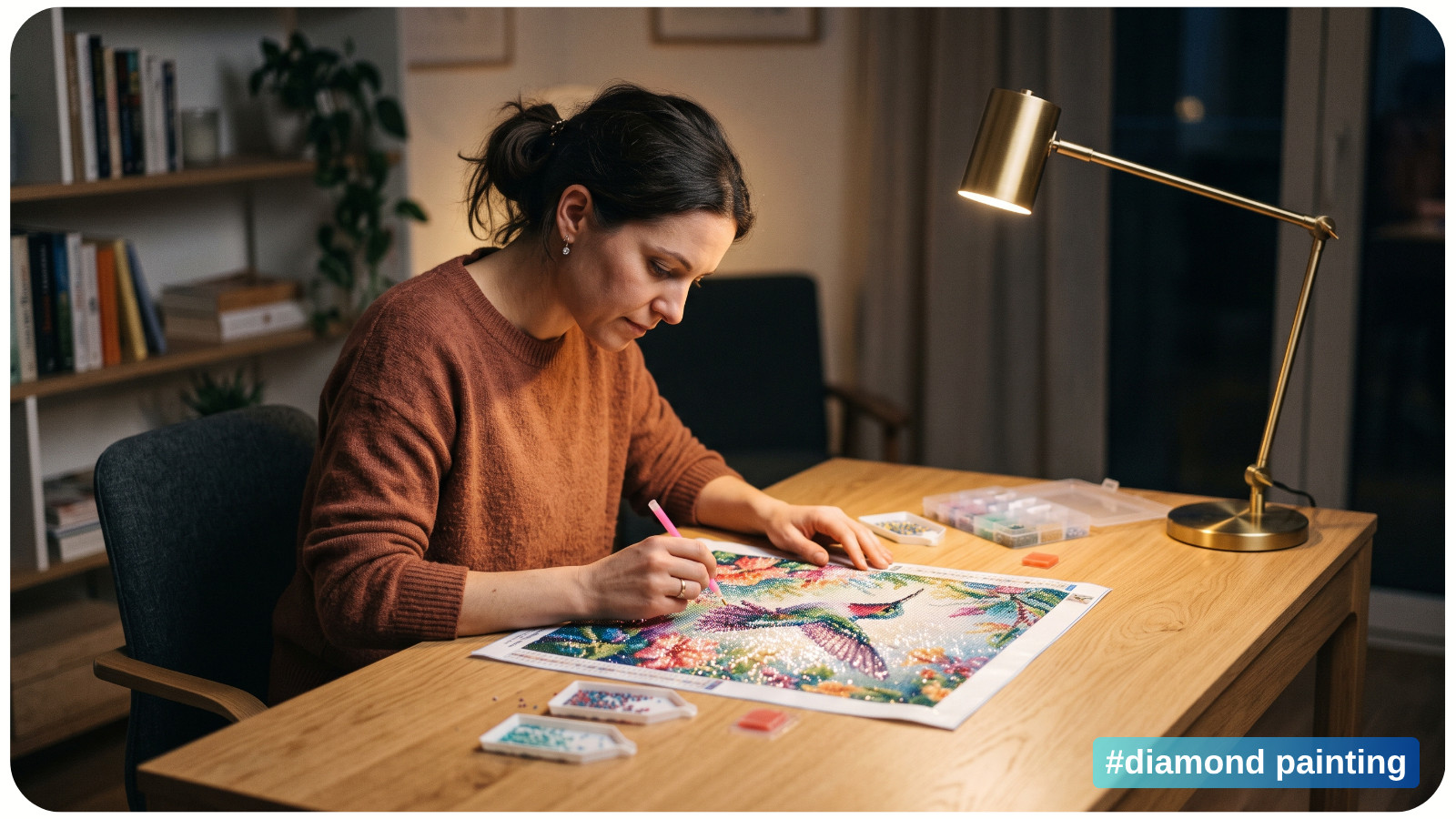
If you’ve ever watched someone do diamond painting and thought, “Wait, is that really all there is to it?” you’re not being rude. From the outside, the process looks simple: pick up a tiny resin diamond, place it on the matching symbol, and repeat. No drawing, complicated stitches, or color mixing. The canvas has made most of the decisions for you.
So yes, diamond painting is easy to learn.
But that isn’t the same as saying it’s boring, mindless, or not worth doing. The more useful question is: easy in what way, and what do you want from a hobby?
Sometimes “easy” is a criticism. Sometimes it’s exactly the selling point.
The Basic Technique Really Is Beginner-Friendly
There’s no need to pretend diamond painting has a steep learning curve. Most beginners can understand the basic process within minutes: pour a few drills into a tray, load the applicator pen, find the matching symbol, and press each piece onto the adhesive canvas.
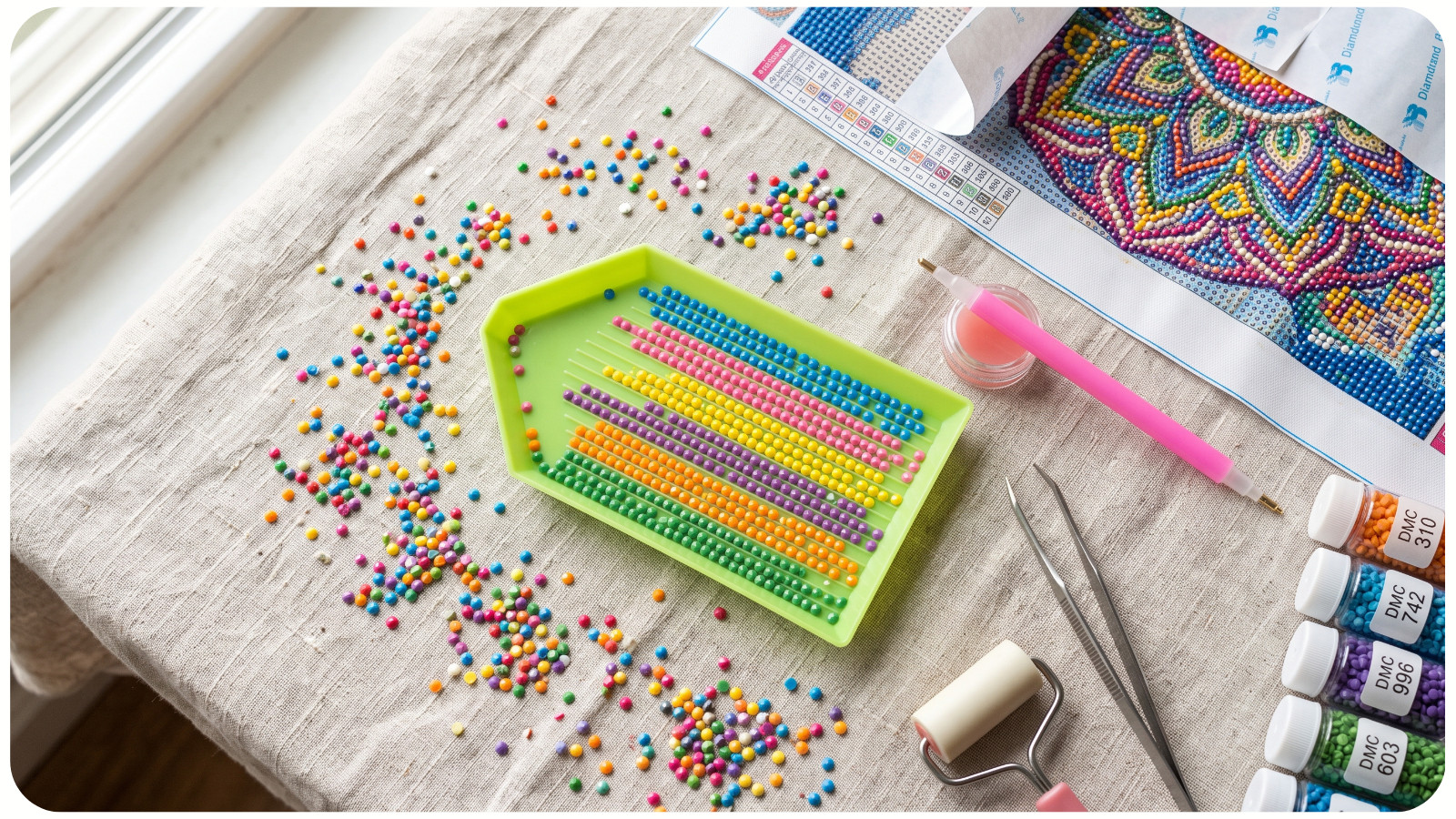
Your first few rows may wander a little. You might spill a tray, place the wrong color, or discover that static-charged drills behave like tiny plastic popcorn. None of this usually requires weeks of practice to overcome. If alignment is the one part that feels unexpectedly fiddly, these tips for creating straight diamond painting rows can help.
That accessibility is one of diamond painting’s biggest strengths. Many creative hobbies ask you to tolerate an awkward beginner stage. Knitting tension may be uneven, watercolor may spread where you didn’t intend, and every wobbly hand-lettered curve remains visible on the page.
Diamond painting gives you a polished-looking result almost immediately. After a few rows, the image is already beginning to sparkle. That quick reward matters if other hobbies have discouraged you before they became enjoyable. A varied diamond painting collection also shows how much the experience can change with the subject and level of detail.
Easy to Learn Doesn’t Mean Effortless to Finish
Here’s where the “too easy” argument starts to wobble: completing a large canvas takes patience. It can mean hours of sorting colors, reading tiny symbols, aligning rows, and placing thousands of drills. The individual action is simple; the commitment is not.
It’s a little like doing a jigsaw puzzle. Nobody would call the physical act of picking up a puzzle piece difficult. The experience comes from continuing, noticing patterns, managing the fiddly moments, and slowly turning scattered pieces into something complete.
Diamond paintings also vary more than they first appear. A small design with broad blocks of one color can feel breezy. A detailed full-drill canvas with similar symbols, frequent color changes, and isolated “confetti” sections asks for much more concentration. Square drills make alignment more noticeable than round ones, while dark areas with nearly identical shades may have you checking the legend again and again.
If you’re deciding how much challenge you want, it helps to compare square and round diamond painting drills and learn how to choose a kit for your skill level.
None of that makes the core technique technically advanced. It does mean that “easy to understand” and “easy to complete” are two different things.
Why Are We So Suspicious of Easy Hobbies?
There’s a funny belief hiding inside this debate: if a hobby doesn’t demand special talent, perhaps it doesn’t count as real creativity.
We tend to admire hobbies that produce visible evidence of skill. A hand-thrown mug, an original painting, or an intricately embroidered jacket tells us that the maker learned something difficult. Diamond painting is closer to paint-by-number. The path is already mapped, and a successful result doesn’t depend on inventing the image yourself.
That can make it feel less creative, but creativity isn’t the only reason people make things.
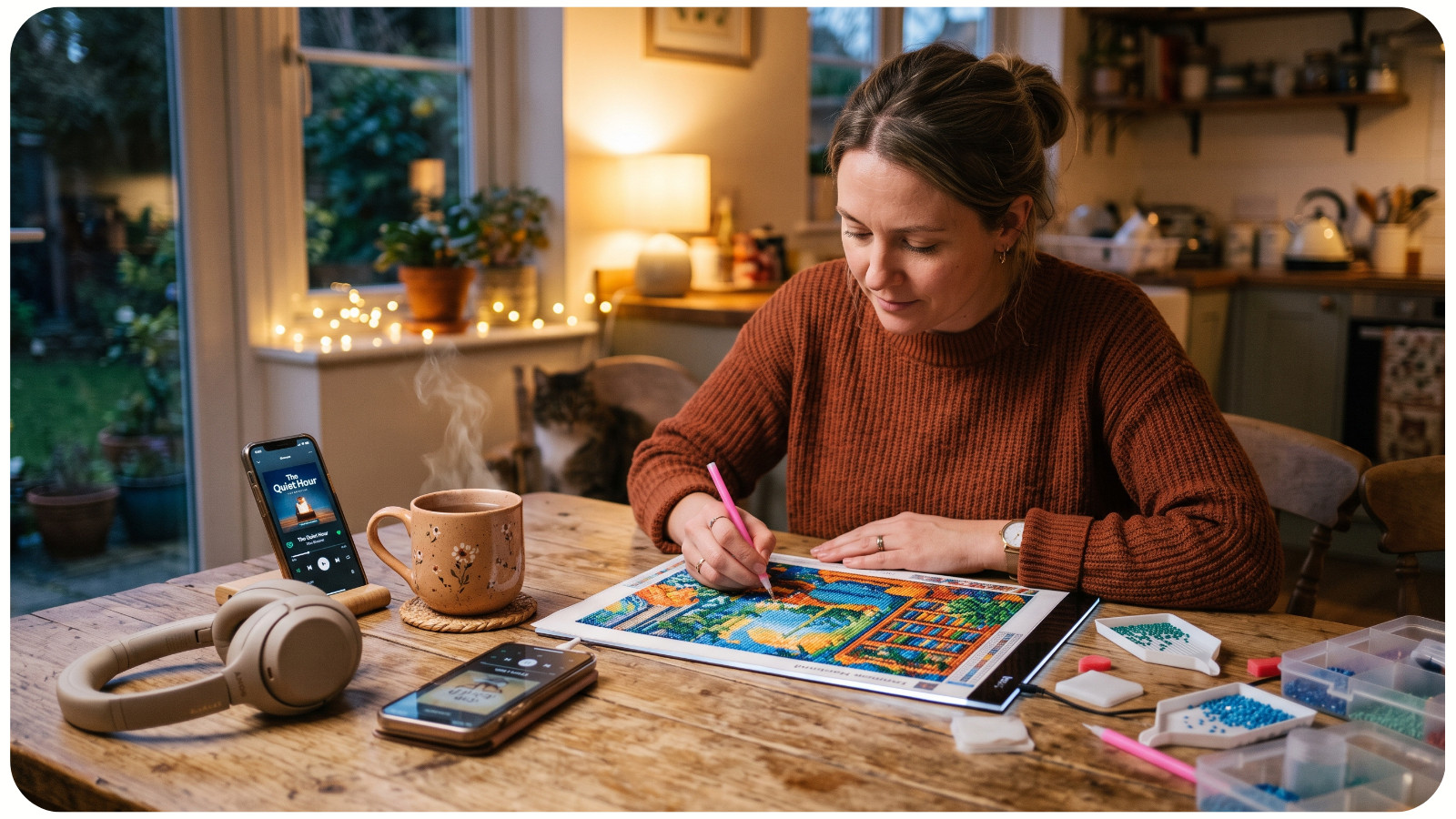
Sometimes we want self-expression. Sometimes we want mastery. And sometimes we want to sit at the kitchen table with a drink nearby, listen to a podcast, and watch a blank section become colorful and orderly. Those are different pleasures, and one doesn’t cancel out the others.
A hobby doesn’t have to become a personal achievement project. You’re allowed to enjoy a process that meets you halfway.
Is Following a Printed Chart Actually Creative?
Not in the same way as drawing an image from scratch. Let’s be honest about that too.
The main design decisions have already been made: the composition, color palette, shading, and placement. If your favorite part of crafting is experimenting, changing direction, or wondering what the finished piece will become, a standard diamond painting may feel restrictive.
Still, making from a chart isn’t creativity-free. You choose the image, organize the work, make changes, finish the edges, and decide how to display it. Your attention and time turn materials into something that did not exist before.
Think of baking from a recipe, playing a written piece of music, or stitching a counted pattern. Following instructions doesn’t make the experience fake. It simply shifts the pleasure away from invention and toward interpretation, rhythm, and completion.
When Diamond Painting Can Start to Feel Too Easy
Now for the part enthusiasts don’t always say out loud: yes, diamond painting can become boring.
If you need frequent decisions to stay interested, large areas of a single color may feel endless. If you love learning new techniques, you may reach a point where the basic pick-and-place motion no longer offers enough novelty. And if you want a portable hobby, a wide adhesive canvas surrounded by trays of tiny loose pieces can be more annoying than relaxing.
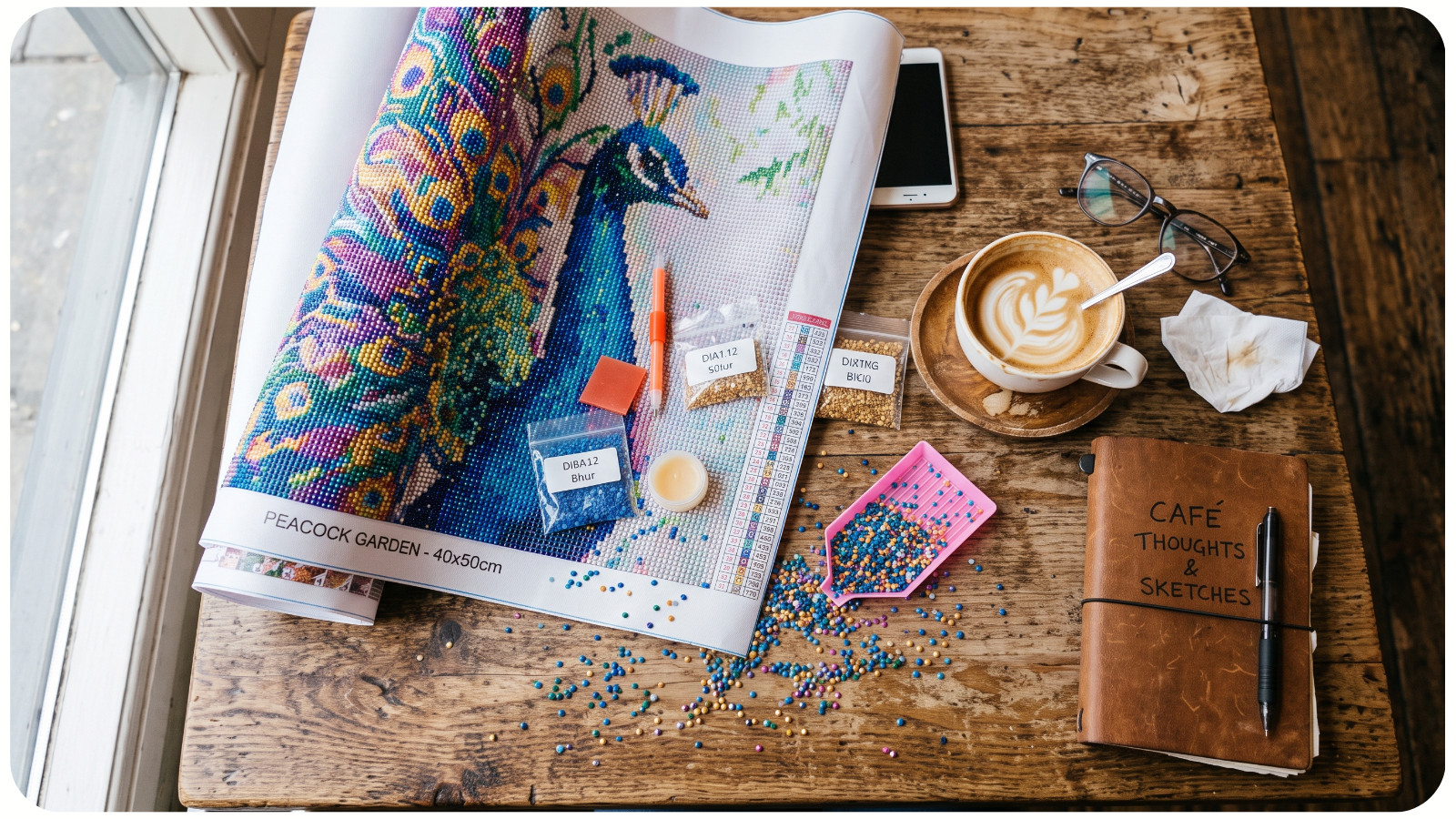
It may also disappoint you if your main goal is to develop drawing, painting, or design skills. Diamond painting can help you practice patience, visual attention, and careful placement, but it won’t teach color mixing or composition in the same direct way an open-ended art practice will.
If you enjoy the sparkle but want more challenge, choose designs with finer detail, more colors, square drills, or sections that require frequent color changes. Larger isn’t automatically better; a well-rendered image with an interesting mix of color blocks and detailed areas can be more engaging than a huge canvas with a repetitive background.
You can also alternate it with a more open-ended craft: diamond painting on tired evenings, sketching or embroidery when you want to make more decisions. There’s no rule saying one hobby has to satisfy every creative mood.
When “Easy” Is Exactly What Makes It Good
Some evenings, the last thing you need is another activity asking you to perform.
You’ve already made decisions all day. You don’t want to select a palette, fix a complicated mistake, or watch a tutorial before you can begin. You want to open a container, uncover a small section of canvas, and know what comes next.
Diamond painting is excellent at that.
The repeated motion creates a gentle rhythm without demanding complete concentration. You can chat with someone, listen to an audiobook, or keep half an eye on a familiar show. Progress is visible, and stopping is usually simple: cover the canvas, close the containers, and return later.
It can also be a welcoming way back into making things. Adults who have decided they’re “not artistic” often carry that judgment for years. A guided craft removes the pressure to prove anything. The first goal is simply to place the next piece. Confidence may grow from there, or it may not. It’s still perfectly fine to enjoy diamond painting for its own sake.
Who Will Probably Love It - and Who Might Not
Diamond painting is likely a good match if you enjoy:
• Repetitive, orderly tasks.
• Clear instructions and visible progress.
• Colorful, sparkling finished art.
• Hobbies you can do while listening to something.
• Projects that are forgiving to beginners.
It may not hold your attention if you prefer:
• Inventing your own designs as you work.
• Constantly learning new techniques.
• Fast projects with very little setup.
• Highly portable crafts.
• Materials that feel natural rather than plastic.
Neither list describes a better kind of crafter. It only describes what feels satisfying to different people.
The Final Verdict: Too Easy for What?
Is the core technique easy compared with many other crafts? Absolutely. Does that make diamond painting less worthy of your time? Not at all.
Its simplicity is the whole arrangement: the design handles the difficult visual decisions, and you supply the time, care, and willingness to continue. For one person, that feels limiting. For another, it’s a relief.
The honest answer is that diamond painting won’t challenge everyone, and it doesn’t need to. A hobby can be worthwhile because it stretches your abilities. It can also be worthwhile because it gives your abilities the evening off.
So if you try it and think, “This is too easy,” believe yourself. You may need more freedom, more variety, or a steeper learning curve. But if you find yourself happily placing one tiny diamond after another and wondering where the last two hours went, you don’t need to defend that either.
Easy can still be absorbing. Easy can still be beautiful. And sometimes easy is exactly the point.