


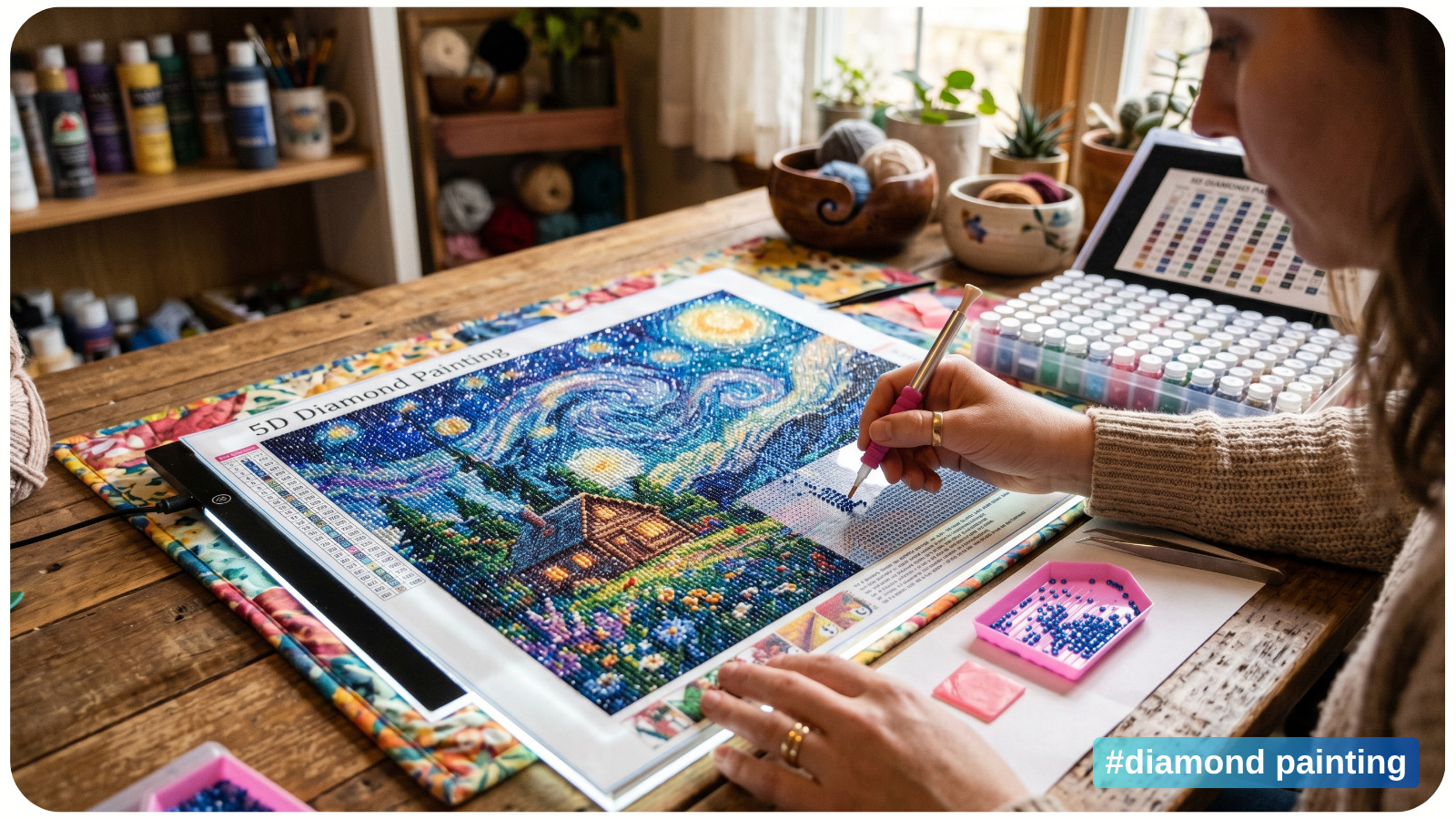
Diamond painting might look like a simple craft at first glance – but once you dive in, you’ll quickly realize that everything revolves around one tiny yet crucial element: drills.
If you’ve ever opened a kit and wondered what those sparkling little pieces are, you’re in the right place. Let’s break it down with precision and clarity.
WHAT EXACTLY ARE “DRILLS”?
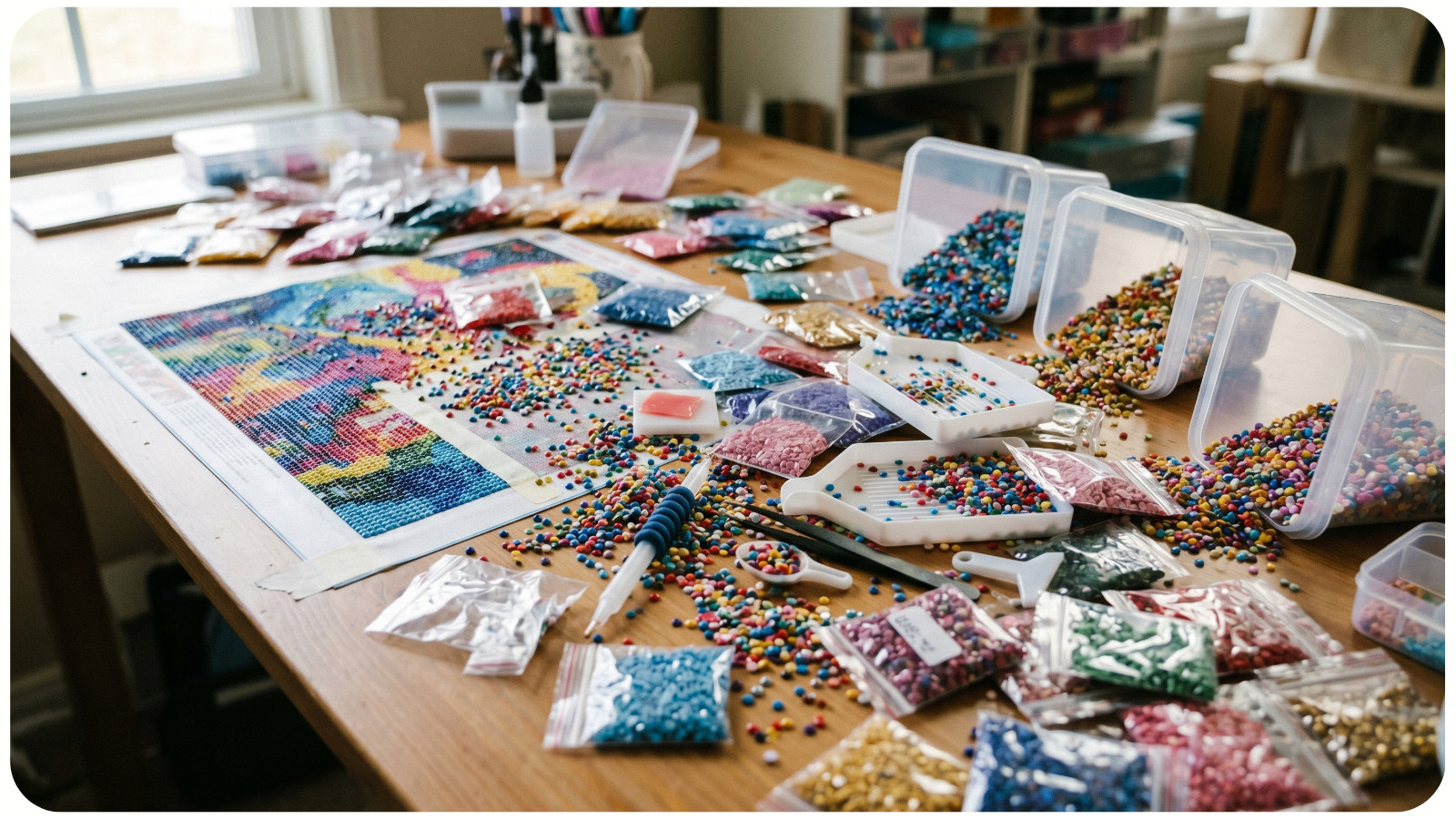
In diamond painting, drills are the small, faceted resin or acrylic pieces that you place onto a sticky canvas to create your design. Despite the name, there’s no actual drilling involved – this term comes from the way these pieces are applied in a repetitive, precise manner.
Each drill acts like a pixel in a digital image. When placed correctly, thousands of drills come together to form a detailed, shimmering picture.
TYPES OF DRILLS
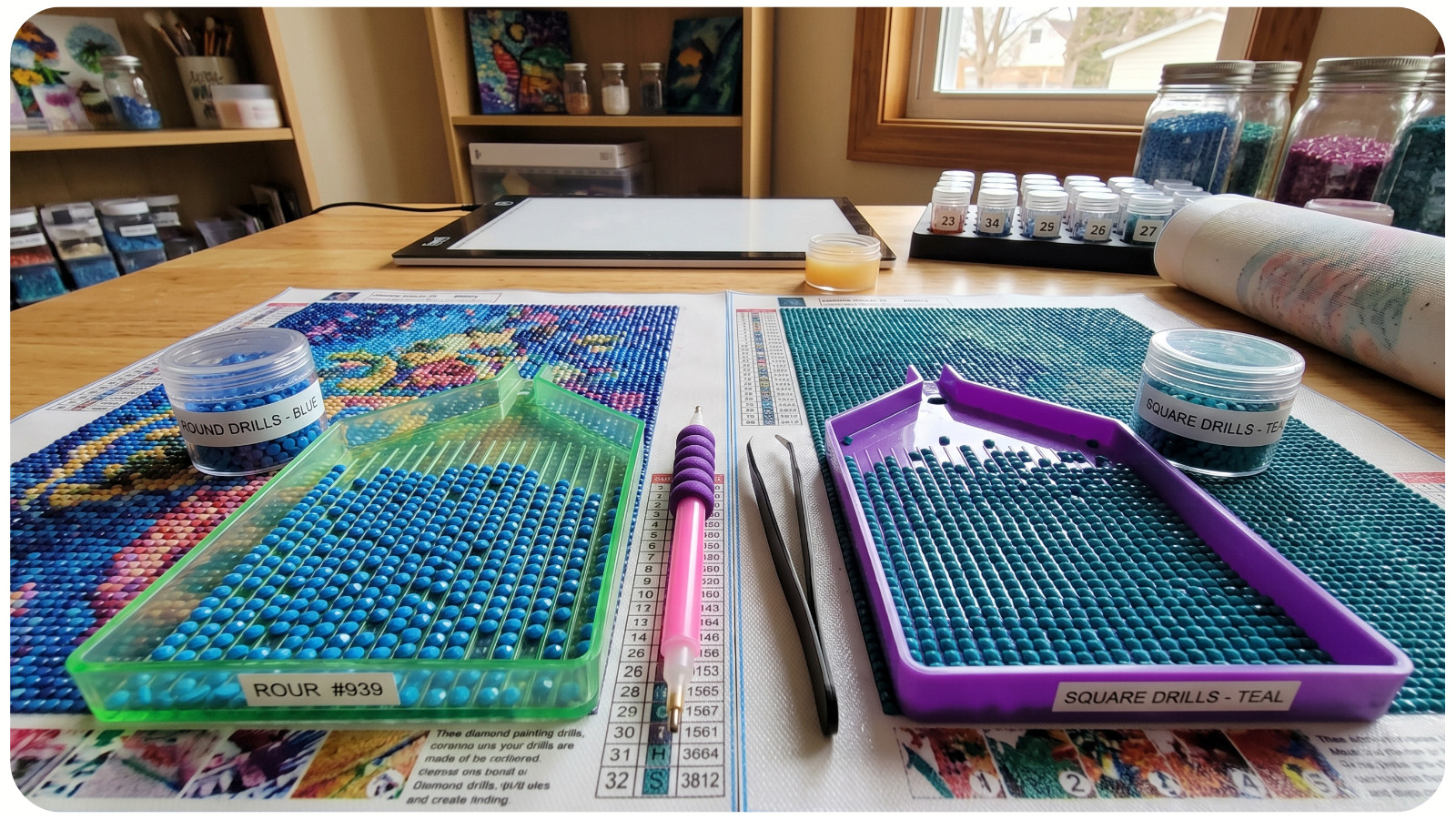
Understanding drill types is key to choosing the right kit and achieving your desired finish.
1. Round Drills
- Shape: Circular with a domed top;
- Placement: Easier and faster to apply;
- Look: Slight gaps between drills create a softer, more blended image.
✔ Best for beginners and relaxing sessions;
✔ More forgiving with alignment.
2. Square Drills
- Shape: Perfect squares with flat edges;
- Placement: Requires precision and alignment;
- Look: Edge-to-edge coverage with no gaps (mosaic effect).
✔ Ideal for detailed, crisp images;
✔ Preferred by advanced hobbyists.
WHAT ARE DRILLS MADE OF?
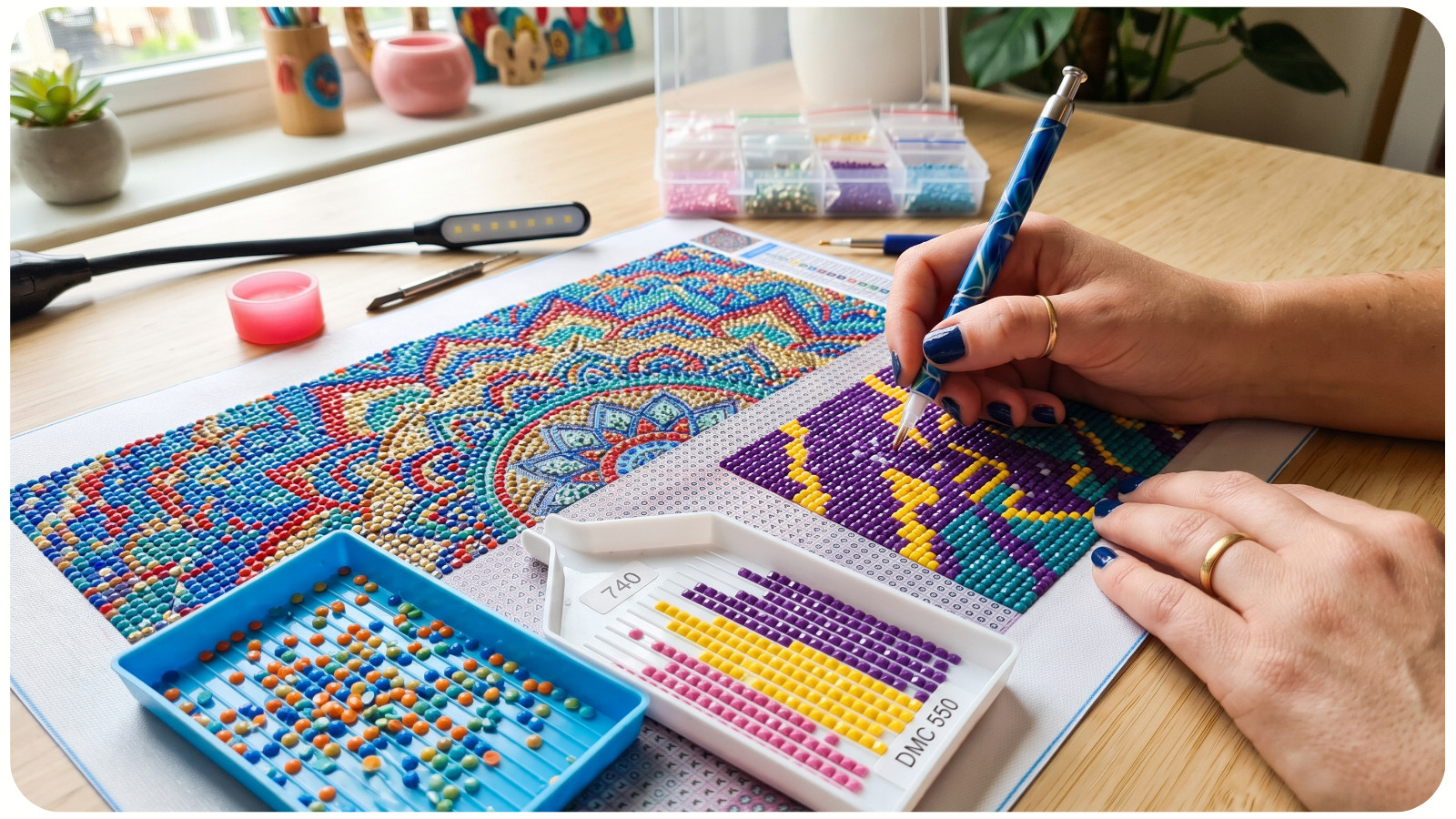
Most modern kits use resin drills, though older or budget kits may include acrylic.
1. Resin Drills
- Higher quality and durability
- More consistent shape and size
- Better sparkle due to sharper facets
2. Acrylic Drills
- Lightweight and cheaper
- Less uniform
- Slightly duller finish
Expert Tip: Always choose resin drills if you care about long-term quality and visual impact.
DRILL FACETS: WHY THEY SPARKLE
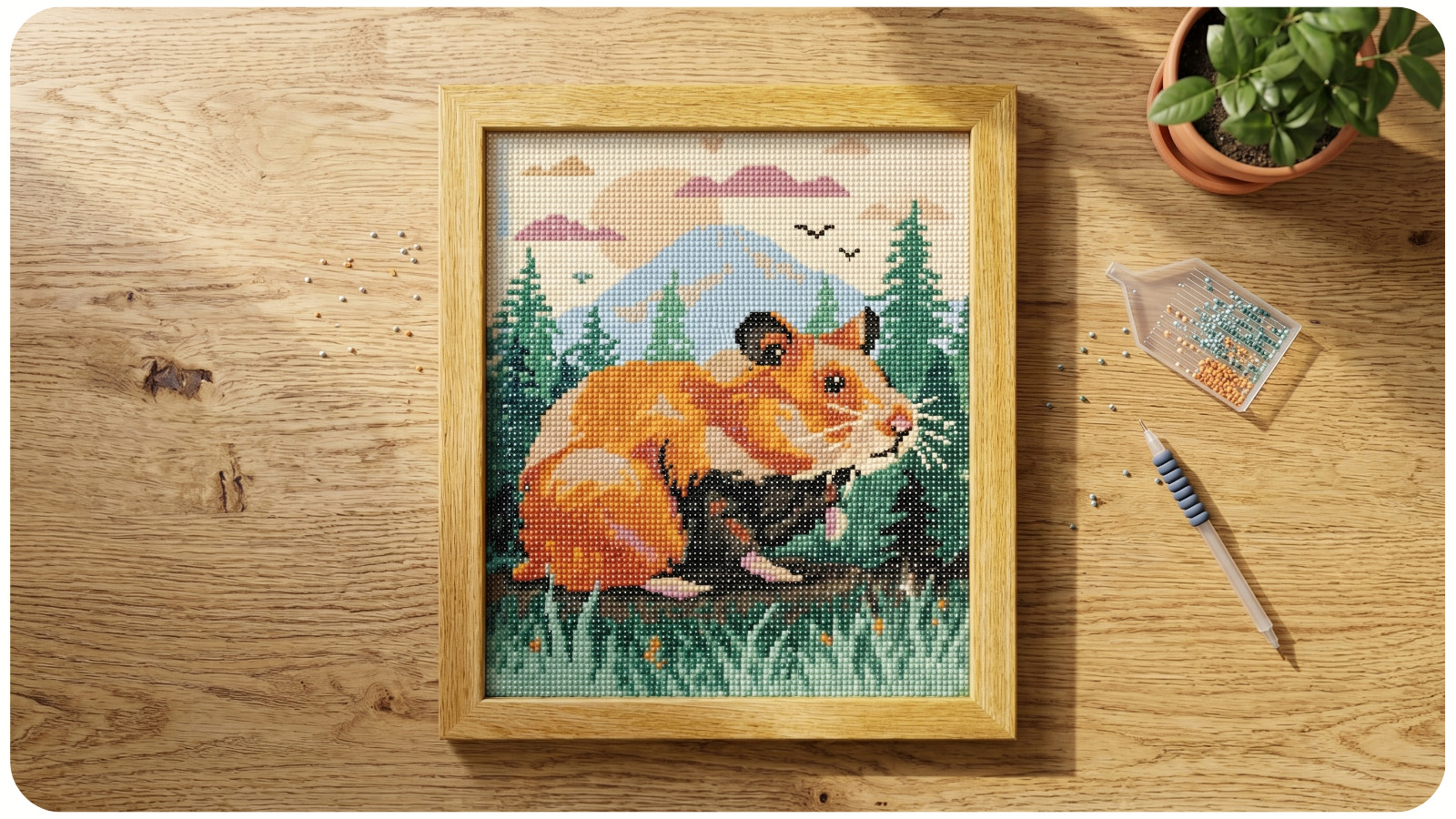
Each drill has multiple flat surfaces called facets. These facets reflect light, creating that signature diamond-like shimmer.
- Standard drills: 9-13 facets;
- High-quality drills: More facets = more brilliance.
The precision of these facets directly affects how “sparkly” your finished piece looks under light.
DRILL COLORS AND CODING SYSTEMS
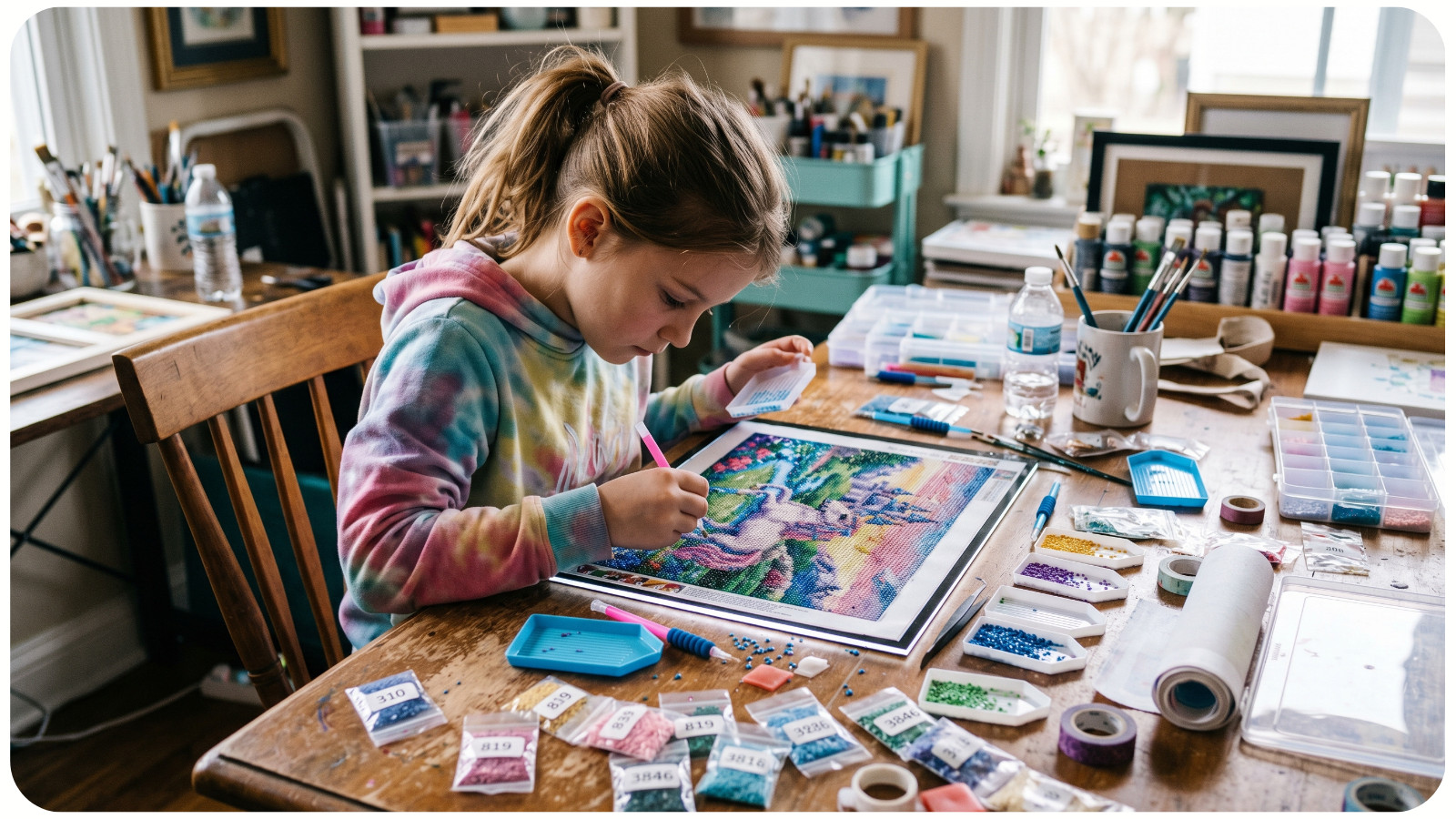
Every drill color corresponds to a symbol on the canvas and is usually labeled using the DMC color system – the same standard used in embroidery floss.
- Ensures color consistency across kits;
- Allows easy replacement or upgrades;
- Helps organize large projects efficiently.
COMMON DRILL ISSUES (AND HOW TO HANDLE THEM)

Even high-quality kits can have minor issues. Here are the most common:
1. Popping Drills
- Drills don’t stay flat or pop off the canvas;
- Cause: Poor adhesive or tight square placement.
✔ Fix: Roll with a brayer or press with a book.
2. Static Cling
- Drills stick together or jump around.
✔ Fix: Use a dryer sheet or anti-static container.
3. Inconsistent Sizes
- Leads to uneven lines or gaps.
✔ Fix: Sort out defective drills before starting.
TOOLS YOU’LL USE WITH DRILLS
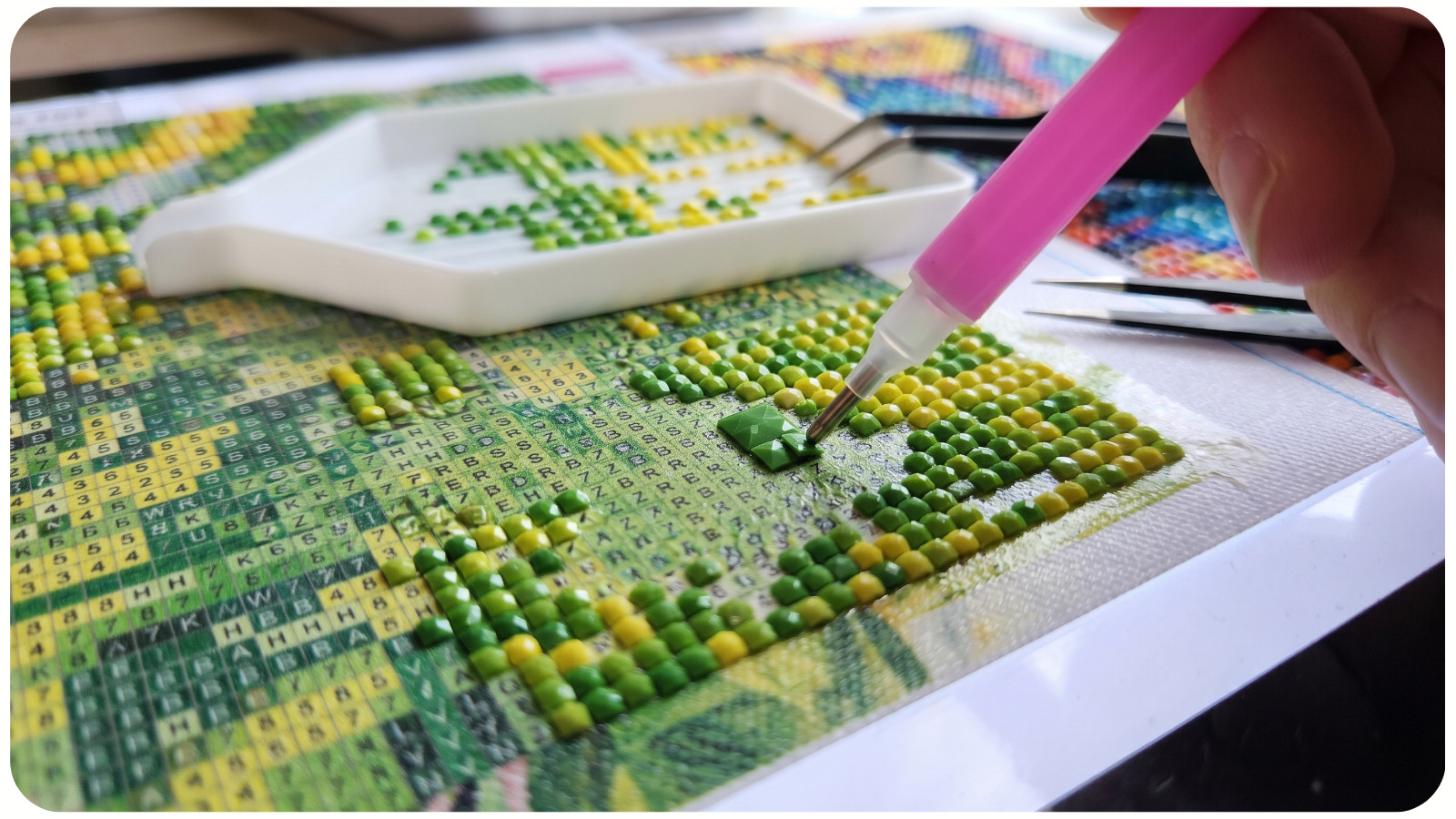
To handle drills efficiently, you’ll need a few essential tools:
- Applicator pen – Picks up drills using pink wax;
- Pink wax – Creates temporary stickiness;
- Tray – Organizes drills for easy pickup;
- Light pad – Illuminates symbols beneath the canvas;
- Tweezers – Essential for square drill precision.
WHY DRILL QUALITY MATTERS
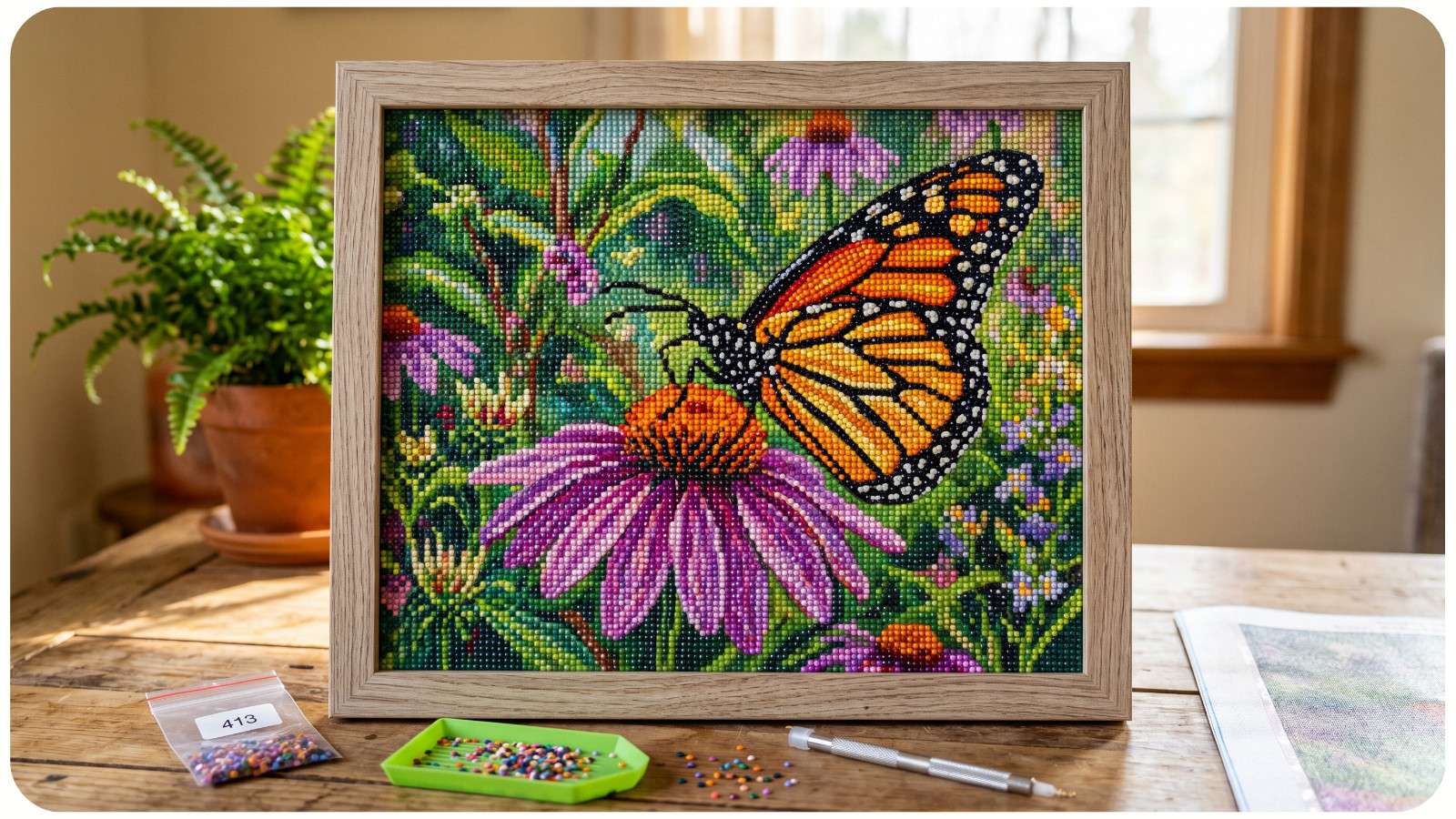
Not all drills are created equal. High-quality drills can:
- Improve placement accuracy;
- Enhance sparkle and visual depth;
- Reduce frustration during the process.
Premium designs – like those from Awesome Pattern Studio – often use better drill manufacturing standards, resulting in cleaner finishes and more satisfying crafting sessions.
FINAL THOUGHTS
Drills may be tiny, but they are the heart of diamond painting. From their shape and material to their sparkle and placement, every detail matters.
Mastering drills means mastering the craft itself – and once you understand them, your projects will look sharper, brighter, and far more professional.