


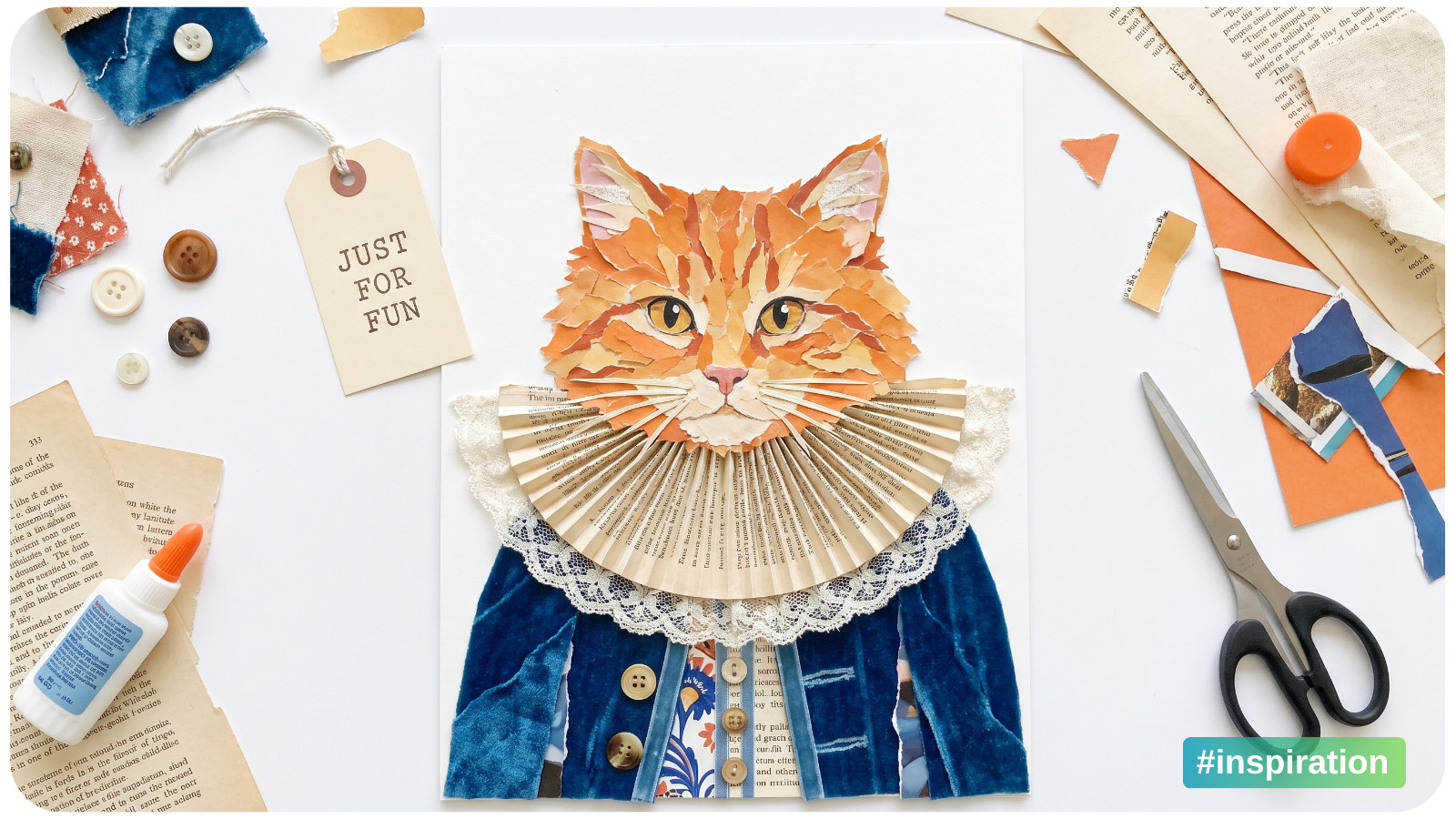
You’ve cleared a corner of the table. Your supplies are ready. You are officially prepared to create.
There’s only one problem: your brain has brought absolutely nothing to the meeting.
Wanting to make something without knowing what to make is an ordinary creative state. It doesn’t mean you’ve lost your imagination. Often, the problem is less “I have no ideas” and more “I have too many possible directions, and none feels obviously right.”
The answer isn’t always to search for more ideas. Sometimes you need fewer choices, a smaller starting point, or permission to make something that has no chance of becoming your greatest artistic achievement. Here’s how to find an entry point when the creative urge is present but the project itself is apparently hiding under the couch.
First, Figure Out What Kind of “No Ideas” You Have
Creative blocks don’t all feel the same. Picking the right project is easier when you identify what is actually stopping you.
• You’re mentally tired: Choose something repetitive, guided, and easy to pause.
• You’re restless: Pick a quick project with visible progress and a little mess.
• You want novelty: Try an unfamiliar material without committing to a full new hobby.
• You’re afraid of wasting supplies: Use scraps, inexpensive materials, or a pattern you already own.
• You have too many ideas: Add one firm constraint, such as one hour, three colors, or only materials already on the table.
• You want to create but not decide: Follow a pattern, kit, tutorial, or randomly selected prompt.
Think of this as checking the creative weather. You wouldn’t plan a picnic during a thunderstorm; you also don’t need to begin a 40-hour heirloom embroidery project when your attention span is currently the length of a cracker.
If You’re Tired, Make Something Repetitive
Low-energy creativity needs a project that doesn’t demand a stream of clever decisions. This is a good time for counted cross-stitch patterns and kits, diamond painting, simple knitting or crochet, beading a repeating pattern, folding paper stars, or filling a page with painted shapes.
The instructions or repetition provide the next small action. You don’t have to invent the whole thing; you only have to place the next stitch, loop, bead, fold, or brushstroke. That can feel deeply satisfying when your imagination wants to participate but refuses to drive.
Keep the scale friendly: a bookmark, coaster, patch, or one section of a larger project. Tonight’s goal can be “create for 20 minutes,” not “prepare a dramatic gallery unveiling.”
If You’re Restless, Make a One-Sitting Project
Sometimes you don’t need inspiration. You need momentum.
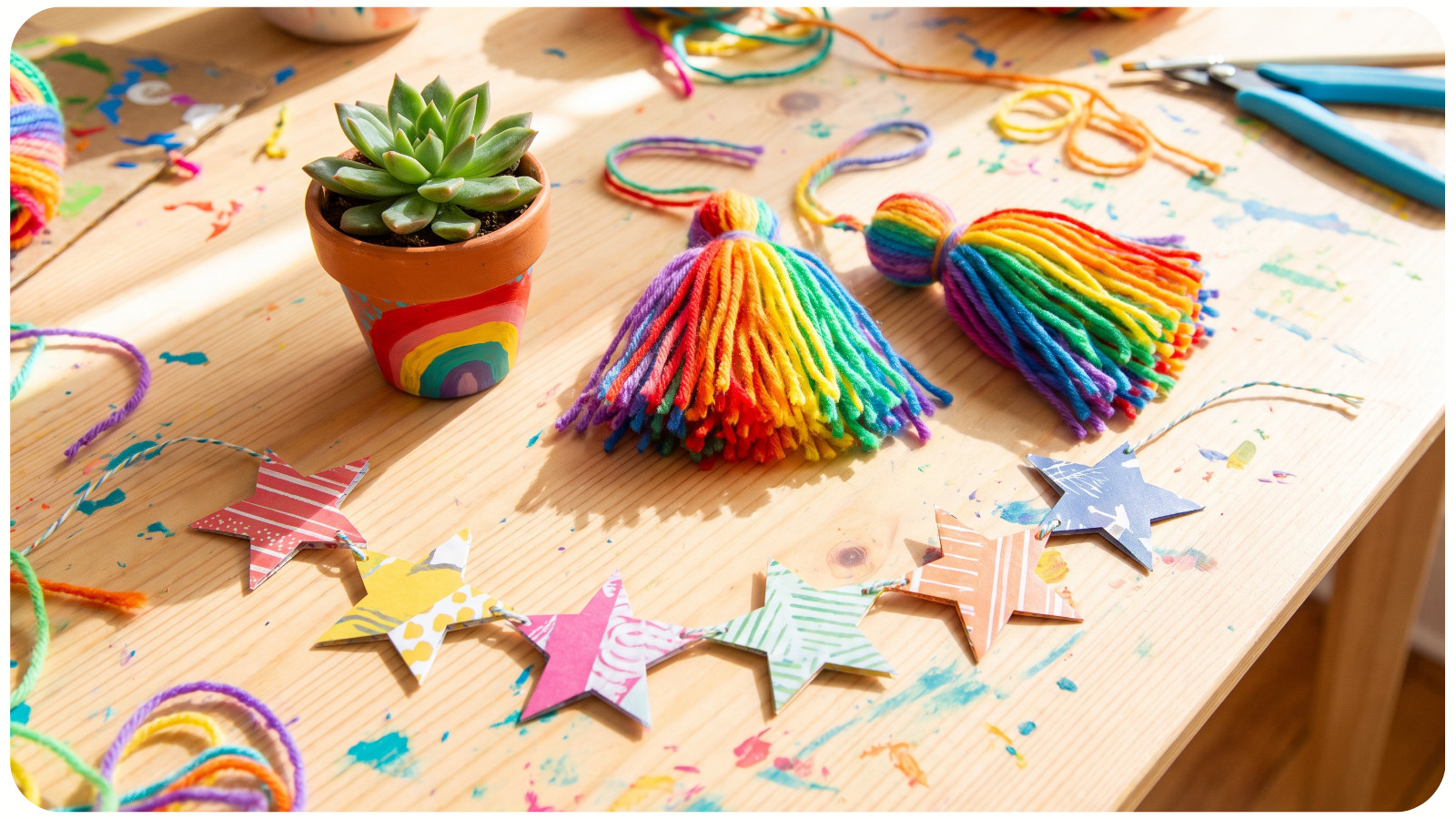
Choose a project that changes quickly in front of you: paint a tiny pot, make a tassel keychain, assemble a paper garland, or decorate a plain picture frame.
Set a timer for 30 to 60 minutes and stop when it rings. A time limit turns “What should I make?” into a much easier question: “What can I finish before dinner?” A blank universe is intimidating; one jar, two colors, and 45 minutes is a game.
If You Want Novelty, Test a Material Instead of Starting a Hobby
The internet is extremely good at making every craft look like a new identity you should immediately adopt. One pottery video later, you’re comparing kilns and wondering whether the garage needs rewiring.
Try a sample-sized experiment instead. Make one air-dry clay ring dish, use a miniature punch-needle kit, weave on a cardboard loom, carve one rubber stamp, or paint a watercolor postcard.
The project doesn’t need to prove you’re “a clay person” or “a weaving person.” Its job is to let you meet the material and leave with one small object.
If Perfectionism Has Taken Over, Make a Deliberately Unimportant Thing
Perfectionism loves a project with emotional stakes: the special gift, the expensive fabric, the design you’ve admired for six months. It becomes much quieter around a cardboard fish wearing sequins.
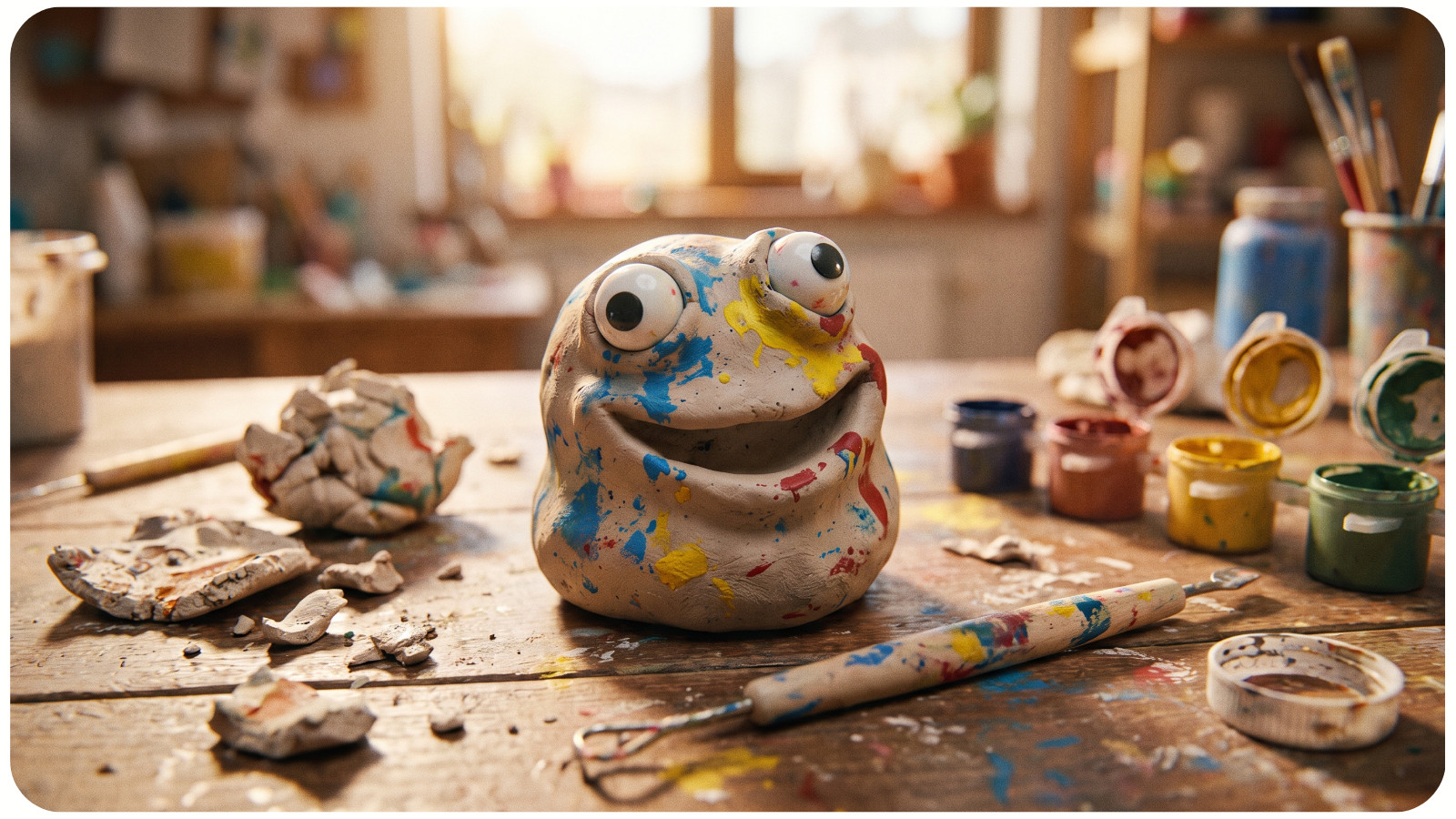
Make a silly magnet, a lopsided clay creature, a tiny felt hat for a houseplant, or a paper portrait of your pet as an aristocrat. Use unprecious materials and finish in one evening.
This isn’t about making something ugly on purpose. It’s about choosing a project that doesn’t have to justify your talent. Play becomes easier when the result isn’t being considered for a gift, a product, a post, or permanent display above the sofa. If pressure tends to follow you into every project, this beginner’s guide to crafting without perfectionism offers more ways to lower the stakes.
And if your cardboard fish turns out magnificent? Congratulations. It may now have a tiny crown.
If You Have Too Many Options, Use the Three-Bowl Method
When every saved image is calling your name, decision-making can consume the energy you wanted to spend creating. Reduce the choice to three categories.
1. Write several materials on slips of paper: thread, paper, paint, fabric scraps, beads, clay.
2. Write several objects on another set: bookmark, ornament, patch, card, mini wall hanging, keychain.
3. Write several moods or themes on a third: botanical, celestial, cozy, retro, ocean, absurd.
Draw one slip from each group. Perhaps you get “paper + ornament + ocean.” That could become a folded paper jellyfish, a painted shell decoration, or a tiny school of fish cut from old magazine pages.
You may redraw once, because this is crafting, not jury duty. But notice your reaction before you do. Disliking a random option often reveals what you would rather make. “Absolutely not beige macramé” is, technically, information.
If You Don’t Want to Decide at All, Borrow a Structure
Originality does not require beginning with an empty page. Patterns, kits, tutorials, and prompts are not creative training wheels; they are frameworks that let you focus on color, texture, technique, and the pleasure of the process.
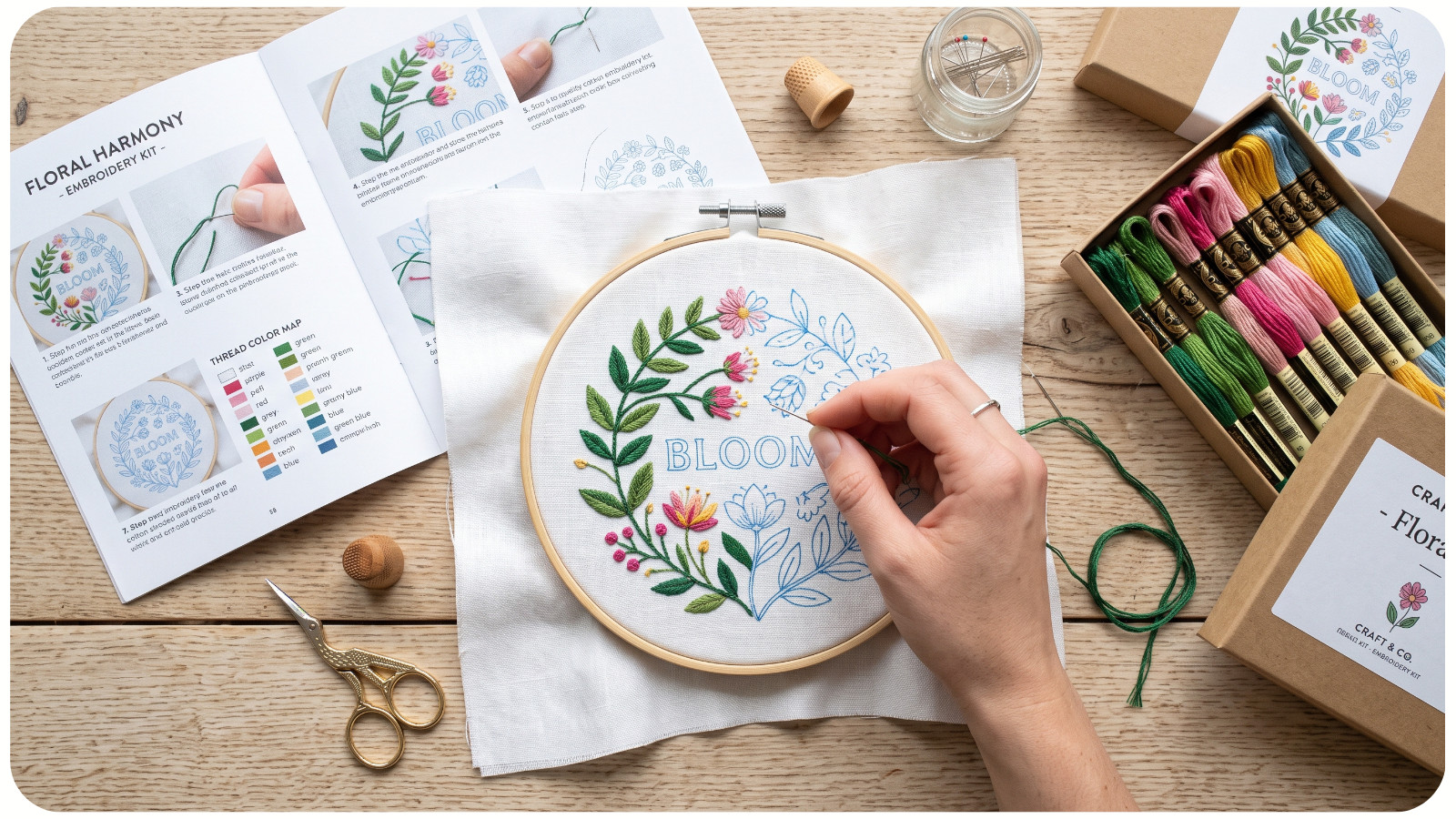
Choose a cross-stitch pattern and change one color. Follow a sewing tutorial using fabric from an old shirt. Assemble a kit exactly as instructed. Re-create the composition of a favorite artwork with torn paper. Use a coloring page as the basis for embroidery, or begin with a design from the APS embroidery pattern collection. Start with someone else’s map, then take the scenic route if you feel like it.
For many makers, ideas emerge during contact with the materials rather than arriving fully designed in advance. Your hands may discover the project before your brain writes the official proposal.
If Nothing Sounds Good, Don’t Make the Project Yet
You can prepare the conditions for an idea without forcing one.
Sort floss, wind loose yarn, clean brushes, or make a small “use next” basket from forgotten supplies. You can also take a short walk, then return and notice which color, texture, or object still holds your attention.
Preparation counts as part of a creative life. It reduces friction for the moment when interest returns. The trick is to keep it contained: organize one drawer, not the entire room. Otherwise, three hours later, you’ll be labeling buttons by emotional temperament and insisting this was the plan. If the problem feels more like low energy than a lack of ideas, try these gentle ways to start a craft project when you have no motivation.
Keep an Emergency Menu for Future Blank-Brain Days
Keep a visible list of projects that reliably suit you when inspiration disappears. Your menu might include:
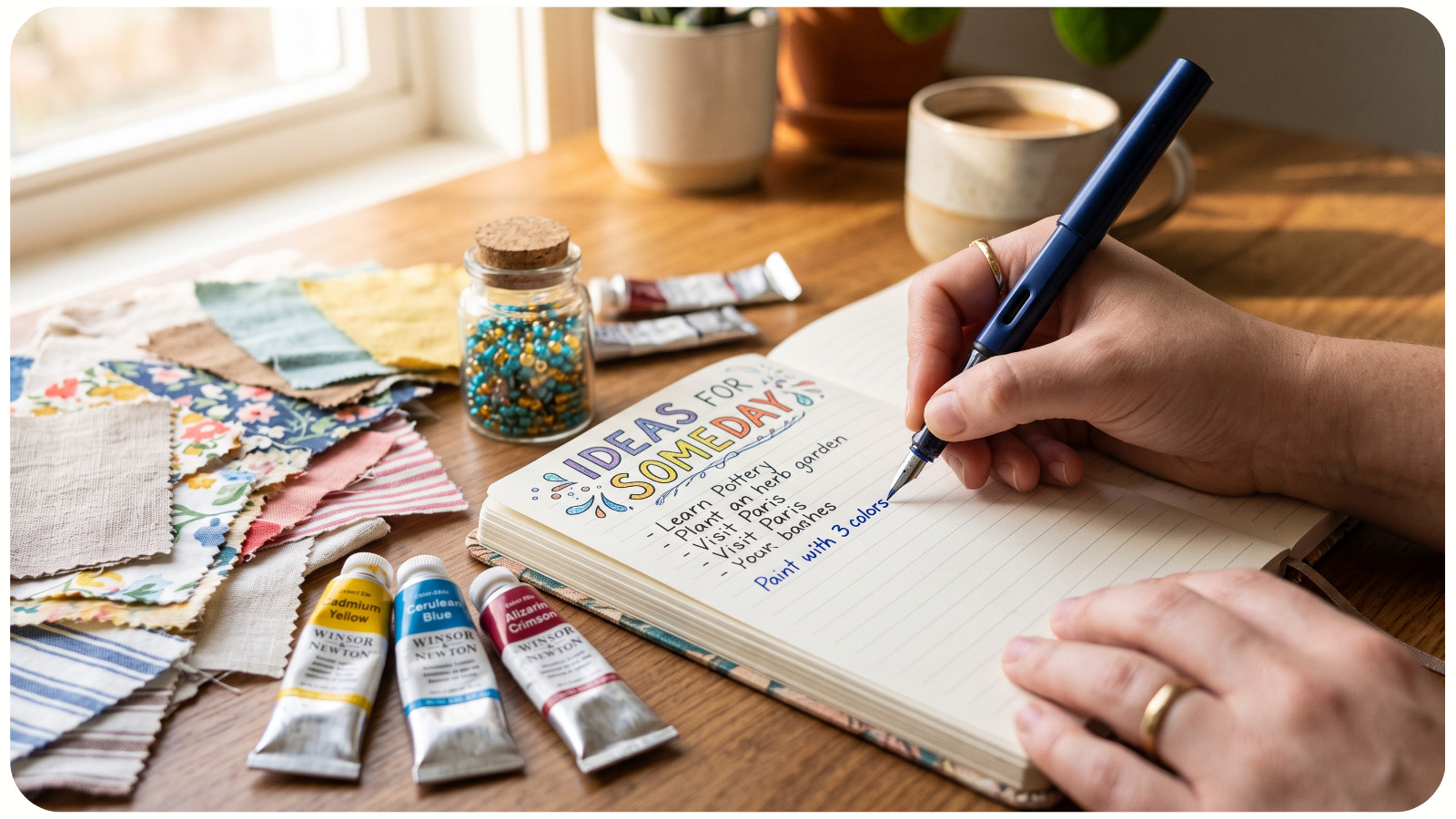
• Stitch a small pattern from your saved folder.
• Make a greeting card from paper scraps.
• Paint a mini canvas using only three colors.
• Finish one neglected project step.
• Decorate a useful object you already own.
• Try one technique from a bookmarked tutorial.
• Make something tiny and unnecessary.
The list should be specific enough that you can begin without another hour of browsing. Update it whenever you encounter an idea that makes you think, “I’d enjoy that someday.” Someday has terrible administrative support, so leave it clear instructions.
Make the Smallest Version of Whatever Interests You
When no project feels quite right, choose the smallest possible version of the one that feels slightly interesting. Not a quilt: one patchwork square. Not a full botanical embroidery: one leaf. Not a set of handmade holiday decorations: one gloriously overdecorated ornament. Not a new sketchbook practice: one page.
The first object is allowed to be a test, a warm-up, or a complete little oddity. Once you start, you may gain enough information to continue, change direction, or stop happily. All three outcomes are useful.
You don’t need a brilliant idea before you begin creating. You need an entry point: a material, a constraint, a pattern, a mood, or ten quiet minutes with your hands occupied. Inspiration is often less like lightning and more like a shy cat. Sitting down and doing something small gives it a reason to wander into the room.