



Imagine a library just before closing: rain at the windows, a painting on the wall, and a desk covered with books and handwritten notes. That is the world dark academia tries to evoke. For a stitcher, the appeal is simple. You can spend the evening making an object that feels connected to art, history, and a little mystery.
The right project needs more than a dark color palette. A black cat or an autumn leaf can be beautiful, but those motifs alone do not make a design dark academia. Look for a connection to study: a historic building, a painting you want to learn about, a bird that might appear in an old natural history book, or a botanical subject worth observing closely. Here is how to find that feeling in a craft kit you will enjoy making.
What Dark Academia Looks Like in Needlework
Dark academia draws on literature, art, old places of learning, and the pleasure of investigating something. Its familiar visual clues include libraries, Gothic arches, classical sculpture, portraits, maps, and notes in the margins. Autumn fits the scene because the shorter days make lamplight and indoor projects feel inviting.
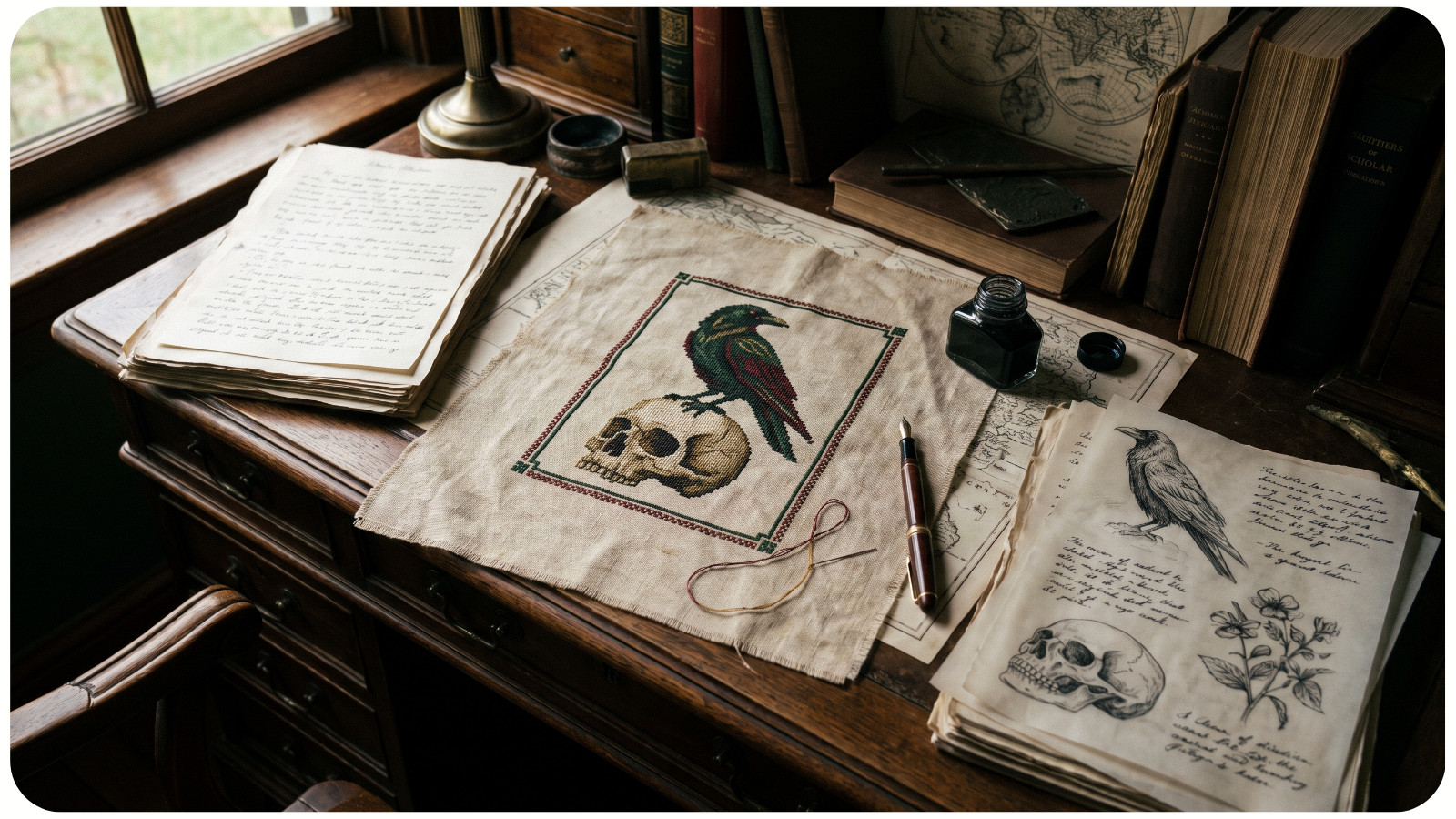
In stitching, translate those clues into a subject, a palette, and a finished display. A pointed window or stone doorway suggests a campus building. A painting inspired design brings a museum wall into your home. An owl, raven, or pressed-flower style motif can resemble a page from a field notebook. Ink blue, oxblood, forest green, walnut brown, and old gold can support the mood, but you do not need every color in one piece.
Ask one question before choosing: What would this design be doing in a scholar's room? It might be a framed artwork, a specimen study, a view from the window, or a small object kept between books. That imagined role gives the project a story beyond “cozy fall decor.”
Start With Art You Want to Study
For an art-led project, consider Danae by Gustav Klimt CS2290. The painting inspired subject and warm gold and brown palette can make the finished cross stitch feel at home among art books and framed prints. You could read about Klimt while working, then display the piece near the books that accompanied it. The scholarly connection comes from engaging with the artwork, not simply from making the room darker.
The APS listing offers a physical kit and a digital PDF option. It describes a 200 × 150 stitch, full coverage design with 19 DMC colors and a Hard complexity rating. That makes it a longer project for someone who enjoys sustained, detailed stitching. Choose the kit variation if you want a physical kit; choose the PDF if you already have or plan to source the supplies. Read the selected variation before ordering, since the PDF is a digital pattern and the kit is shipped.
If Klimt is not your style, use the APS famous paintings cross stitch category as a starting point. Choose a work you would actually stop to examine in a museum. A painting you are curious about will give you more to enjoy over many evenings than one selected only for its colors.
Try the Library, Observatory, or Natural History Route
You do not need a painting to make an academic-looking piece. Choose the branch of the aesthetic that feels most like you, then look closely at the image and specifications of each APS design before buying.
The Old Library
Look for books, writing desks, lamps, windows, and interior architecture. The appeal lies in the suggestion of reading and research. A design with a bookish subject can work as a small framed piece on a shelf, while a more detailed room scene may suit a wall near your reading chair. A stack of books beside an unrelated design is a photo setting; a book-related motif makes the theme part of the stitching itself.
Architecture After Rain
Arches, towers, stone facades, and narrow streets bring the Gothic campus side of dark academia into focus. Check whether a city or building design actually has the shapes and mood you want. An intensely sunny landmark scene may be a lovely travel project, but it will tell a different story. Consider the size and coverage too: detailed architecture may ask for more evening sessions than a single motif.
A Cabinet of Curiosities
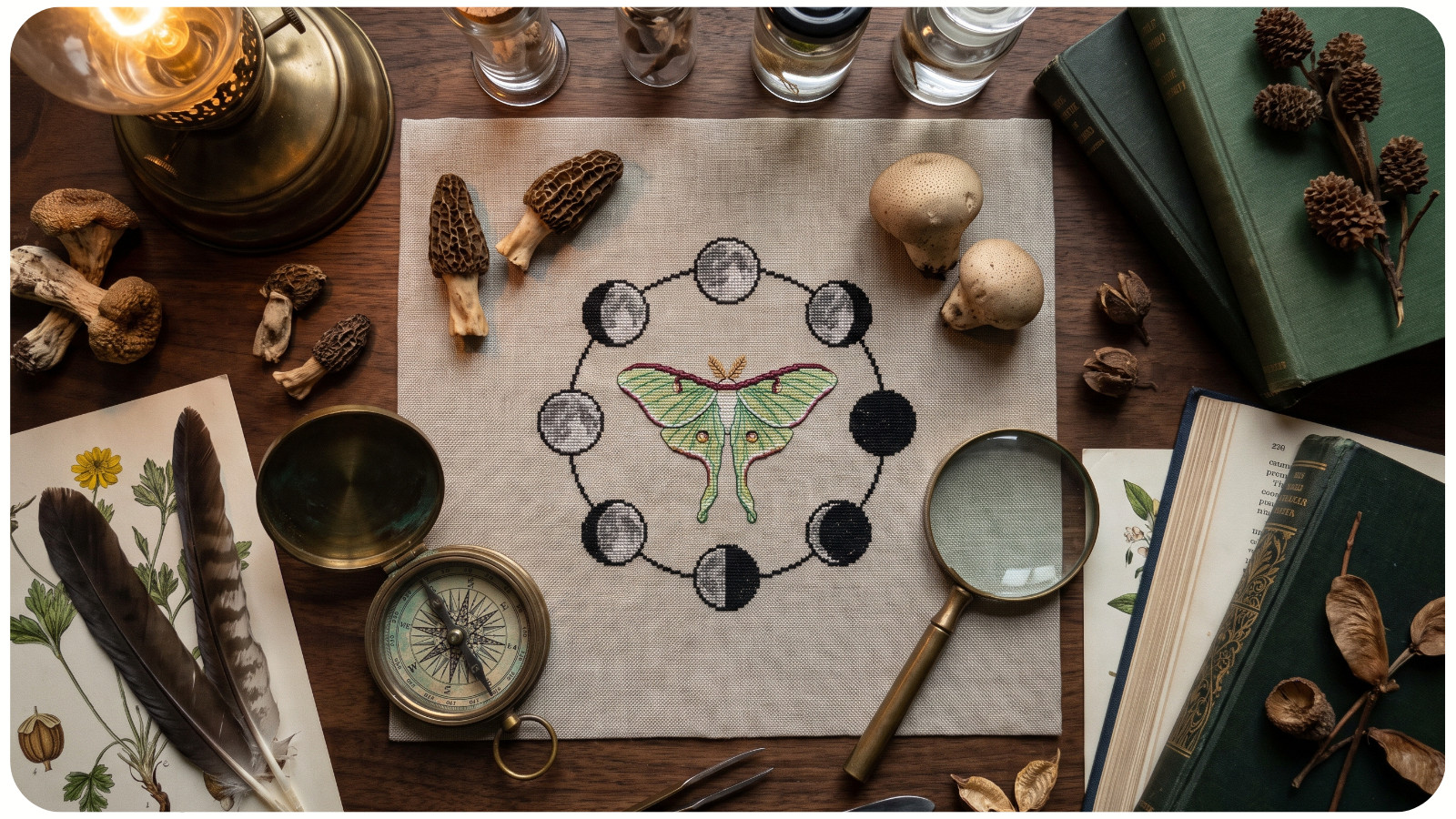
Botanical studies, mushrooms, birds, insects, and celestial subjects can suggest an old collection of observations. The most useful question is whether you want the object to feel like a labeled specimen, a page from a nature journal, or a mysterious night scene. You can create that context through framing and placement without adding words or changing the original pattern. This APS article on the history of samplers is a further reminder that stitched objects can carry knowledge and memory as well as decoration.
Choose a Kit for the Time You Really Have
A long autumn project sounds romantic until you realize you prefer a finish you can see this month. Before buying, compare the listing's stitch count or design dimensions, coverage, colors, and complexity rating where provided. These details are more useful than guessing from a product photo. Full coverage means the stitched area is filled, which can make a project more involved than a sparse motif of similar dimensions.
Think about how you like to work. Counted cross stitch suits evenings when following a chart and filling an area feels calming. Hand embroidery offers a different experience through outlines and filled shapes; read the stitch list on the specific design rather than assuming every embroidery kit uses the same techniques. If your room lighting is low, improve the light on your fabric before choosing especially dark threads. Atmosphere belongs around the work; you still need to see your stitches clearly.
Check the format at checkout. A digital PDF is useful when you have materials ready and want to begin after downloading the file. A physical kit is the option to consider when you want its listed materials delivered. Kit contents, framing materials, and shipping details belong to the individual product listing, so verify those for the variation you select.
Give the Finished Piece Its Own Story
The display can complete the academic mood. A painting inspired cross stitch might hang beside a small group of art prints. An architectural scene could sit above a desk. A botanical or bird motif might become the first piece in a small collection, with space left for future studies. Dark wood, an ivory mat, or a simple frame can support the visual tone; choose finishing materials separately unless the product page includes them.
For tonight, begin with one subject you want to investigate. Browse the Awesome Pattern Studio catalog, open the actual product page, and check its format and project details. The most convincing dark academia craft kit is one whose story keeps you curious while you stitch it.