



You can leave a museum with one image still on your mind: a blue wave, a flowering branch, or a face you want to look at again. A famous artwork craft kit lets you spend time with those details at home. The harder choice is often the craft itself. Should you stitch the image, or build it one piece at a time?
Both counted cross stitch and diamond painting turn an image into a grid of color. The process, supplies, and finished surface feel quite different. Here is how to choose between famous painting cross stitch kits and diamond art kits, with real designs from Awesome Pattern Studio (APS).
Cross Stitch vs. Diamond Painting: The Quick Comparison
The subject may draw you in, but the making process decides whether you will enjoy the evenings you spend on it.
Craft comparison | ||
If you care most about… | Choose counted cross stitch | Choose diamond painting |
|---|---|---|
The making process | Counting stitches and working with thread | Gluing colored resin pieces to a printed pattern |
The finished surface | Soft fabric with visible X stitches | A bright, textured mosaic that catches light |
Getting started | A physical kit, or a PDF chart if you own supplies | A physical kit with a printed pattern, resin pieces, glue, and tools |
Your work rhythm | Threading a needle, stitching sections, and checking the chart | Sorting colors and filling sections with an applicator |
Neither medium can copy every brushstroke of an original painting. Each design interprets the image on its own grid. For a museum lover, that change can be part of the pleasure: you notice shapes, color blocks, and edges that you might miss during a quick gallery visit.
Choose Cross Stitch If You Love the Feel of Thread
Counted cross stitch is a good fit if you enjoy the quiet routine of making X stitches on fabric. You follow a chart and count your place as the image grows. It asks for attention, especially in a fully stitched design, but you can work in small sessions. A PDF pattern makes sense when you already have fabric, floss, and a needle; a physical kit suits someone who wants the materials together. Check the options on each APS product page before choosing.
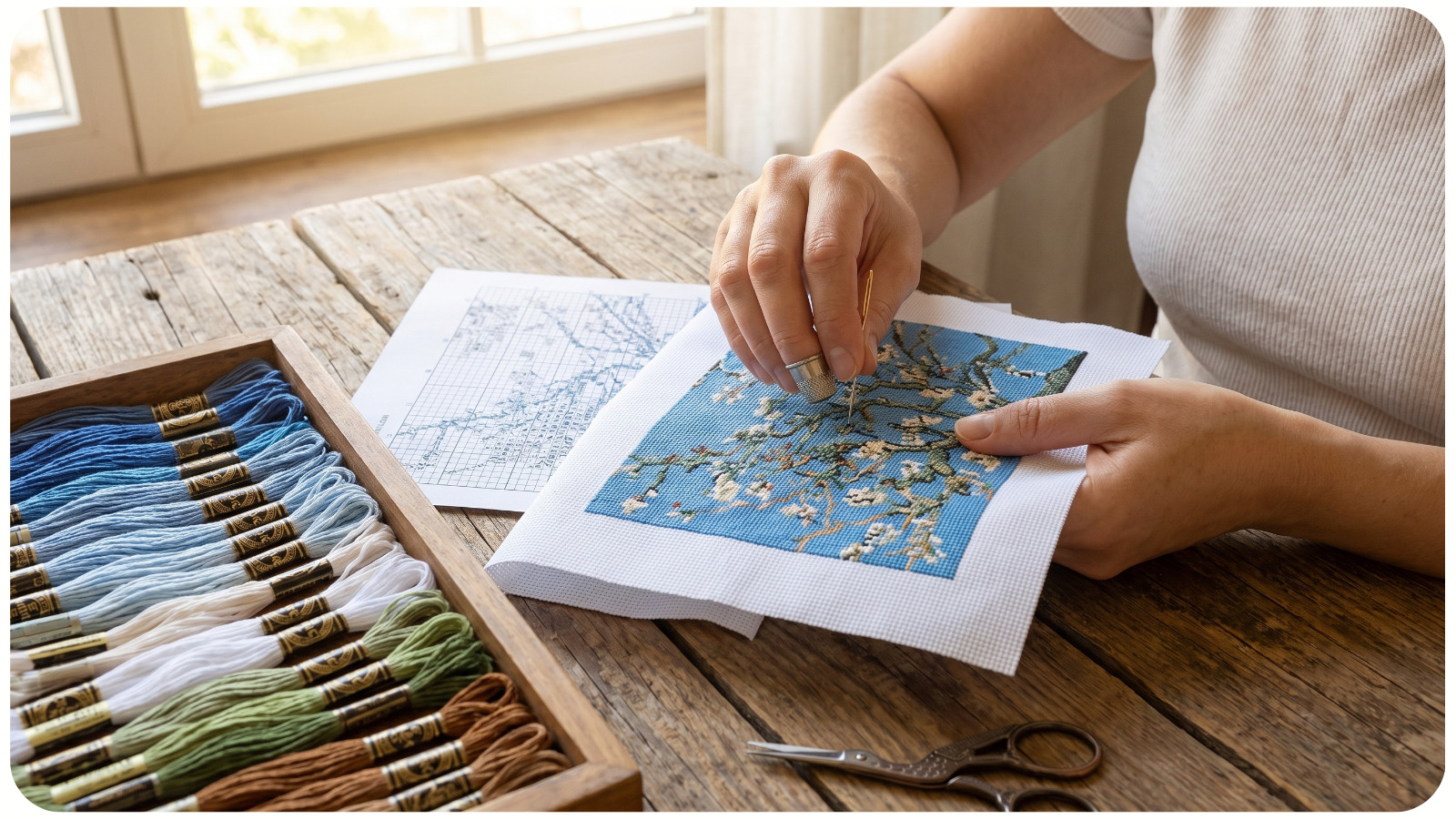
For a calm, airy subject, try Almond Blossom by Vincent van Gogh, CS2291-2. Its pale blossoms and blue background make it a lovely choice for someone drawn to botanical art. APS lists the design at 162 × 120 stitches, with 14 colors and full coverage. That means the background is part of the project, so choose it because you want to spend time with the whole image, not just the branches.
If you prefer a portrait with stronger contrast, Self-Portrait by van Gogh, CS2216-2 offers a different mood. APS lists 120 × 162 stitches, 19 colors, full coverage, and a “Hard” complexity rating. It suits a stitcher ready to pay close attention to the face and the shifting colors around it.
For someone who loves decorative surfaces, The Three Ages of Woman by Gustav Klimt, CS2892 is an absorbing choice. The figures and patterned areas invite a slower look. APS lists 150 × 150 stitches, 18 colors, full coverage, and a “Hard” rating. If you are picking a gift, that rating is a useful cue: this is better for a person who welcomes a substantial counted project than someone seeking a quick first try.
Choose Diamond Art If You Enjoy Building a Mosaic
In the APS diamond painting kits discussed here, you use the included glue and applicator to place colored resin pieces on a printed, laminated paper pattern. Follow the kit instructions for applying the glue. There is no needle to thread or stitch count to follow on blank fabric. Keeping colors sorted and placing pieces neatly makes a visible difference. The result is a textured surface that catches the light.
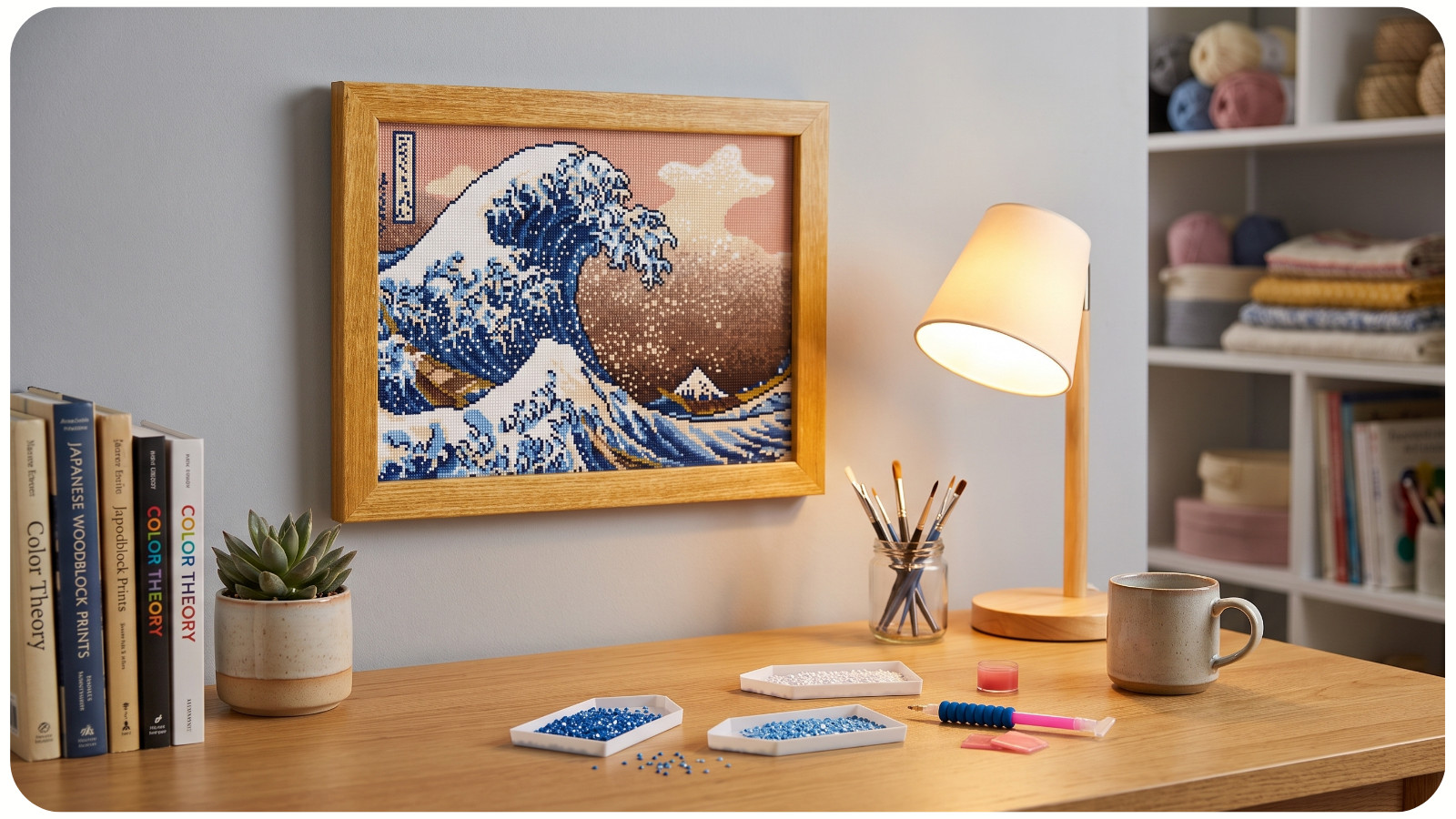
APS’s The Great Wave off Kanagawa by Katsushika Hokusai diamond painting kit, DS2203 is a strong pick for someone who likes bold movement and blue tones. Its curling wave gives the mosaic a clear focal point. Although people often group this image with famous paintings, Hokusai’s original is a woodblock print. Calling it a famous work of art is the more accurate description.
If you love van Gogh’s glowing night scenes, APS also shows a Starry Night Over the Rhône diamond painting design, DS3003, among the related products on its cross stitch version, CS3003. Look at the listed diamond kit and the stitch version side by side before deciding. The subject is the same, but the grid, finish, and format choices need to be checked on their own product pages.
How to Pick a Famous Art Kit You Will Actually Finish
Start with the art, then choose the process. A painting you already love can carry you through repetitive sections. If you keep returning to van Gogh’s blossoms, choose that subject before worrying about which craft seems more impressive. If the physical rhythm matters more to you, choose between thread and resin first, then browse the available art.
Look at the actual design, not just the original artwork. A craft pattern is a planned interpretation. Check the product image to see how faces, small details, and gentle color changes appear on the grid. On a diamond painting, think about how the finished mosaic will look in your room under natural and evening light. With cross stitch, consider whether you enjoy a fully covered background or would rather work on a design with open fabric.
Read the format and size details carefully. A cross stitch PDF is a chart, not a box of supplies. The APS cross stitch listings shown here offer a PDF option and a physical kit option. The diamond painting example is a physical kit. Stitch dimensions describe a chart in stitches; they are not the finished size in inches. Fabric count and the margin you leave for finishing affect the cut fabric size. For diamond art, check the dimensions of the chosen variant rather than assuming two designs come in the same size.
Be honest about your attention and space. A complex, fully covered portrait can be deeply satisfying if you like chart work. If you want to put on music and fill one color area at a time, diamond art may suit your evenings better. Both crafts benefit from a clear table, good light, and a safe place to keep your work between sessions.
Frequently Asked Questions
Is cross stitch or diamond painting better for a beginner?
Diamond painting removes the steps of threading a needle and counting stitches on blank fabric. Many beginners find that straightforward. Counted cross stitch can also be learned from a chart, but a large full coverage design may take patience. Choose a subject and project size you will enjoy, then check the listed complexity where APS provides it.
Is an APS diamond painting pattern a sticky canvas?
The APS kit featured here uses a printed pattern on laminated paper and includes glue. Check the instructions that come with the kit. Do not assume it works like a diamond painting kit with a pre-adhesive canvas.
Do all famous artworks come in both crafts?
No. Designs and variants differ. A PDF option mentioned for cross stitch does not mean the diamond painting version is also a PDF. If you want one particular artwork, check its product page and related products to see which APS formats are offered.
Which finish looks more like a museum artwork?
That depends on what you want to see. Cross stitch gives you a soft textile interpretation with visible stitches. Diamond painting gives you a raised, reflective mosaic. Neither reproduces the original paint or print surface exactly. Compare the product images and pick the texture you would enjoy making and displaying.
Make the Museum Visit Last Longer
For a tactile, steady project, start with an APS famous painting cross stitch pattern or kit. For a bright mosaic that you can build piece by piece, explore the Great Wave diamond painting kit. Choose the image you would happily look at for many evenings, and the making will become part of how you remember it.