



Picture an autumn landscape painting. You might see a road lined with red trees, a field after harvest, or a river beneath a pale sky. These scenes feel familiar now, but artists in different places and periods gave autumn very different roles.
Autumn gained prominence in landscape painting at different times and for different reasons. It was not a single discovery. Seasonal painting had long been important in East Asia. In Europe, painters increasingly let the changing landscape carry a picture on its own. During the nineteenth century, artists in France and the United States made autumn especially visible through rural scenes, dramatic foliage, and close attention to changing light.
Seasonal landscapes existed long before the nineteenth century
Artists had been looking closely at the seasons for centuries. A fifteenth-century Chinese handscroll now called Landscape of the Four Seasons moves through spring, summer, autumn, and winter. The Metropolitan Museum of Art describes its autumn passage through clear skies and a climb into high mountains. The season changes the viewer's experience of space, not merely the color of a tree.
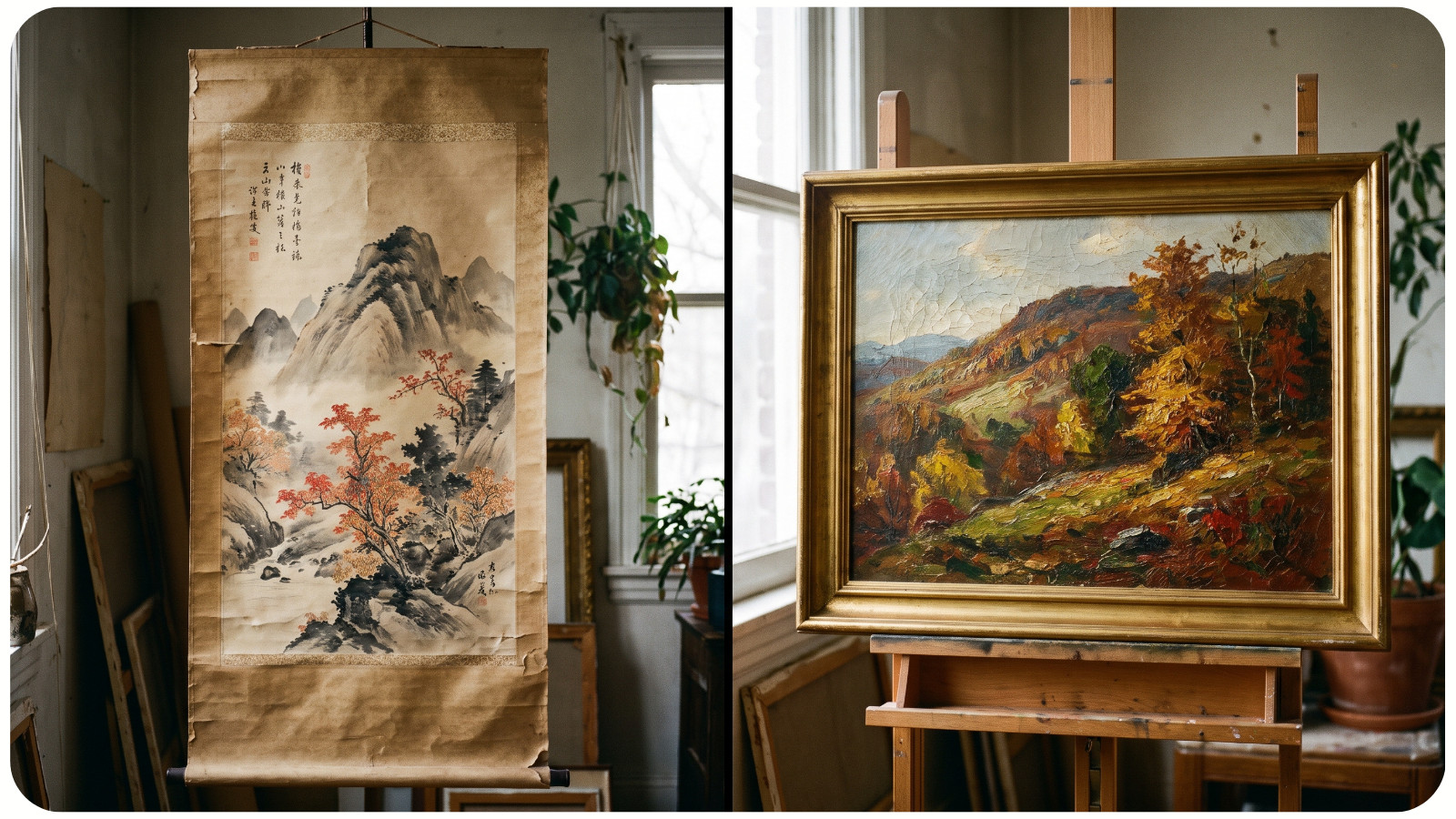
In Japan, autumn also offered painters distinctive forms and colors. In Autumnal Landscape with a Waterfall, made in the second half of the eighteenth century, Ike Gyokuran used small pink marks and blue-green strokes to distinguish changing deciduous trees from evergreens. The work invites a close look at how varied an autumn hillside can be.
These examples matter because there is no single worldwide moment when artists “discovered” autumn. The rise of autumn in European and American landscape painting followed its own path. Those developments did not begin the history of seasonal landscape painting, and visual similarities alone do not prove direct influence between traditions.
European painters made the seasons part of the landscape's story
In sixteenth-century Europe, the calendar of rural work helped artists picture the changing year. Pieter Bruegel the Elder's The Harvesters (1565) belongs to a series of seasons. Its workers cut wheat, gather food, eat, and rest within a wide landscape. According to the Met, the scene takes place in July or August. It is a harvest image, but it is not an autumn foliage painting in the modern sense.
That distinction helps explain the change. Bruegel did more than show an activity associated with a time of year. His broad view made the weather, fields, and atmosphere essential to the scene. The Met notes that his season paintings emphasize the transformation of the landscape itself. Over the following century, landscape also flourished as an independent genre in the Netherlands, giving painters more room to make the land and sky the main event.
For a viewer, that shift opens up a new question: what makes a season visible when no one is holding a harvest tool? Artists could answer with the shape of bare branches, the state of a field, the angle of sunlight, or a change in the air.
Nineteenth-century painters found more than bright leaves
By the nineteenth century, French painters working in and around the countryside treated ordinary places and changing conditions as subjects worth sustained attention. Jean-François Millet's Autumn Landscape with a Flock of Turkeys (1872–73) shows a woman with turkeys, a nearly bare tree, and a village in the distance. The scene near Barbizon is subdued rather than brilliant. Its autumn feeling comes from the exposed branches, low color, and rural life within the landscape.
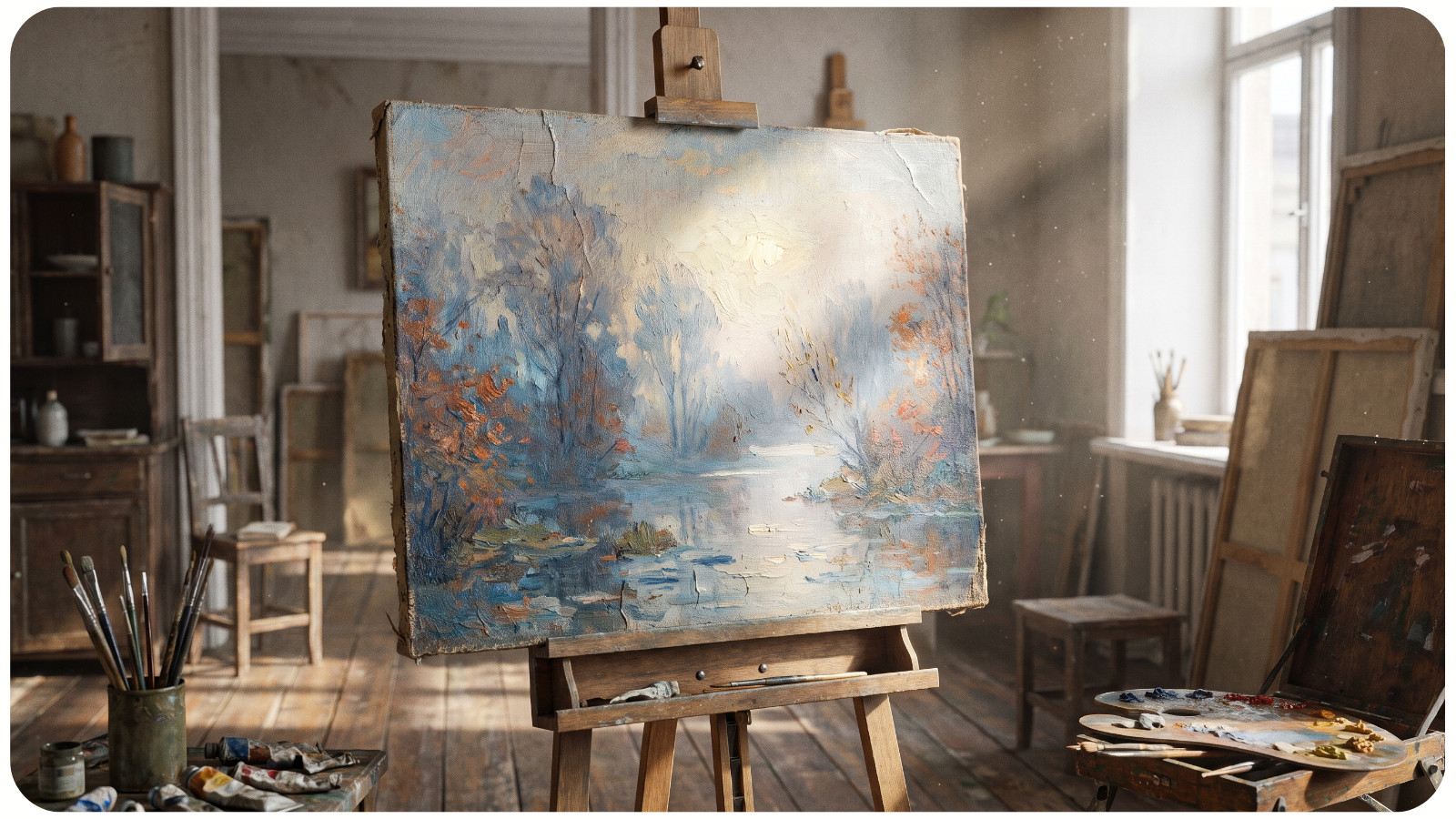
Later nineteenth-century artists also paid close attention to how the same place could change with weather and season. A scholarly catalogue from the Art Institute of Chicago notes that Camille Pissarro explored autumn and winter effects in the 1860s, when many Paris-based landscape painters favored warmer months for countryside work. An autumn painting could therefore be about a particular effect of light or atmosphere, not simply a collection of orange leaves.
This is why autumn works so well in landscape art. A painter can show the season through several connected clues: color, light, vegetation, labor, and weather. A red canopy may catch the eye first, but a nearly empty field can tell the story just as clearly.
American painters made fall color a powerful landscape image
In the United States, nineteenth-century landscape painting gave autumn a different kind of prominence. Artists associated with the Hudson River School used sweeping views to present the land on a grand scale. Jasper Francis Cropsey's Autumn – On the Hudson River (1860) is a striking example: red and gold trees frame a distant river, while tiny people and signs of settlement sit within the vast scene.
Cropsey painted the monumental canvas from memory in a London studio. The National Gallery of Art explains that its autumn view was tied to a celebration of the American landscape and national identity. British viewers were so surprised by its vivid foliage that Cropsey displayed North American leaves beside the painting to show that the colors were plausible.
His picture also shows why an autumn landscape is an artistic construction, even when it draws on observation. The high viewpoint, framed distance, glowing sky, and carefully placed trees guide us through the scene. The foliage supplies color and spectacle, but the painting also presents a particular idea of the land. Its small figures and cultivated details are part of that idea.
What autumn lets an artist say
It is tempting to read every falling leaf as a symbol of aging or loss. Some autumn pictures invite that reading, but the meaning depends on the work. Cropsey's painting is celebratory. Millet's is quieter and tied to rural life. Gyokuran's mountains reward attention to the variety of trees and brush marks.
The season gives artists a flexible visual language. A patch of warm color can lead the eye into a composition. Dark trunks can make yellow leaves appear brighter. A field after harvest can show work and change without making either the only subject. For anyone who enjoys patterns and handmade art, these paintings are also a reminder to look at the small decisions that build a larger scene: repeated leaf shapes, clusters of color, and spaces left calm between them.
Autumn became a major subject because painters found so many ways to make a changing landscape speak. Across different traditions, it could be a passage in a cycle, a record of work, a study of weather, or a dramatic vision of place. The next time you see an autumn painting, look beyond the red leaves. Notice what else tells you the season is there, and what the artist chose to make you feel about it.