


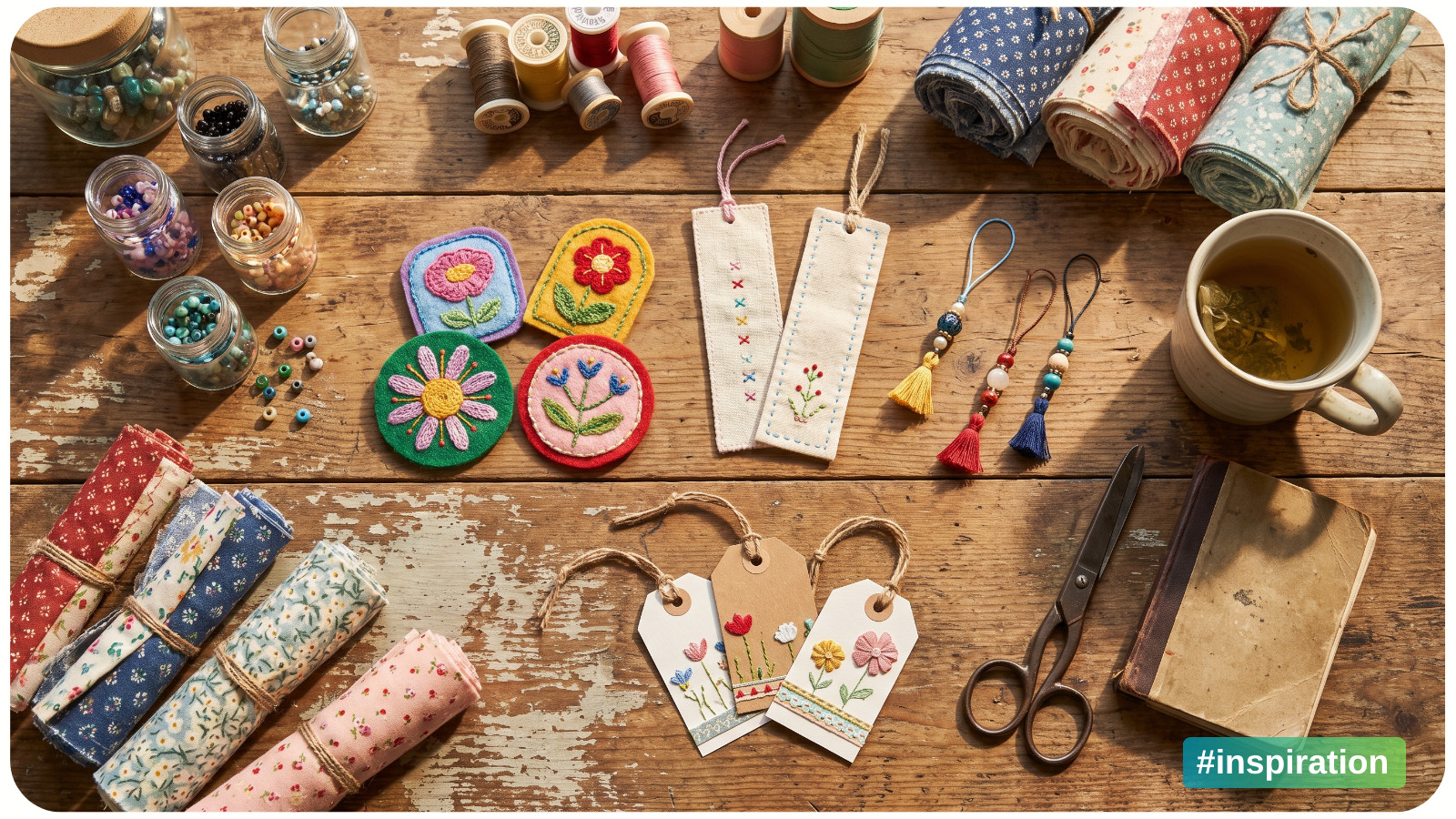
Every craft drawer has its own little collection of maybes: half a skein of embroidery floss, a square of pretty fabric, seven wooden beads, three inches of velvet ribbon, and one button that is far too lovely to throw away.
These leftovers rarely feel useful enough for a full-size project, so they stay in jars and boxes waiting for the “right idea.” The good news is that the right idea doesn’t have to be big. Small supplies are often best suited to small projects - quick pieces you can finish in an evening, add to a gift, display on a shelf, or simply make for the pleasure of using what you already have.
Here are some beautiful mini projects that turn craft leftovers into objects worth keeping. If making from your stash sounds appealing, you can also explore these DIY art projects you can do without buying new supplies.
First, Make a Small “Use It Up” Tray
Before choosing a project, gather a limited selection of leftovers in one shallow tray or box. Pick materials that share a color story, such as dusty pink, cream, and gold, or a mood, like bright summer colors or quiet woodland shades.
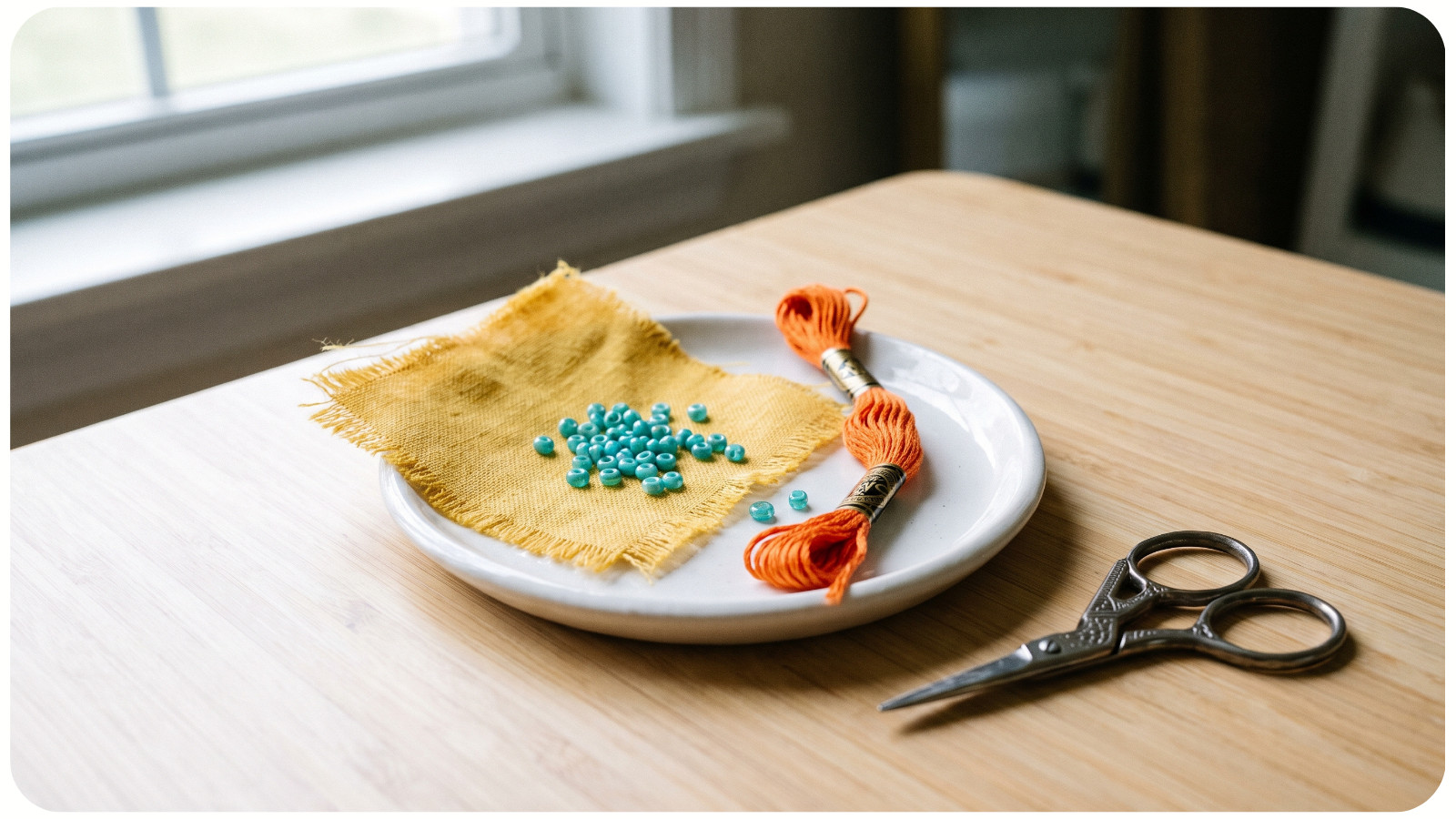
Keeping the selection small is important. If you empty every supply bin onto the table, the project can start to feel like a major organizing job. A tray containing one fabric scrap, two or three thread colors, a few beads, and a short piece of ribbon is much easier to work with.
Then ask one practical question: What could this become in under two hours? A bookmark, ornament, tiny hoop, gift tag, pin, or keychain is a much friendlier starting point than trying to invent an elaborate masterpiece from miscellaneous scraps.
Turn Fabric and Felt Scraps Into Tiny Useful Things
Even very small pieces of fabric can become satisfying projects because they already bring color, texture, and pattern to the table.
Make a Mini Patch or Brooch
Start with a sturdy scrap of felt, denim, canvas, or cotton backed with interfacing. Cut a simple shape - a flower, heart, moon, mushroom, leaf, or abstract form - and add a few hand stitches around the edge. A tiny embroidered detail, bead, or contrasting fabric layer can make it feel intentional rather than improvised.
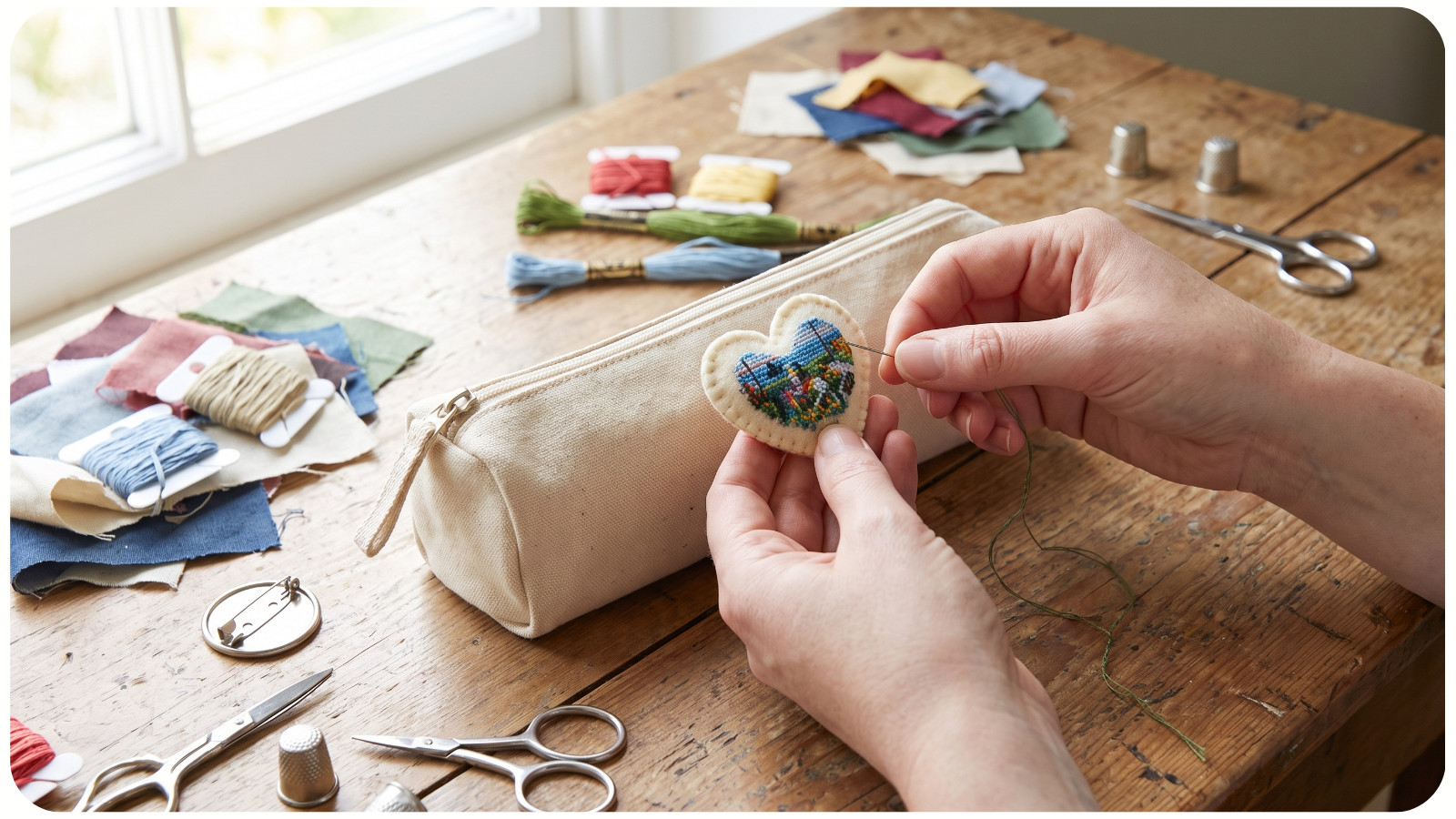
Attach a pin back to turn it into a brooch, or leave it plain and sew it onto a tote bag, jacket, pencil case, or mending project. This is especially good for those scraps you love too much to hide inside a seam.
Sew a Soft Cord Keeper
A narrow rectangle of fabric and one leftover snap or button can become a cord keeper for earbuds or charging cables. Fold the raw edges inward, stitch around the outside, and add the closure at each end.
It’s a small project, but it has the pleasant polish of something you might buy from a handmade shop. Make several in coordinating fabrics and they become an easy gift set for a traveler, student, or permanently tangled-cable person.
Create a Tiny Stuffed Ornament
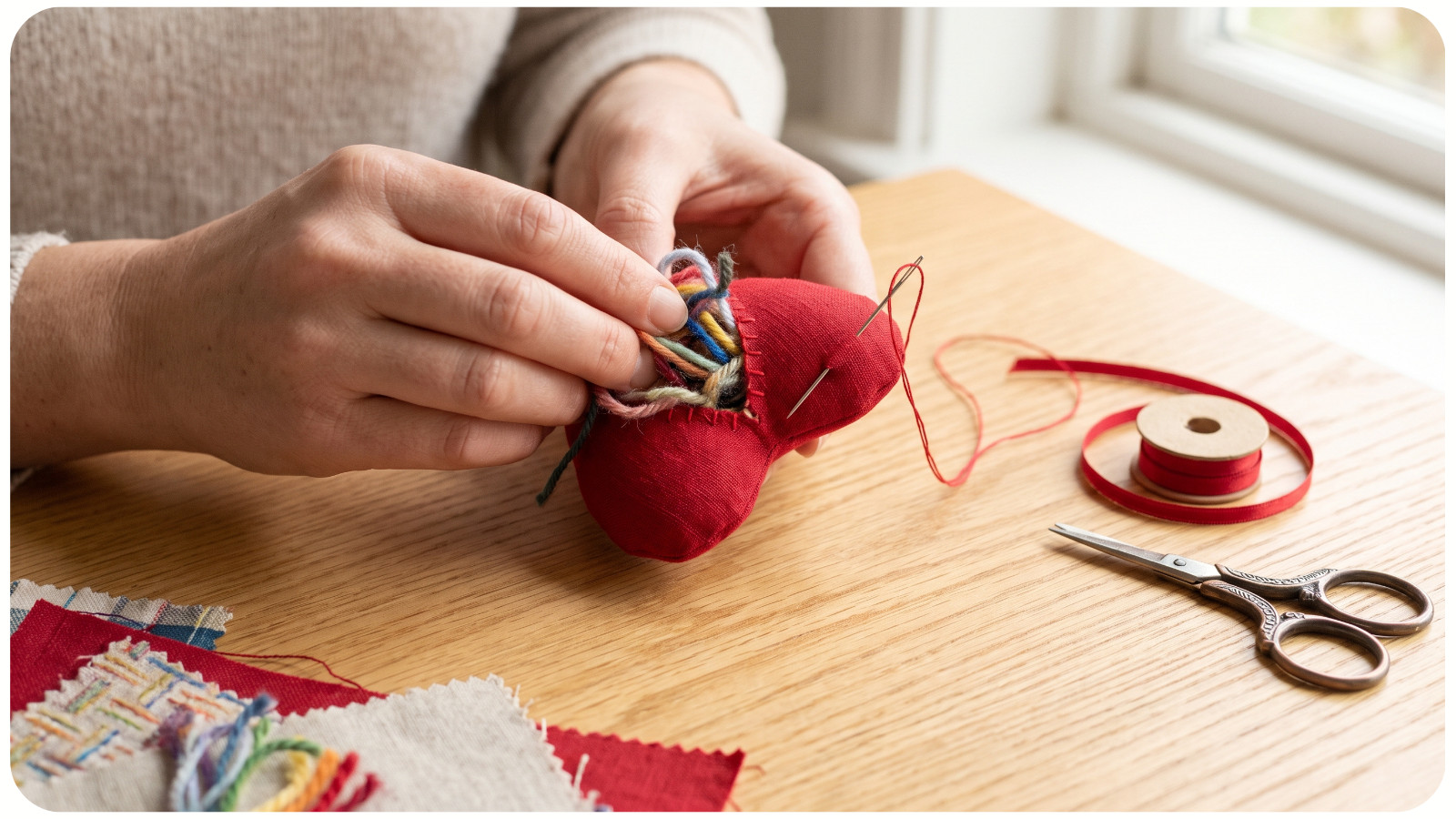
Pair two small fabric pieces, cut out a simple shape, and sew around the edge. Before closing it, add a little stuffing. If you don’t have fiberfill, clean fabric trimmings and chopped yarn ends can work inside ornaments that won’t need frequent washing.
Add a ribbon loop and a few stitched details. Stars, houses, birds, fruit, and miniature mittens can work beyond the holiday season when you choose everyday colors. Hang the finished piece from a cabinet knob, peg rail, gift bag, or seasonal branch display.
Give Short Lengths of Thread and Yarn a Job
Leftover yarn and embroidery floss tend to look insignificant one strand at a time. Grouped by color, however, they can become the most expressive part of a mini project.
Make a Tassel Bookmark
Cut a strip from cardstock, watercolor paper, or a cereal box covered with decorative paper. Punch a hole at the top and use short lengths of floss or yarn to make a compact tassel.
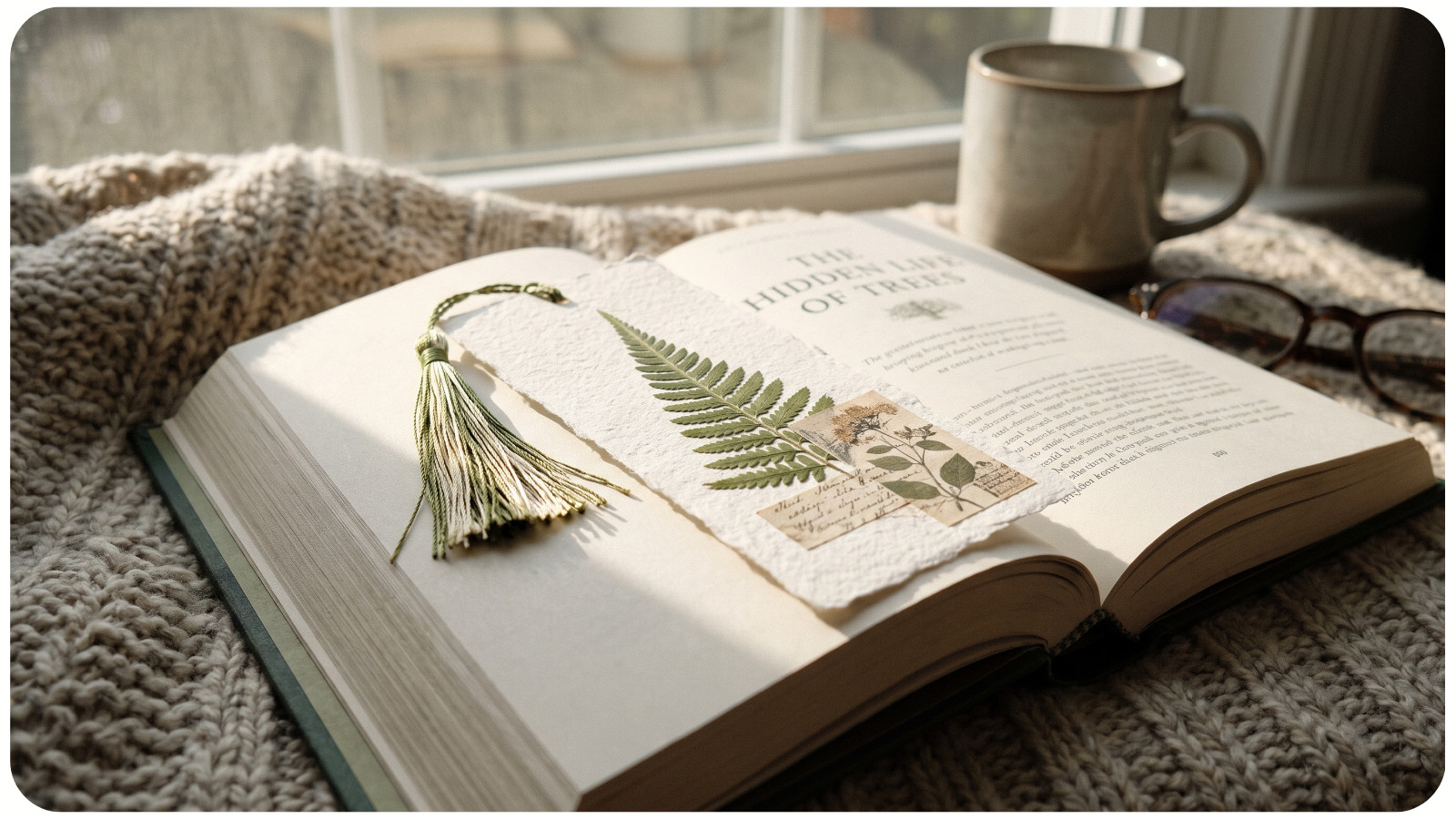
Decorate the bookmark with a painted stripe, a pressed leaf, a stamp, or a tiny collage. If your thread lengths are very short, braid them together before attaching them. The finished bookmark is useful, lightweight, and easy to tuck into a book you’re giving as a present.
Stitch a Tiny Sampler
Small quantities of embroidery floss are perfect for a palm-size sampler. Choose a piece of leftover fabric and stitch a single motif, a decorative border, your initial, or a few rows of favorite stitches. There’s no need to plan a large composition; the charm comes from treating a tiny experiment as a finished piece.
Display it in a miniature hoop, mount it on cardstock, or turn it into a patch. This is also a low-pressure way to test a color combination before using it with a larger embroidery pattern or one of the many cross-stitch patterns and kits.
Wrap a Mini Vase or Pencil Cup
Use yarn remnants to wrap a clean jar, small can, or plain cardboard tube. Work in bands of color and secure the yarn neatly as you go. Thin yarn creates a smooth striped effect, while fuzzy or textured yarn makes the container feel softer and more playful.
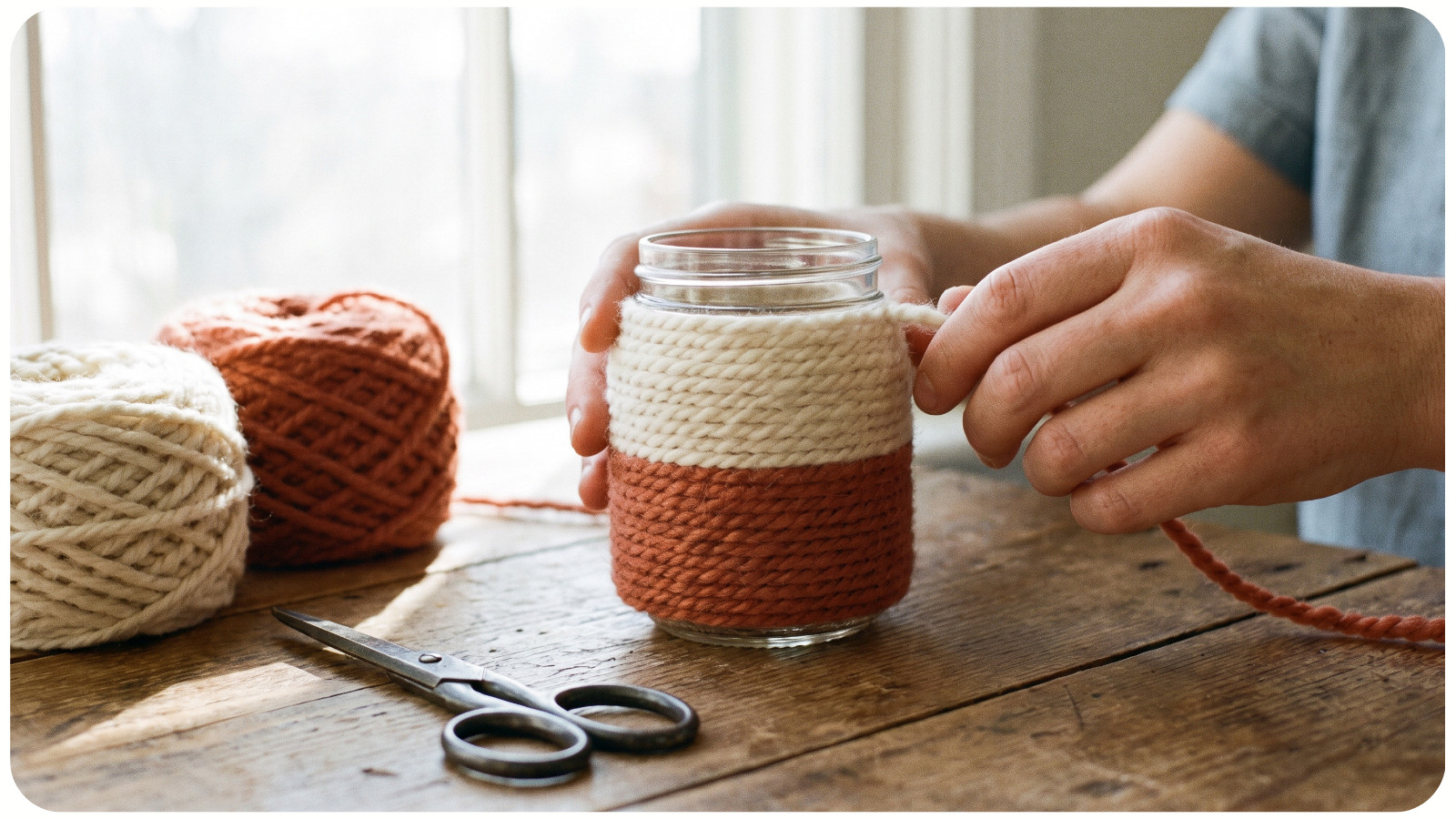
Keep the design simple: two broad color blocks often look more polished than many narrow stripes. Use the finished piece for paintbrushes, crochet hooks, dried flowers, or the collection of pens that somehow keeps multiplying.
Turn Paper Offcuts Into Something Gift-Worthy
Paper scraps are easy to combine because they don’t need to match perfectly. A page from an old calendar, a painted test sheet, leftover wrapping paper, and a strip of cardstock can all live happily in the same small collage.
Build a Set of Layered Gift Tags
Cut sturdy paper into simple tag shapes, then layer smaller scraps on top. Try torn edges, narrow stripes, tiny geometric shapes, or one illustrated detail cut from a larger offcut. Finish each tag with leftover ribbon, twine, or embroidery floss.
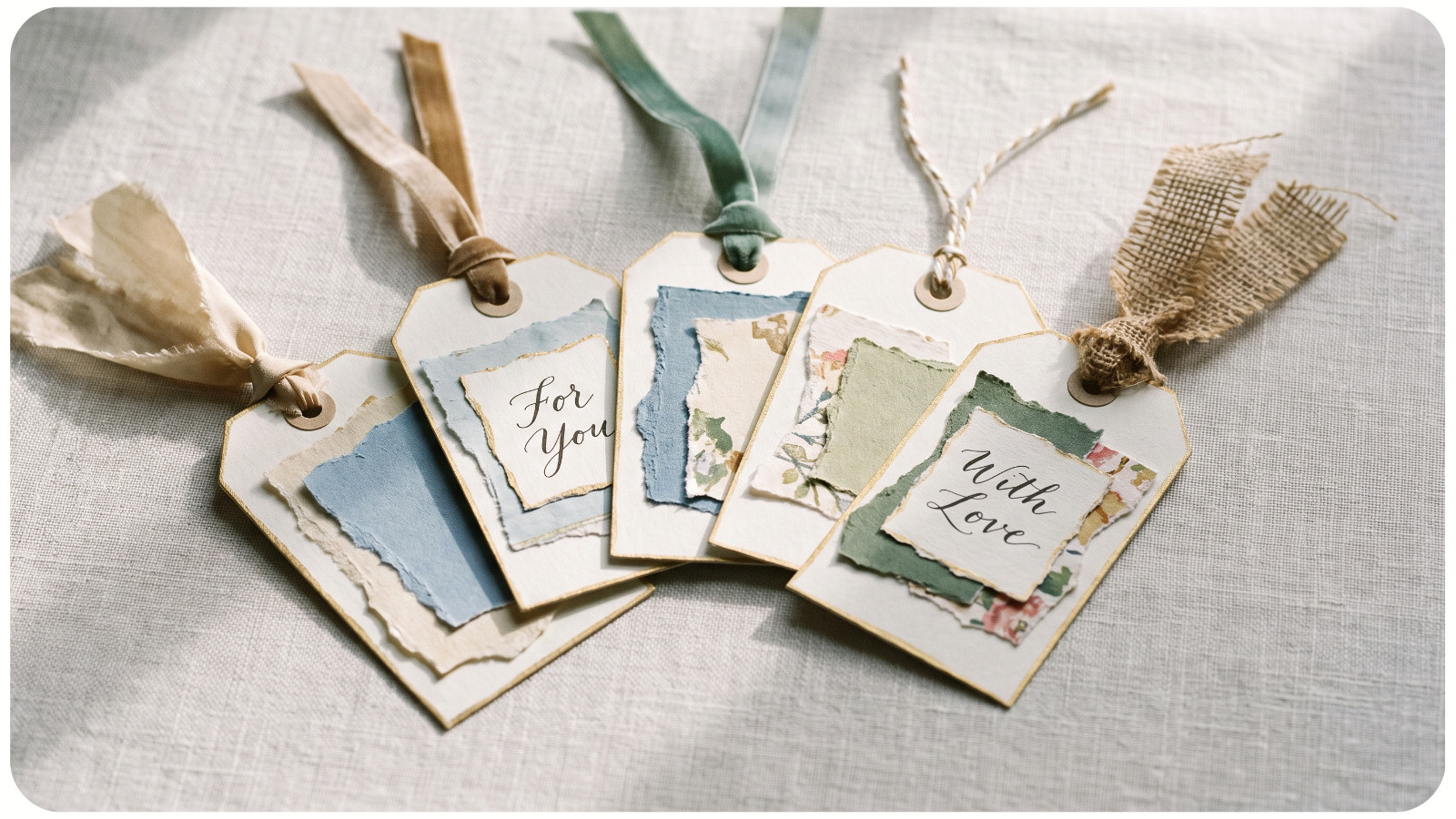
Working in a set makes the process especially enjoyable. Give all the tags one repeated feature—perhaps a gold dot, a blue paper strip, or a small stitched X - so they look related without being identical. Store them with your wrapping supplies, and the next last-minute gift will already have a handmade finishing touch.
Make Mini Collage Cards
Fold small pieces of cardstock into note cards and create a simple image from paper scraps. A few shapes can suggest a vase of flowers, a row of houses, a birthday cake, or an abstract landscape.
Leave some blank space around the collage. It helps even playful, mismatched scraps look considered. These little cards are ideal for thank-you notes, lunch-box messages, place cards, or a short note added to an online order or handmade gift.
Use Beads, Buttons, and Findings as the Main Feature
When only a few beads or buttons remain, don’t try to stretch them into a full piece of jewelry. Let one or two special elements become the focal point. If your extras are diamond painting drills, try these creative projects for leftover diamonds.
Assemble a Zipper Pull or Bag Charm
Thread a small combination of beads onto sturdy cord, ribbon, or an eye pin, then attach it to a key ring or lobster clasp. Mix shapes rather than forcing a perfect match: one wooden bead, one glass bead, and a small tassel can look more interesting than three identical pieces.
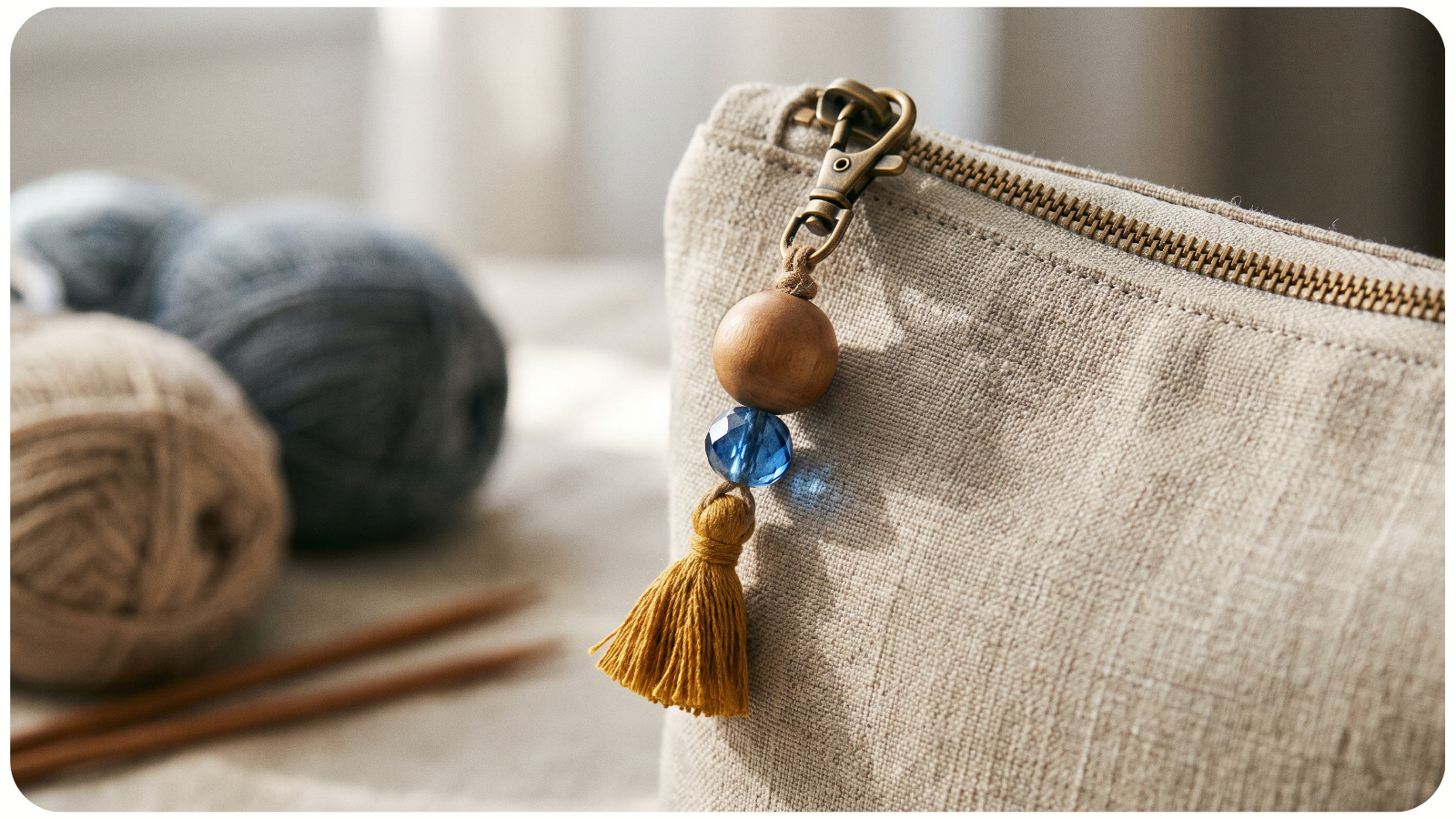
Use the charm on a project bag, backpack, pencil pouch, or keychain. If it may be handled by a child, skip tiny detachable pieces and choose age-appropriate materials and construction.
Frame One Beautiful Button
An orphaned button can become a tiny piece of art. Sew it to a square of fabric or heavy paper, then add a few stitched or drawn details around it. A green button can become a flower center; a pearly one might become a moon; a wooden button can sit inside a simple sunburst.
Mount the finished square in a mini frame or on a folded card. Instead of looking like a leftover, the button becomes the reason the whole piece exists.
Combine the Oddest Leftovers in a Mini Hoop Landscape
For the scraps that don’t fit neatly into one category, try a mixed-media landscape in a small embroidery hoop. Layer fabric to suggest hills or sky, use thread for grasses and clouds, and add one or two beads as flowers, stars, or windows. A narrow ribbon can become a path or horizon line.
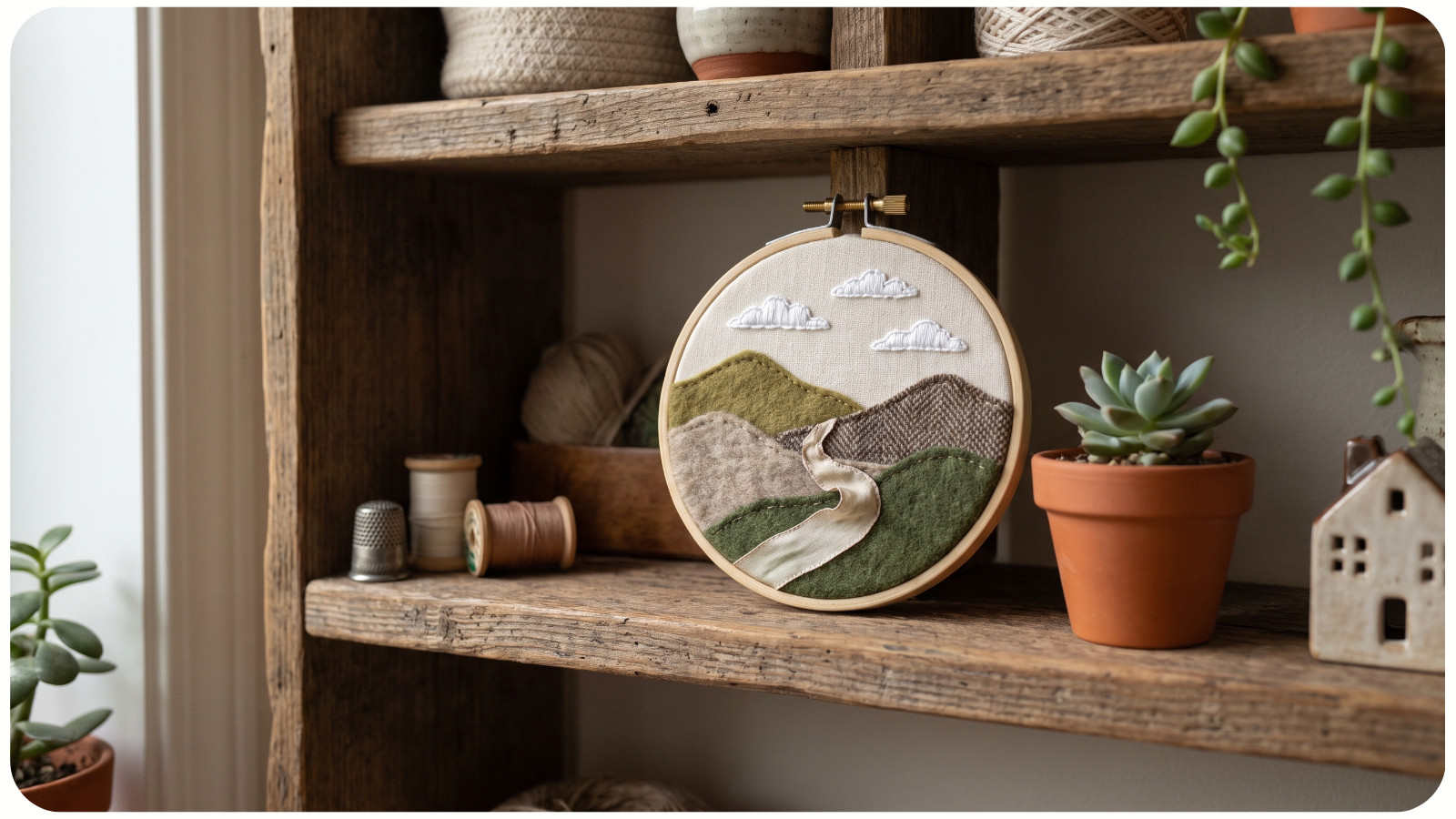
The landscape doesn’t need to be realistic. Choose a simple arrangement of shapes and repeat colors across the hoop so the materials feel connected. Because the finished area is small, even a two-inch ribbon scrap or six inches of green floss can make a visible contribution.
This kind of project is particularly good for sentimental remnants: fabric from an old dress, ribbon from a gift, or thread left from a meaningful piece. You can preserve the memory without keeping an entire bag of unused material.
Let the Leftovers Decide the Scale
Using leftover craft supplies isn’t about squeezing one more large project from materials that clearly aren’t enough. It’s about changing the scale of the idea. A few beads can be a charm. A small piece of fabric can be a patch. Short threads can become the brightest detail in a tiny sampler.
The next time you finish a project, place the nicest remnants in your use-it-up tray instead of returning them to the deepest drawer. You may not have enough for something big - and that may be exactly what makes the next project easy to begin.